Jafary F, Hanachi P, Gorjipour K
Department of Biochemistry, School of Medicine, Shahid Sadoughi University of Medical Sciences, Yazd, Iran.
Faculty of Biological Science, Department of Biotechnology, Biochemistry Unit, Alzahra University, Tehran, Iran.
Int J Organ Transplant Med. 2017;8(4):195-202. Epub 2017 Nov 1.
In tissue engineering, scaffold characteristics play an important role in the biological interactions between cells and the scaffold. Cell adhesion, proliferation, and activation depend on material properties used for the fabrication of scaffolds.
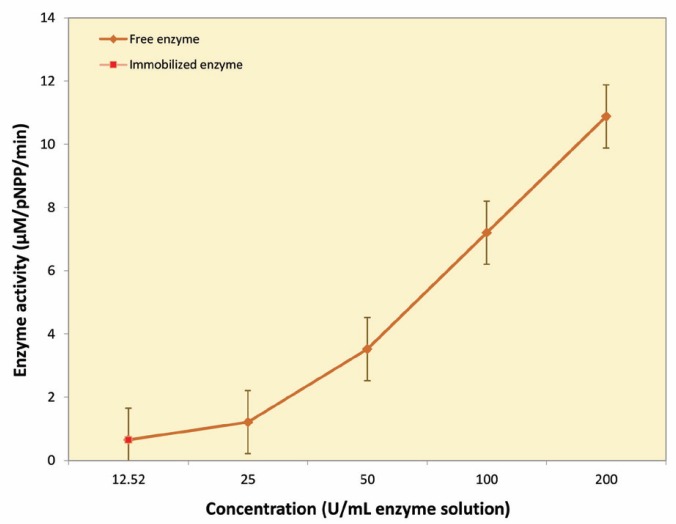
In the present investigation, we used collagen with proper characteristics including mechanically stability, biodegradability and low antigenicity. Optimization of the scaffold was done by immobilization of alkaline phosphatase on the collagen surface via cross-linking method, because this enzyme is one of the most important markers of osteoblast, which increases inorganic phosphate concentration and promote mineralization of bone formation.
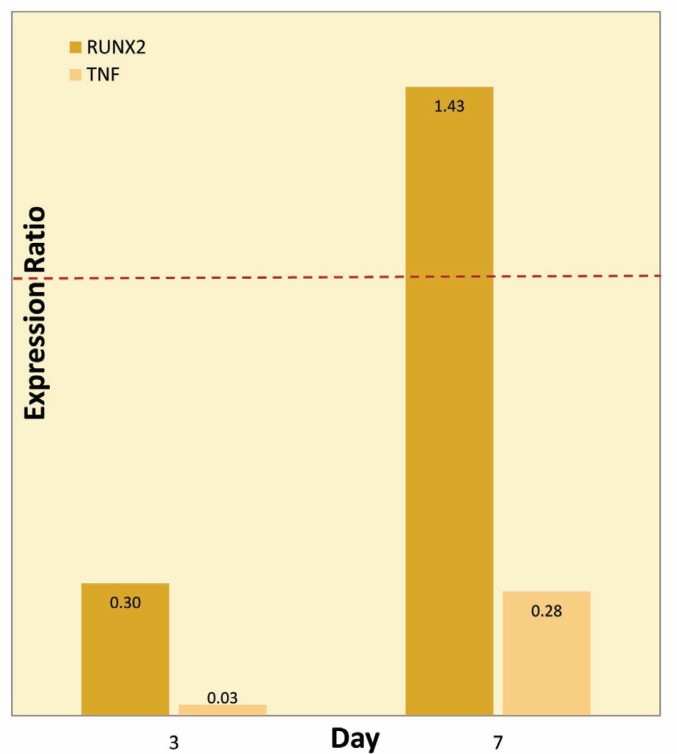
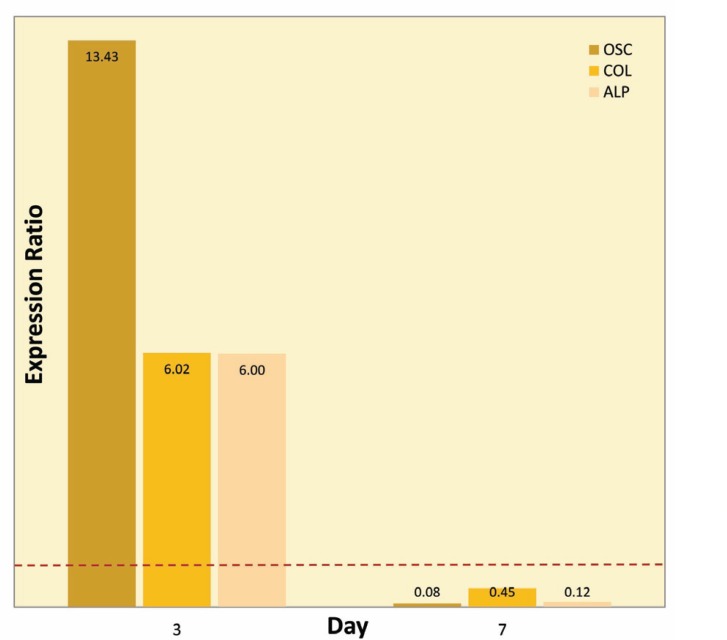
Alkaline phosphatase was immobilized on a collagen surface by 1-ethyl-3-(dimethylaminopropyl) carbodiimide hydrochloride, as a reagent. Then, rat mesenchymal stem cells were cultured in osteogenic medium in control and treated groups. The osteogenesis-related genes were compared between treatments (differentiated cells with immobilized alkaline phosphatase/collagen scaffold) and control groups (differentiated cells on collagen surface without alkaline phosphatase) on days 3 and 7 by quantitative real-time PCR (QIAGEN software).
Several genes, including alkaline phosphatase, collagen type I and osteocalcine associated with calcium binding and mineralization, showed upregulation in expression during the first 3 days, whereas tumor necrosis factor-α, acting as an inhibitor of differentiation, was down-regulated during osteogenesis.
Collagen scaffold with immobilized alkaline phosphatase can be utilized as a good candidate for enhancing the differentiation of osteoblasts from mesenchymal stem cells.
在组织工程中,支架特性在细胞与支架之间的生物相互作用中起着重要作用。细胞的黏附、增殖和活化取决于用于制造支架的材料特性。
在本研究中,我们使用了具有适当特性(包括机械稳定性、生物可降解性和低抗原性)的胶原蛋白。通过交联法将碱性磷酸酶固定在胶原蛋白表面来优化支架,因为这种酶是成骨细胞最重要的标志物之一,它能增加无机磷酸盐浓度并促进骨形成的矿化。
使用盐酸1-乙基-3-(二甲基氨基丙基)碳二亚胺作为试剂,将碱性磷酸酶固定在胶原蛋白表面。然后,在成骨培养基中培养大鼠间充质干细胞,分为对照组和处理组。在第3天和第7天,通过定量实时PCR(QIAGEN软件)比较处理组(固定有碱性磷酸酶的胶原蛋白支架上的分化细胞)和对照组(胶原蛋白表面无碱性磷酸酶的分化细胞)之间的成骨相关基因。
包括碱性磷酸酶、与钙结合和矿化相关的I型胶原蛋白和骨钙素在内的几个基因,在最初3天表达上调,而作为分化抑制剂的肿瘤坏死因子-α在成骨过程中表达下调。
固定有碱性磷酸酶的胶原蛋白支架可作为促进间充质干细胞向成骨细胞分化的良好候选材料。