Smart Blood Analytics Swiss SA, CH-7000, CHUR, Switzerland.
Centre for Clinical Toxicology and Pharmacology, Division of Internal Medicine, University Medical Centre Ljubljana, SI-1000, Ljubljana, Slovenia.
Sci Rep. 2018 Jan 11;8(1):411. doi: 10.1038/s41598-017-18564-8.
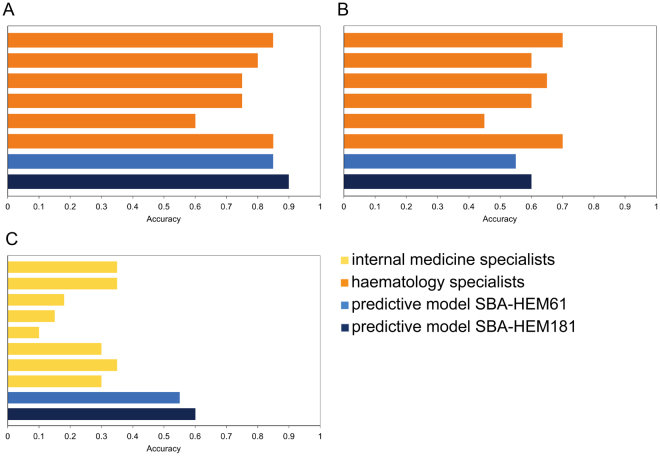
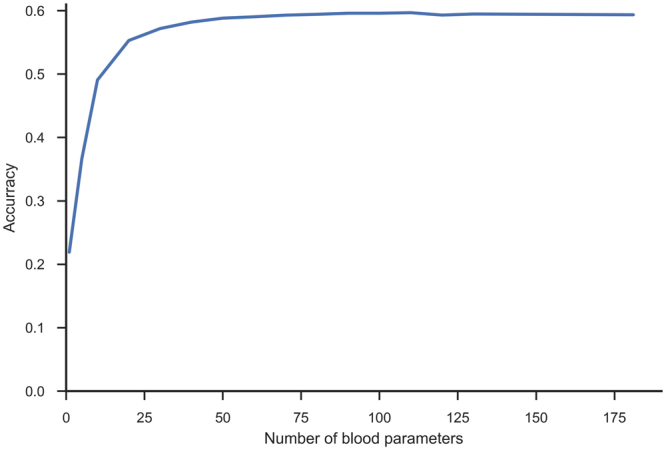
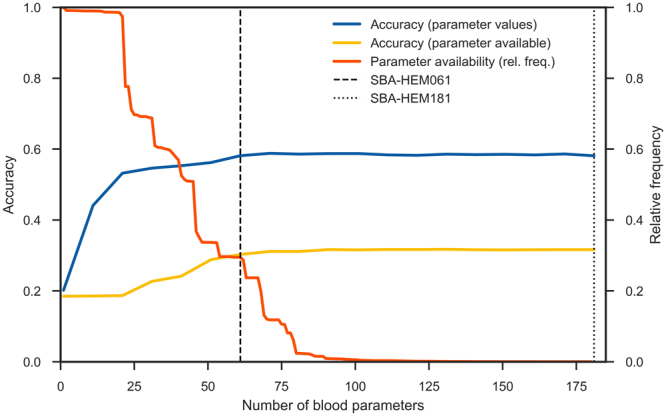
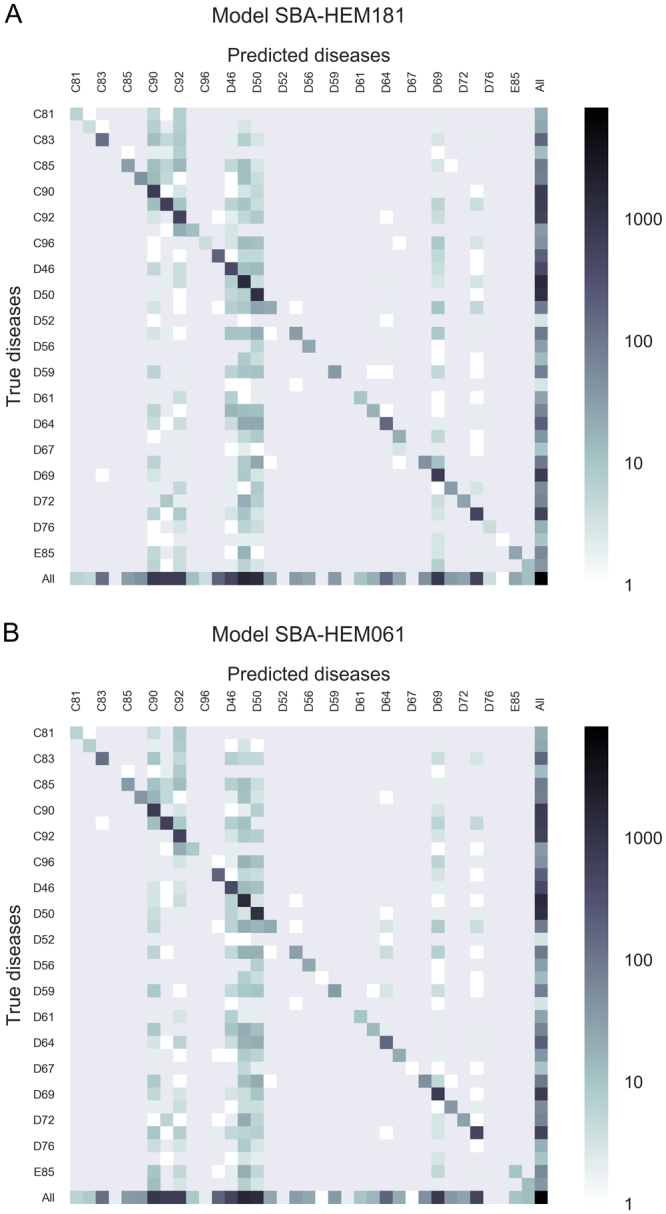
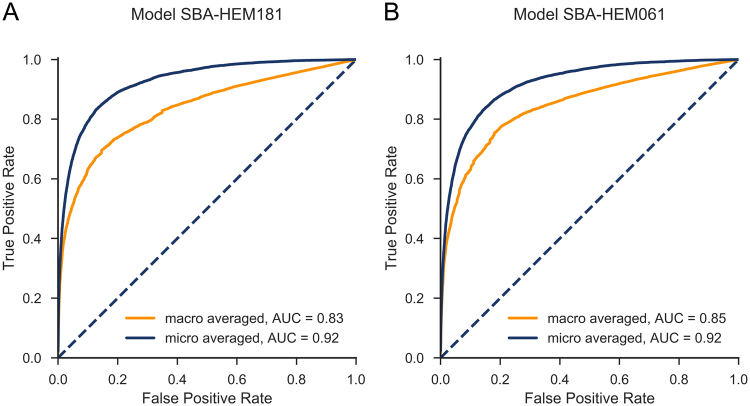
Quick and accurate medical diagnoses are crucial for the successful treatment of diseases. Using machine learning algorithms and based on laboratory blood test results, we have built two models to predict a haematologic disease. One predictive model used all the available blood test parameters and the other used only a reduced set that is usually measured upon patient admittance. Both models produced good results, obtaining prediction accuracies of 0.88 and 0.86 when considering the list of five most likely diseases and 0.59 and 0.57 when considering only the most likely disease. The models did not differ significantly, which indicates that a reduced set of parameters can represent a relevant "fingerprint" of a disease. This knowledge expands the model's utility for use by general practitioners and indicates that blood test results contain more information than physicians generally recognize. A clinical test showed that the accuracy of our predictive models was on par with that of haematology specialists. Our study is the first to show that a machine learning predictive model based on blood tests alone can be successfully applied to predict haematologic diseases. This result and could open up unprecedented possibilities for medical diagnosis.
快速准确的医学诊断对于疾病的成功治疗至关重要。我们使用机器学习算法并基于实验室血液检测结果,构建了两个预测血液病的模型。一个预测模型使用了所有可用的血液检测参数,另一个仅使用了通常在患者入院时测量的简化参数集。两个模型都取得了良好的效果,在考虑五个最可能的疾病列表时,预测准确率分别为 0.88 和 0.86,而仅考虑最可能的疾病时,预测准确率分别为 0.59 和 0.57。模型之间没有显著差异,这表明简化参数集可以代表疾病的相关“指纹”。这一知识扩展了模型在全科医生中的应用范围,并表明血液检测结果包含的信息比医生通常认识到的更多。临床测试表明,我们的预测模型的准确性与血液学专家相当。我们的研究首次表明,仅基于血液检测的机器学习预测模型可以成功应用于预测血液病。这一结果可能为医学诊断开辟前所未有的可能性。