Department of Food and Nutrition, Myongji University, Yongin, Gyeonggi, 449-728, Republic of Korea.
Department of Energy Science and Technology, Myongji University, Myongji, Gyeonggi, 449-728, Republic of Korea.
Sci Rep. 2018 Jan 11;8(1):547. doi: 10.1038/s41598-017-19033-y.
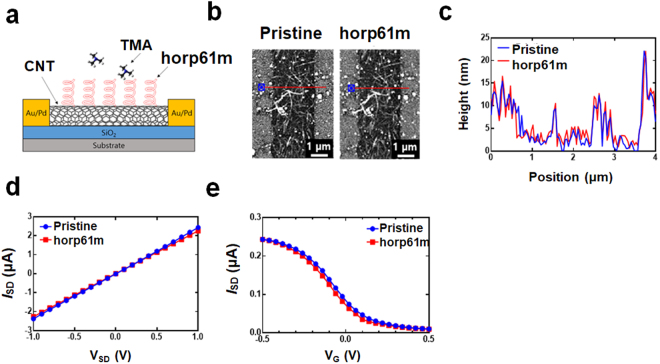
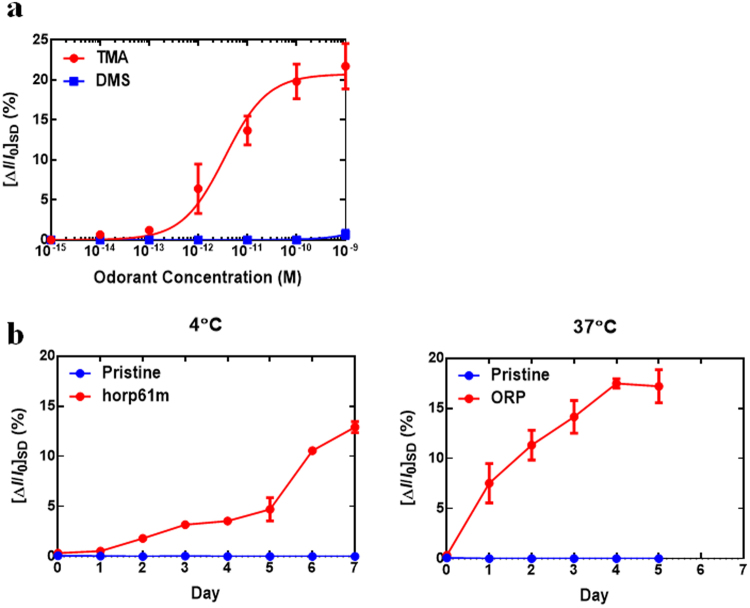
Because the freshness of seafood determines its consumer preference and food safety, the rapid monitoring of seafood deterioration is considered essential. However, the conventional analysis of seafood deterioration using chromatography instruments and bacterial colony counting depends on time-consuming and food-destructive treatments. In this study, we demonstrate a non-destructive and rapid food freshness monitoring system by a triangular study of sensory evaluation, gas chromatography-mass spectroscopy (GC-MS), and a bioelectronic nose. The sensory evaluation indicated that the acceptability and flavor deteriorated gradually during post-harvest storage (4 °C) for 6 days. The GC-MS analysis recognized the reduction of freshness by detecting a generation of dimethyl sulfide (DMS) from the headspace of oyster in a refrigerator (4 °C) at 4 days post-harvest. However, the bioelectronic nose incorporating human olfactory receptor peptides with the carbon nanotube field-effect transistor sensed trimethylamine (TMA) from the oyster at 2 days post-harvest with suggesting early recognition of oysters' quality and freshness deterioration. Given that the bacterial species producing DMS or TMA along with toxins were found in the oyster, the bacterial contamination-driven food deterioration is rapidly monitored using the bioelectronic nose with a targeted non-destructive freshness marker.
由于海鲜的新鲜度决定了其消费者的偏好和食品安全,因此快速监测海鲜的变质情况被认为是至关重要的。然而,传统的使用色谱仪器和细菌菌落计数来分析海鲜变质的方法,依赖于耗时且破坏食物的处理方式。在这项研究中,我们通过感官评估、气相色谱-质谱联用(GC-MS)和生物电子鼻的三角研究,展示了一种非破坏性和快速的食品新鲜度监测系统。感官评估表明,在收获后 6 天的冷藏(4°C)过程中,可接受性和风味逐渐恶化。GC-MS 分析通过检测冷藏(4°C)收获后 4 天牡蛎顶空二甲硫(DMS)的生成,识别出新鲜度的降低。然而,生物电子鼻结合了带有碳纳米管场效应晶体管的人类嗅觉受体肽,能够在收获后 2 天从牡蛎中检测到三甲胺(TMA),从而提前识别牡蛎的质量和新鲜度恶化。鉴于产生 DMS 或 TMA 以及毒素的细菌种类存在于牡蛎中,因此可以使用生物电子鼻快速监测由细菌污染驱动的食物变质情况,这种生物电子鼻具有针对性的非破坏性新鲜度标志物。