MRC Laboratory of Molecular Biology, Cambridge Biomedical Campus, Francis Crick Avenue, Cambridge CB2 0QH, UK.
Wellcome Trust Sanger Institute, Hinxton, Cambridge CB10 1SA, UK.
Nature. 2018 Jan 11;553(7687):171-177. doi: 10.1038/nature25154. Epub 2018 Jan 3.
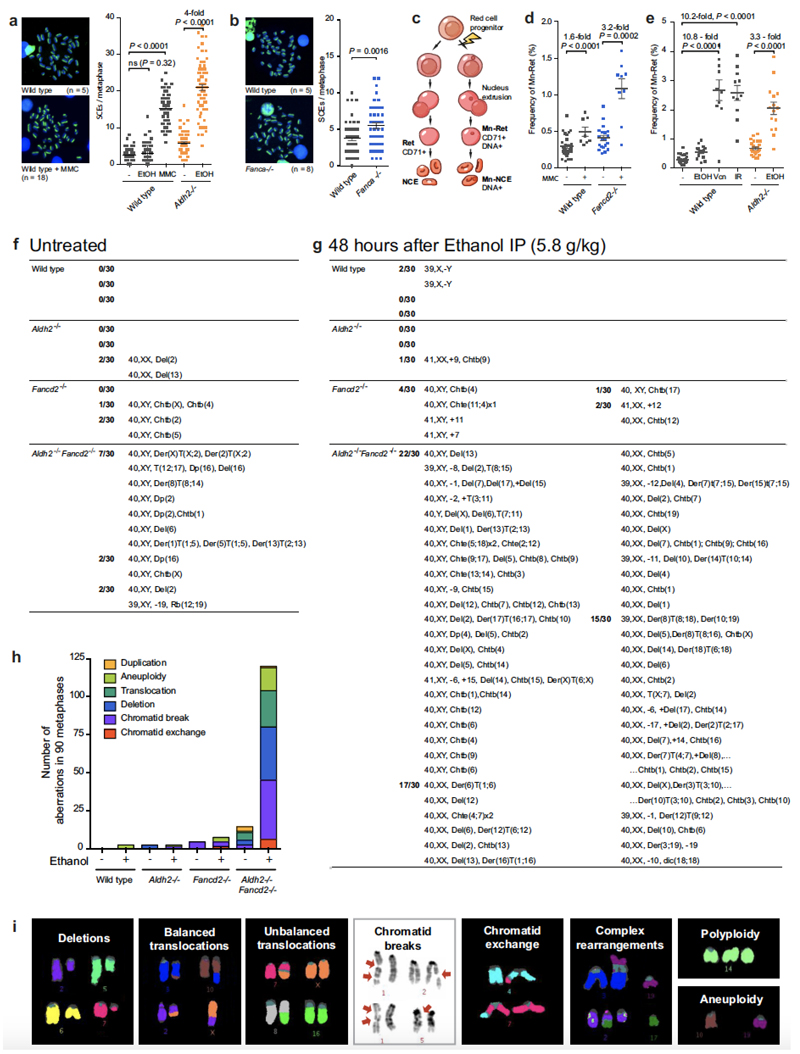
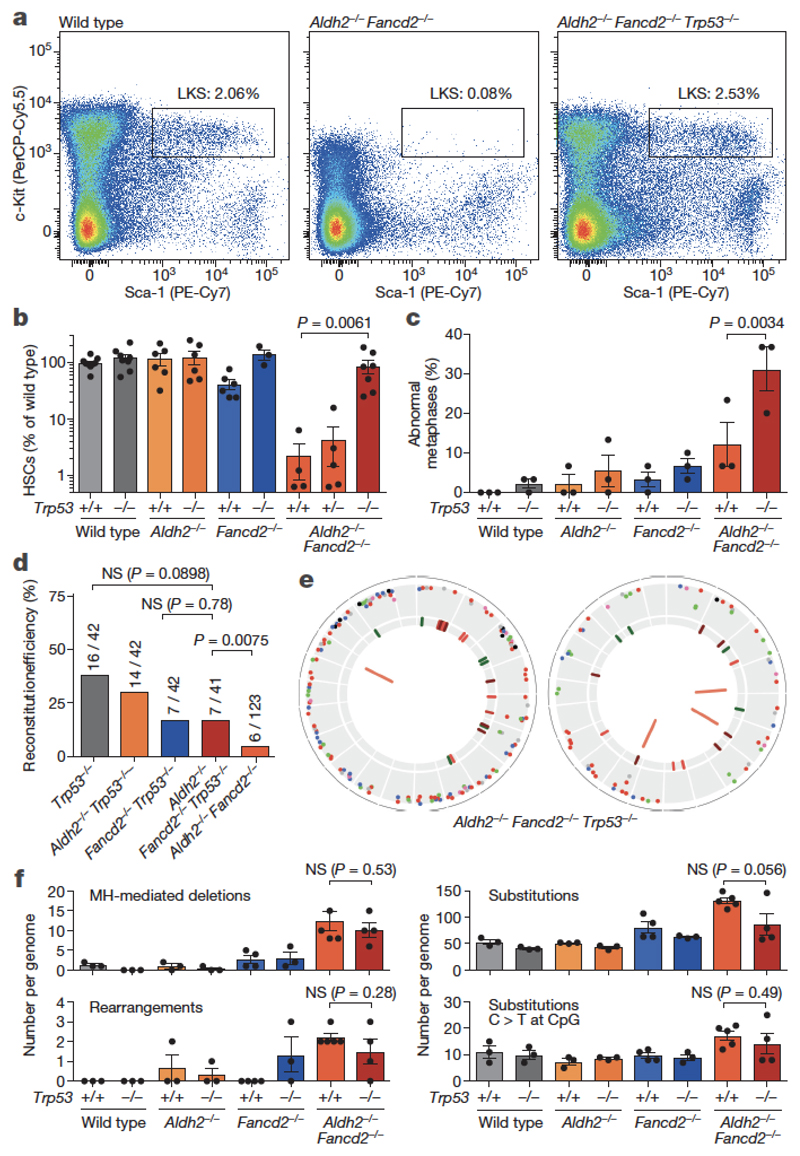
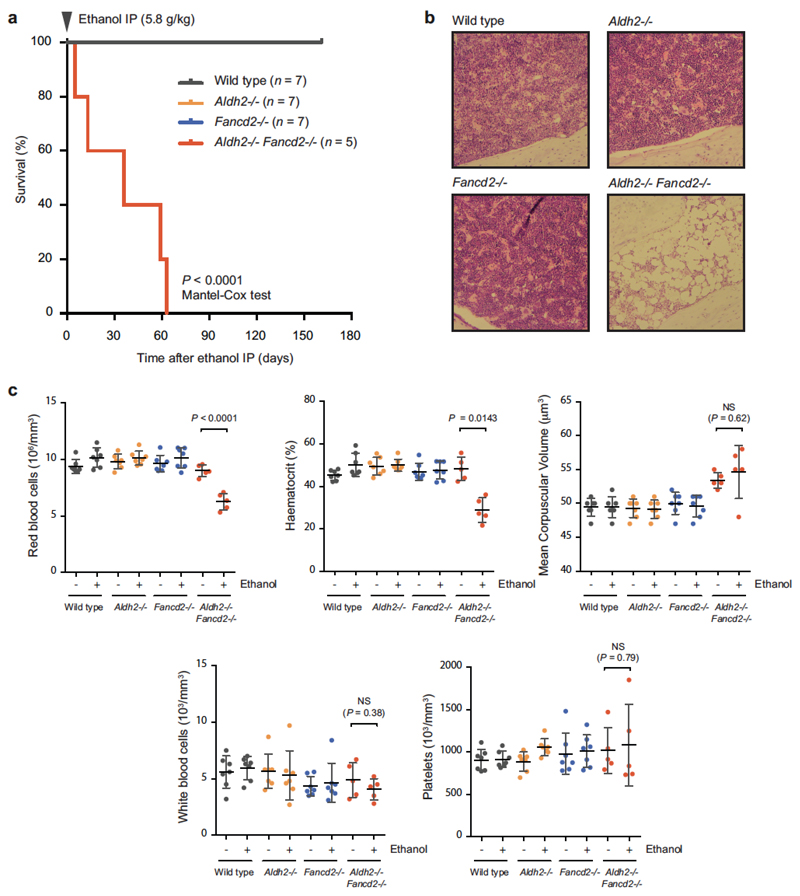
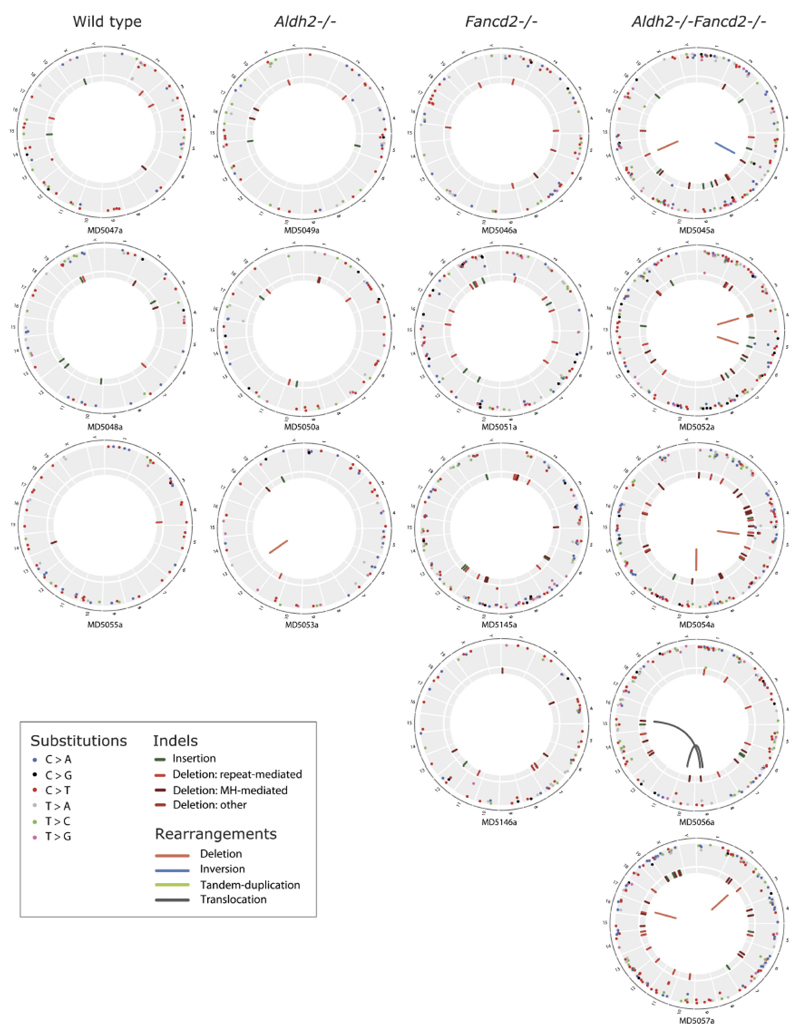
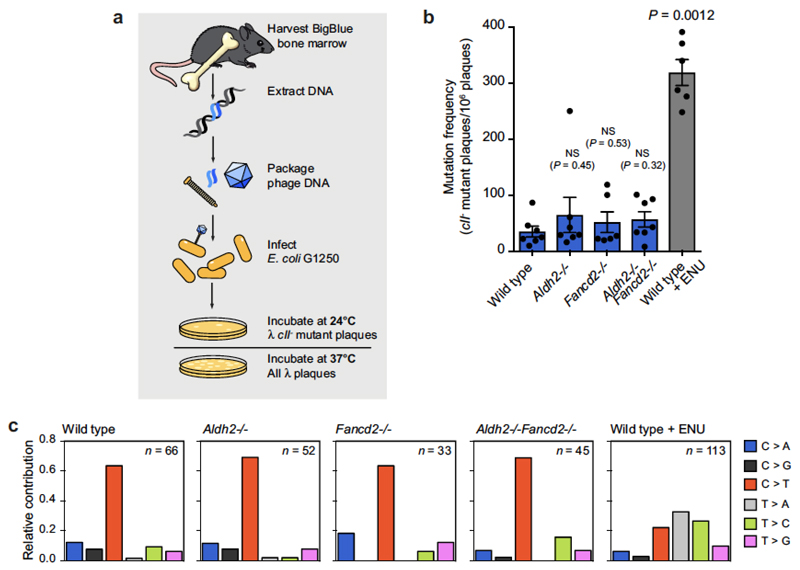
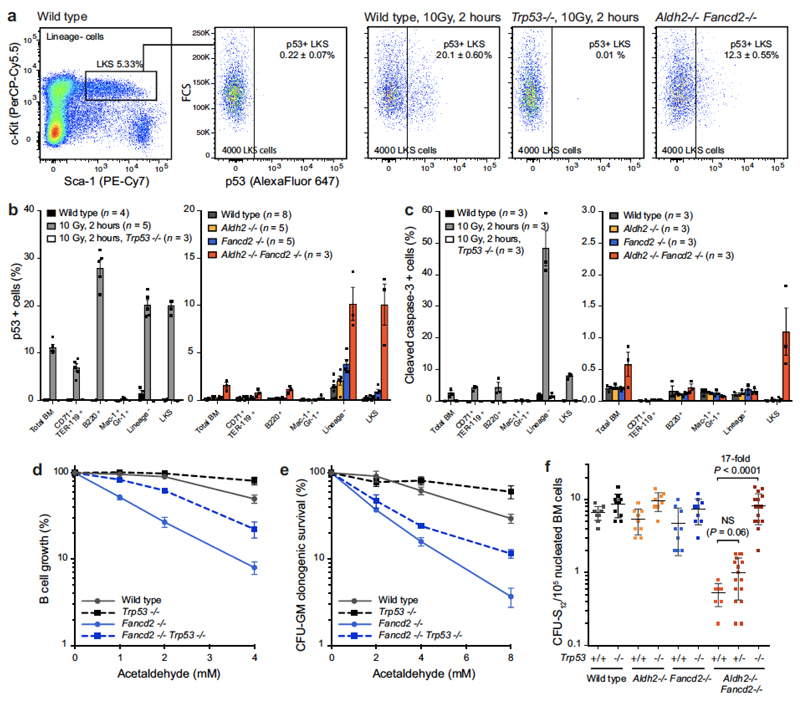
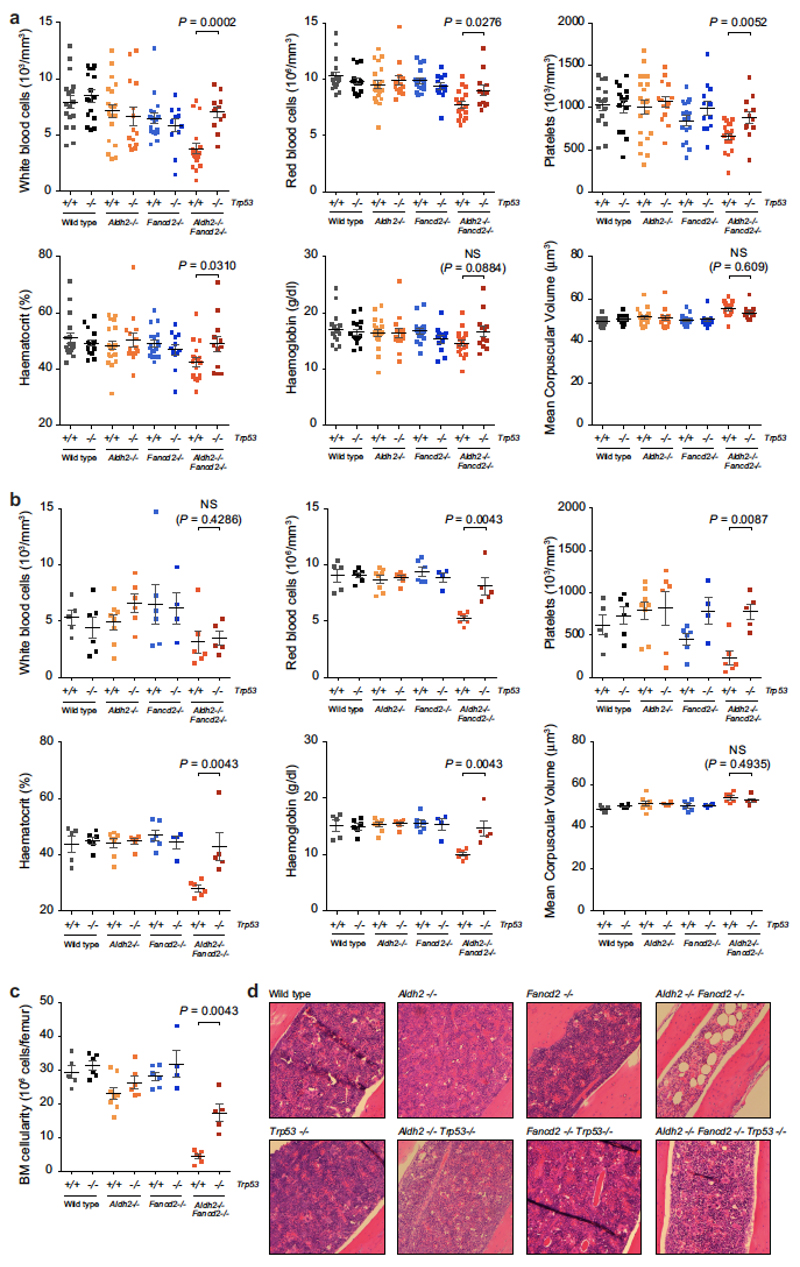
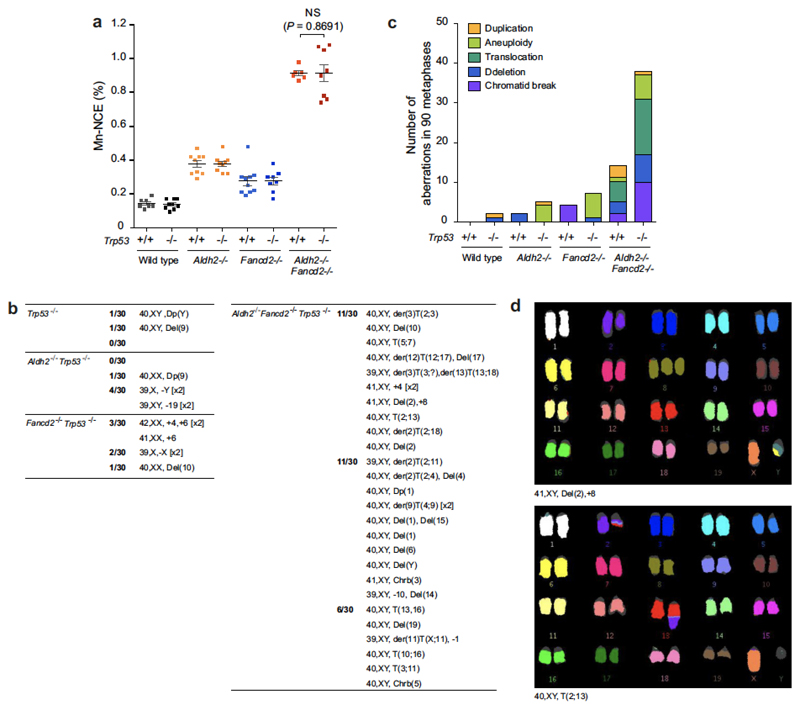
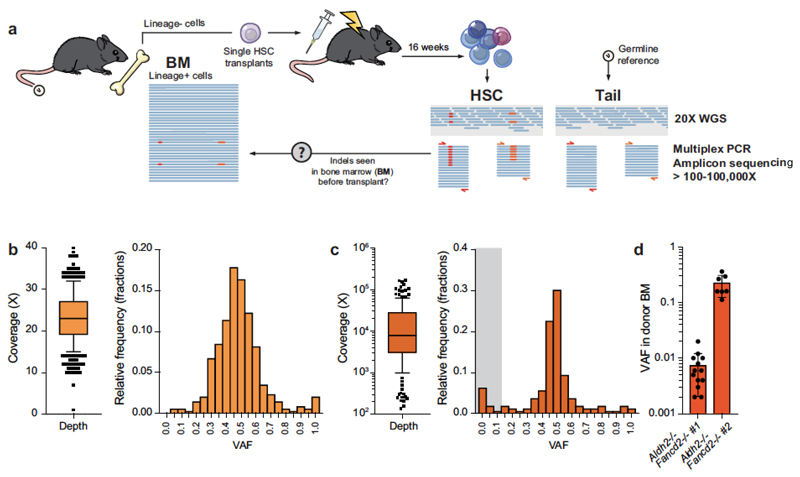
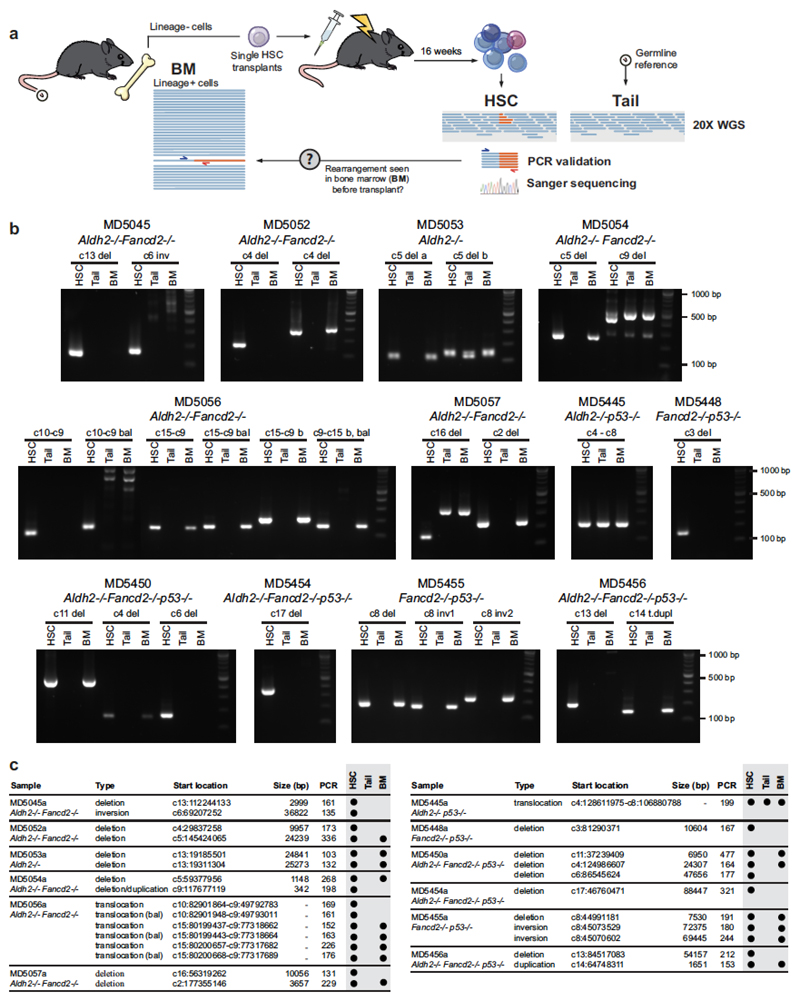
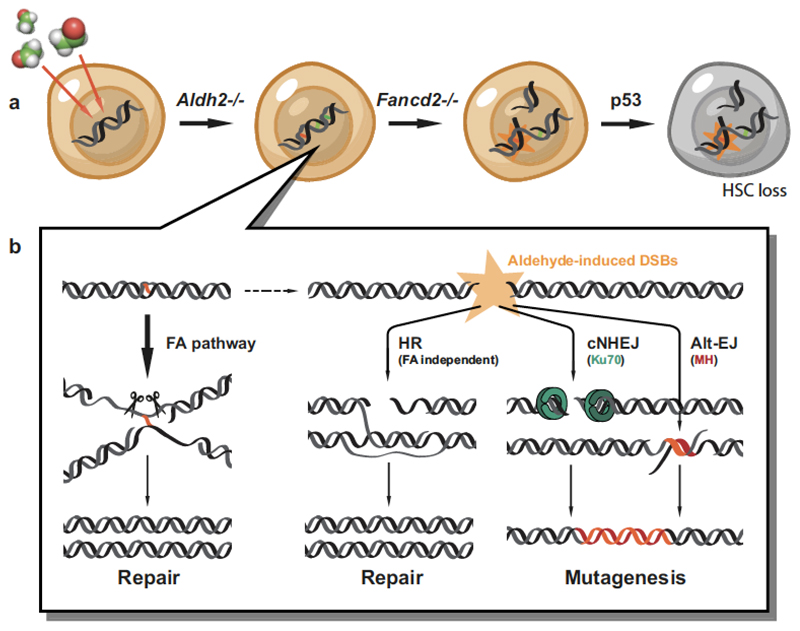
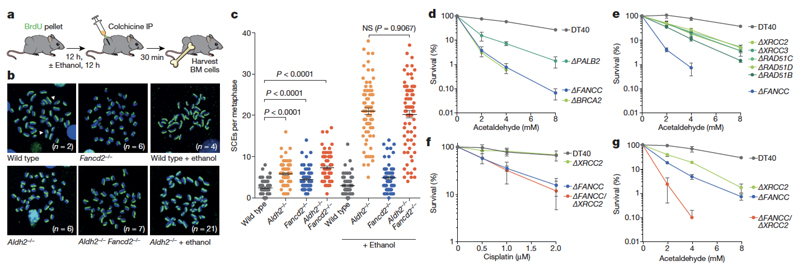
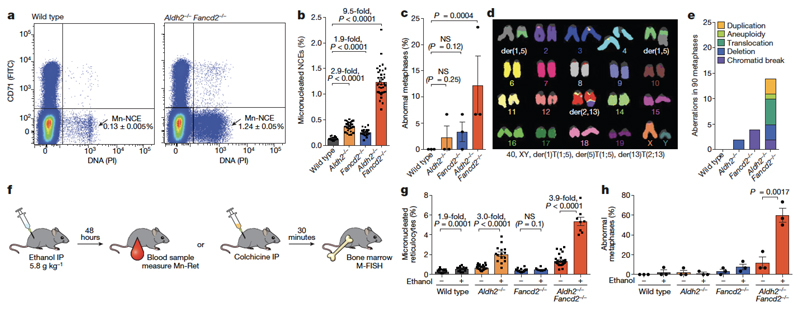
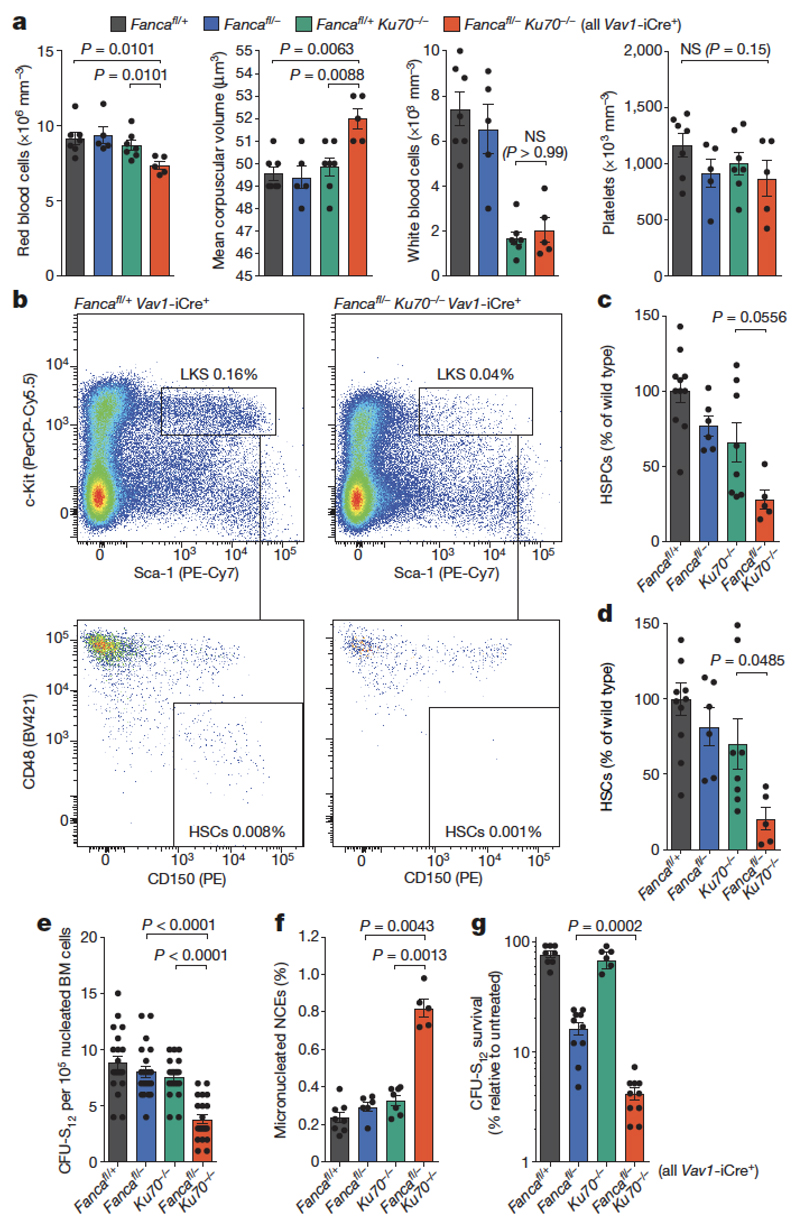
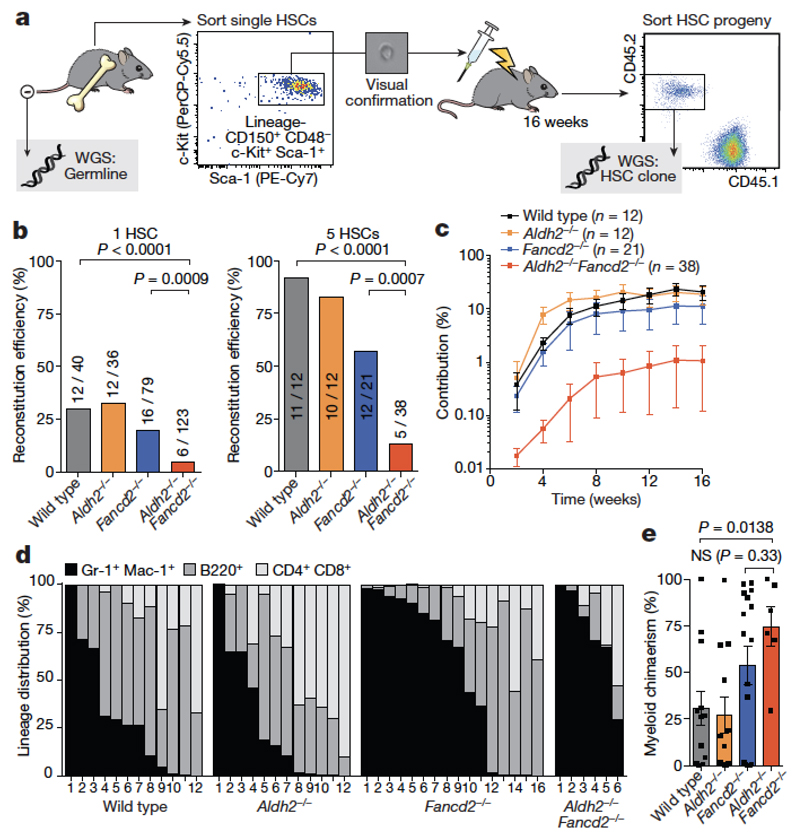
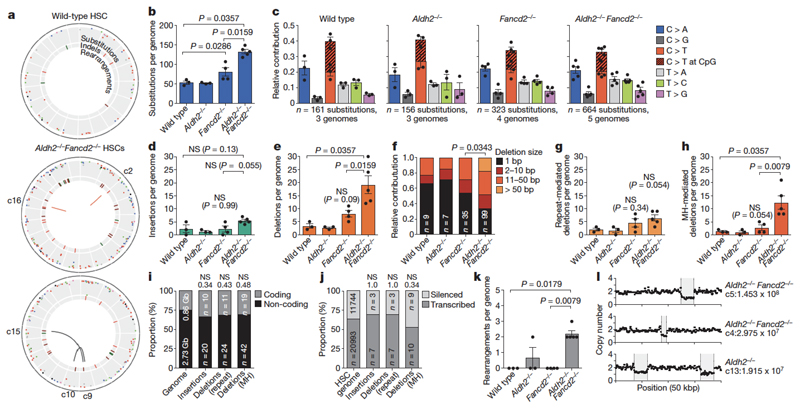
Haematopoietic stem cells renew blood. Accumulation of DNA damage in these cells promotes their decline, while misrepair of this damage initiates malignancies. Here we describe the features and mutational landscape of DNA damage caused by acetaldehyde, an endogenous and alcohol-derived metabolite. This damage results in DNA double-stranded breaks that, despite stimulating recombination repair, also cause chromosome rearrangements. We combined transplantation of single haematopoietic stem cells with whole-genome sequencing to show that this damage occurs in stem cells, leading to deletions and rearrangements that are indicative of microhomology-mediated end-joining repair. Moreover, deletion of p53 completely rescues the survival of aldehyde-stressed and mutated haematopoietic stem cells, but does not change the pattern or the intensity of genome instability within individual stem cells. These findings characterize the mutation of the stem-cell genome by an alcohol-derived and endogenous source of DNA damage. Furthermore, we identify how the choice of DNA-repair pathway and a stringent p53 response limit the transmission of aldehyde-induced mutations in stem cells.
造血干细胞更新血液。这些细胞中 DNA 损伤的积累会促进其衰退,而损伤的错误修复则会引发恶性肿瘤。在这里,我们描述了内源性和酒精衍生代谢物乙醛引起的 DNA 损伤的特征和突变特征。这种损伤会导致 DNA 双链断裂,尽管会刺激重组修复,但也会导致染色体重排。我们将单个造血干细胞的移植与全基因组测序相结合,表明这种损伤发生在干细胞中,导致微同源介导的末端连接修复的缺失和重排。此外,p53 的缺失完全挽救了应激和突变的造血干细胞的存活,但不会改变单个干细胞内基因组不稳定性的模式或强度。这些发现描述了由酒精衍生和内源性 DNA 损伤源引起的干细胞基因组突变。此外,我们确定了 DNA 修复途径的选择和严格的 p53 反应如何限制在干细胞中传递乙醛诱导的突变。