Zarski Anna-Carlotta, Berking Matthias, Reis Dorota, Lehr Dirk, Buntrock Claudia, Schwarzer Ralf, Ebert David Daniel
Friedrich-Alexander-University Erlangen-Nürnberg, Erlangen, Germany.
Leuphana University Lüneburg, Lüneburg, Germany.
J Med Internet Res. 2018 Jan 11;20(1):e9. doi: 10.2196/jmir.8814.
Many individuals engaging in Internet-based interventions fail to complete these treatments as intended. The processes responsible for treatment adherence in Internet-based interventions are still poorly understood.
The aim of this study was to investigate to what extent adherence in an Internet-based intervention can be predicted by motivational and volitional factors outlined in the health action process approach (HAPA).
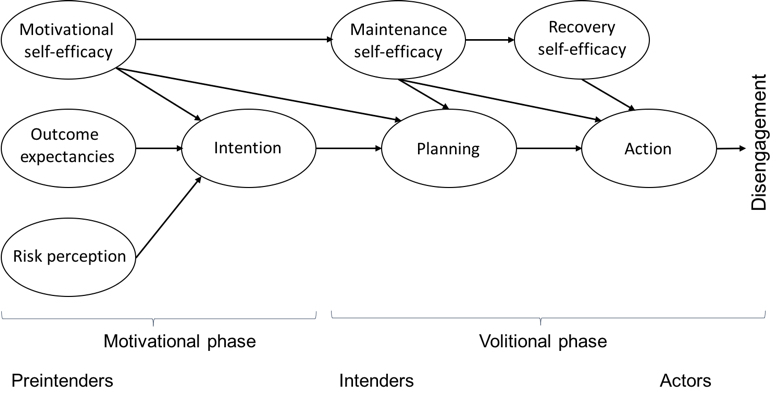
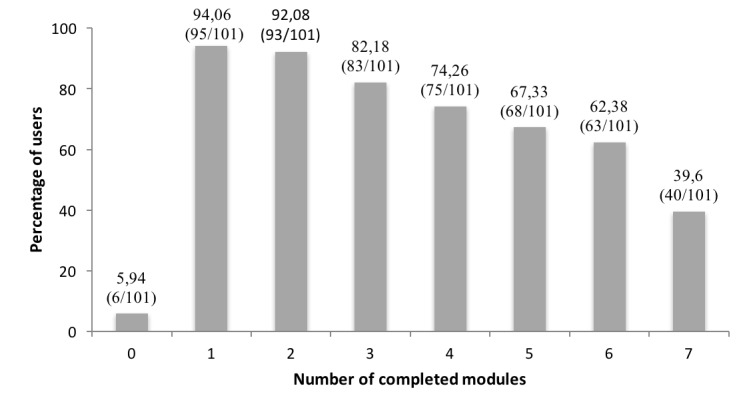
This study investigated motivational and volitional factors included in HAPA in a randomized controlled trial to predict treatment adherence of N=101 individuals with subclinical depression in the intervention group of a depression prevention intervention (GET.ON Mood Enhancer). Adherence was operationalized as the number of completed treatment modules. Using longitudinal structural equation modeling, HAPA variables (motivational, maintenance, and recovery self-efficacy, outcome expectancies, intention, and planning) were assessed at baseline and their associations with adherence 7 weeks later.
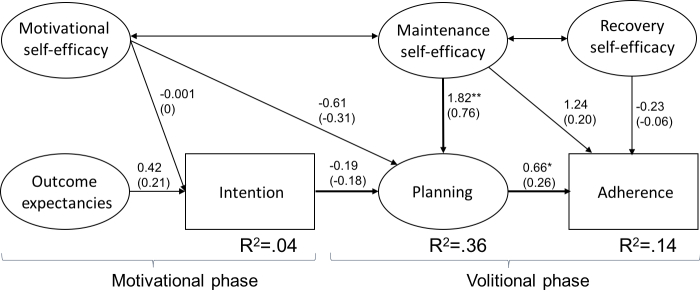
Planning predicted adherence. Better planning was, in turn, associated with higher levels of maintenance self-efficacy, and the latter significantly affected treatment adherence via planning. The other hypothesized direct associations were not significant. In total, the HAPA variables accounted for 14% of variance in treatment adherence.
Planning emerged as the strongest predictor of treatment adherence in highly motivated participants in an Internet-based intervention out of all HAPA variables investigated. Findings are in line with the hypothesis that planning facilitates the translation of good intentions into actions. The findings imply that systematically fostering planning skills and maintenance self-efficacy prior to or during Internet-based interventions would help participants to successfully complete these treatments.
German Clinical Trials Register DRKS00005973; https://www.drks.de/drks_web/navigate.do? navigationId=trial.HTML&TRIAL_ID=DRKS00005973 (Archived by WebCite at http://www.webcitation.org/6uxCy64sy).
许多参与基于互联网干预措施的人未能按预期完成这些治疗。基于互联网的干预措施中治疗依从性的相关过程仍未得到充分理解。
本研究旨在调查健康行动过程方法(HAPA)中概述的动机和意志因素在多大程度上可以预测基于互联网干预措施的依从性。
本研究在一项随机对照试验中调查了HAPA中包含的动机和意志因素,以预测抑郁症预防干预(GET.ON情绪增强剂)干预组中N = 101名亚临床抑郁症患者的治疗依从性。依从性通过完成的治疗模块数量来衡量。使用纵向结构方程模型,在基线时评估HAPA变量(动机、维持和恢复自我效能、结果期望、意图和计划),并评估它们与7周后依从性的关联。
计划可预测依从性。反过来,更好的计划与更高水平的维持自我效能相关,而维持自我效能又通过计划显著影响治疗依从性。其他假设的直接关联不显著。总体而言,HAPA变量占治疗依从性方差的14%。
在所有调查的HAPA变量中,计划是基于互联网干预措施中积极性高的参与者治疗依从性的最强预测因素。研究结果符合计划有助于将良好意图转化为行动的假设。研究结果表明,在基于互联网的干预措施之前或期间系统地培养计划技能和维持自我效能将有助于参与者成功完成这些治疗。
德国临床试验注册中心DRKS00005973;https://www.drks.de/drks_web/navigate.do?navigationId=trial.HTML&TRIAL_ID=DRKS00005973(由WebCite存档于http://www.webcitation.org/6uxCy64sy)