Division of Experimental Oncology, IRCCS San Raffaele Scientific Institute, Milan, Italy.
Pathology Unit, IRCCS San Raffaele Scientific Institute, Milan, Italy.
Haematologica. 2018 Apr;103(4):707-716. doi: 10.3324/haematol.2017.167486. Epub 2018 Jan 11.
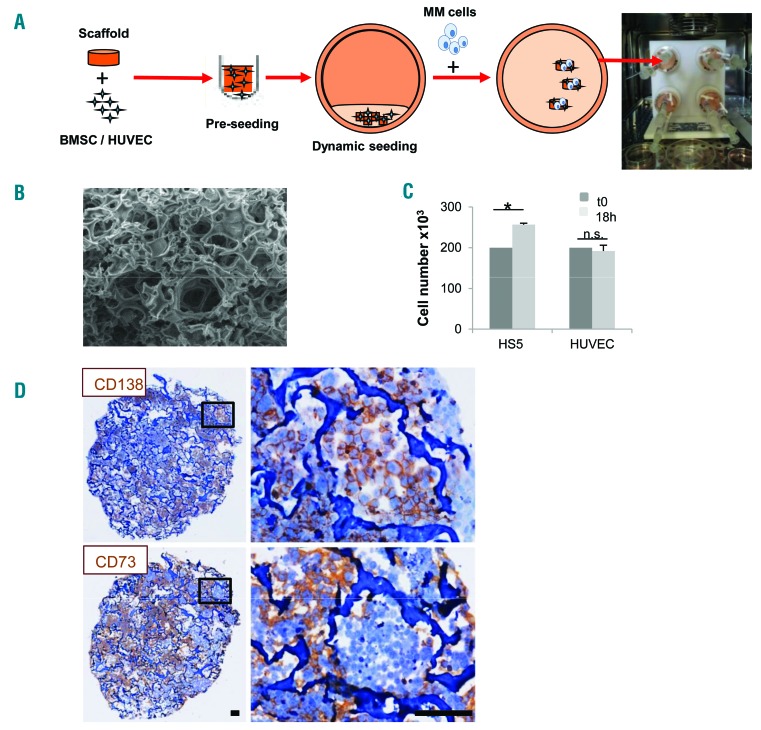
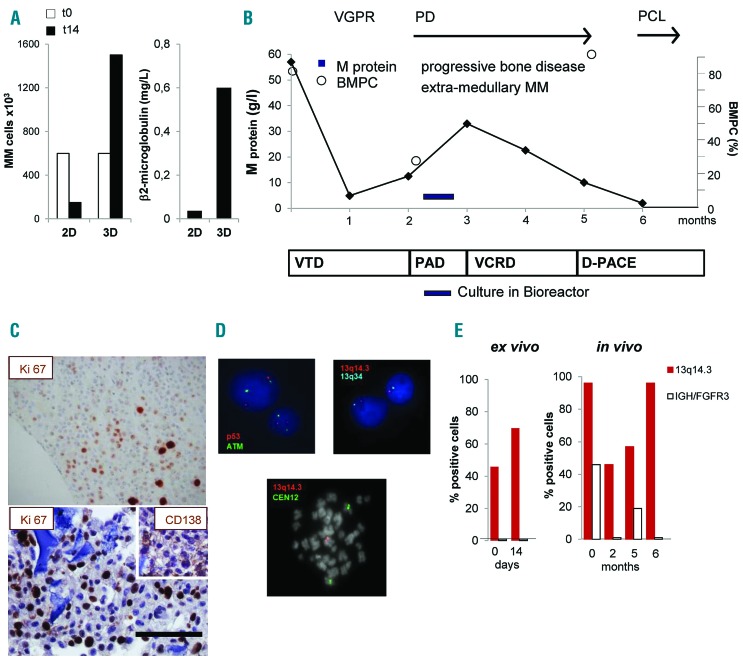
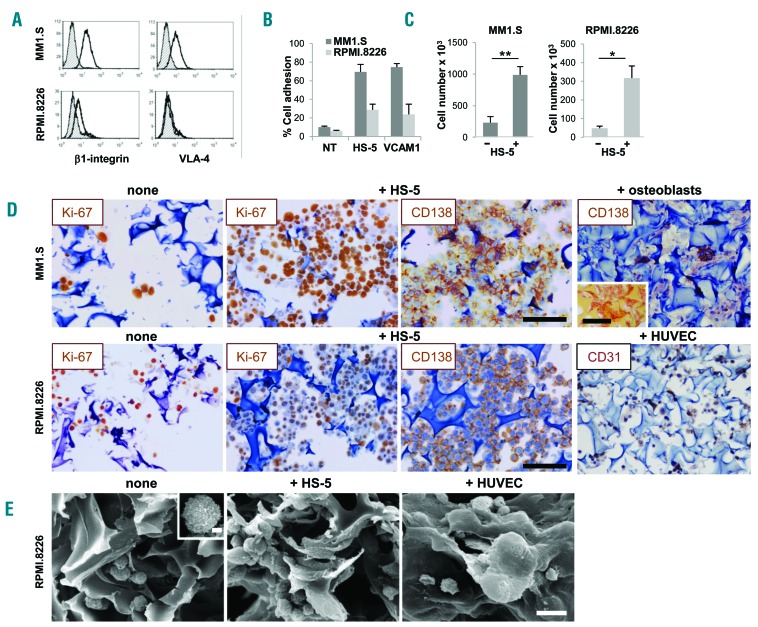
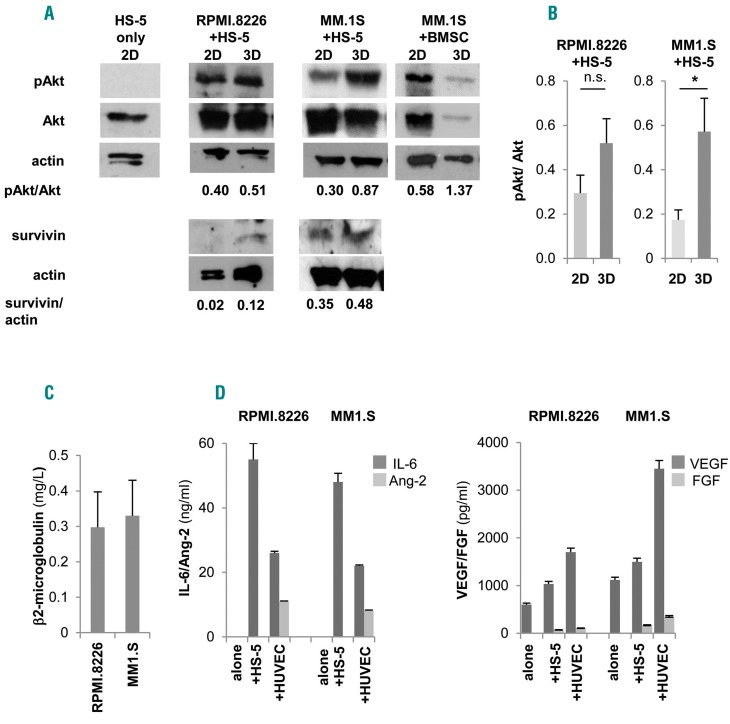
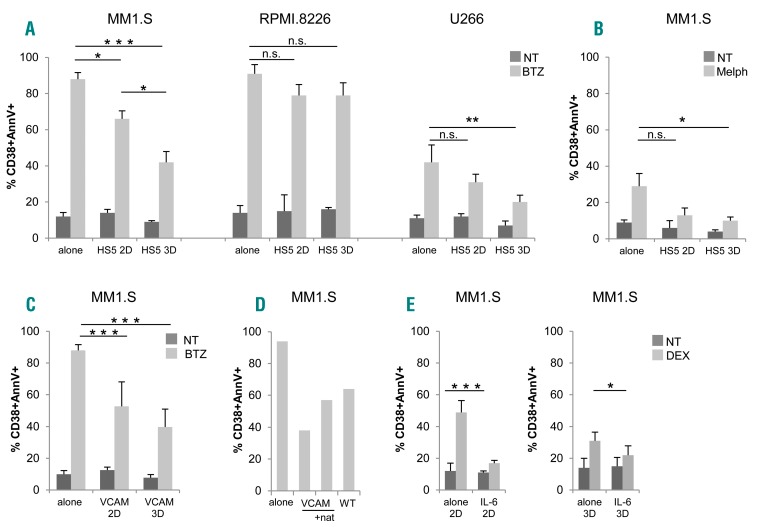
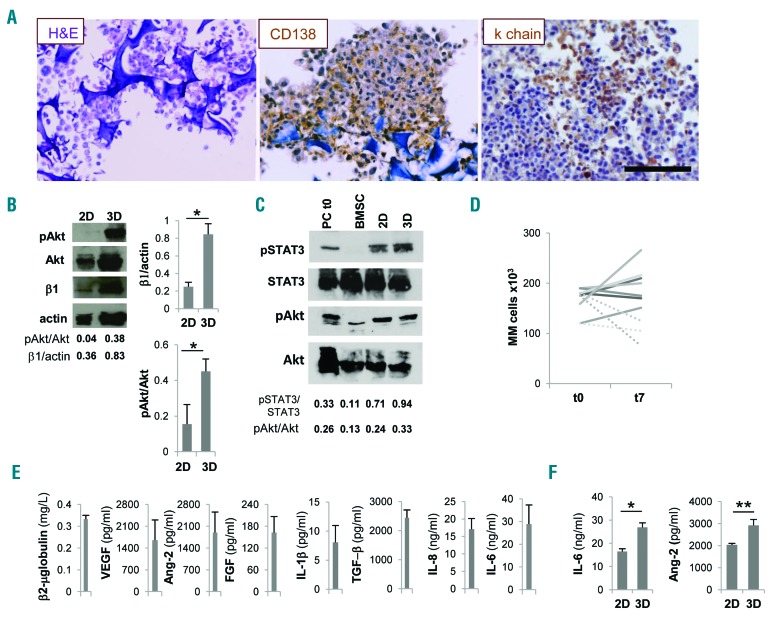
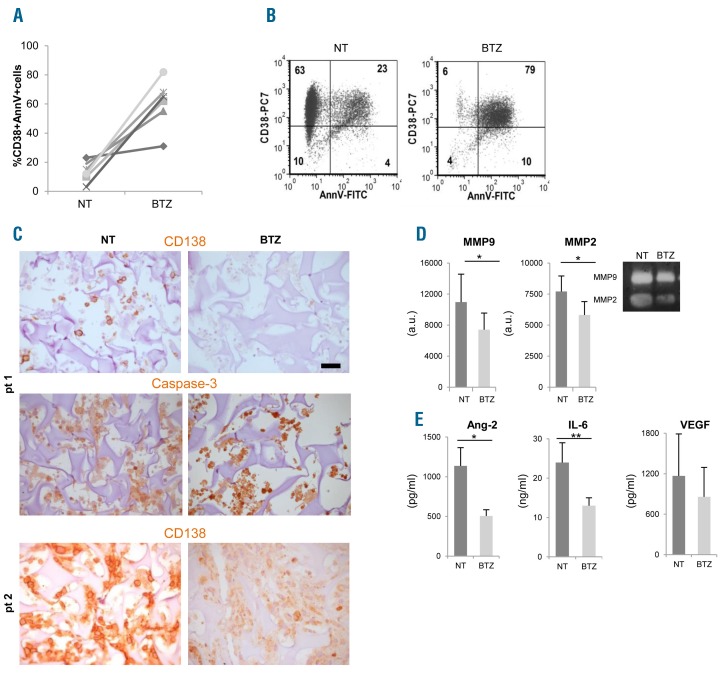
Multiple myeloma develops primarily inside the bone marrow microenvironment, that confers pro-survival signals and drug resistance. 3D cultures that reproduce multiple myeloma-bone marrow interactions are needed to fully investigate multiple myeloma pathogenesis and response to drugs. To this purpose, we exploited the 3D Rotary Cell Culture System bioreactor technology for myeloma-bone marrow co-cultures in gelatin scaffolds. The model was validated with myeloma cell lines that, as assessed by histochemical and electron-microscopic analyses, engaged contacts with stromal cells and endothelial cells. Consistently, pro-survival signaling and also cell adhesion-mediated drug resistance were significantly higher in 3D than in 2D parallel co-cultures. The contribution of the VLA-4/VCAM1 pathway to resistance to bortezomib was modeled by the use of VCAM1 transfectants. Soluble factor-mediated drug resistance could be also demonstrated in both 2D and 3D co-cultures. The system was then successfully applied to co-cultures of primary myeloma cells-primary myeloma bone marrow stromal cells from patients and endothelial cells, allowing the development of functional myeloma-stroma interactions and MM cell long-term survival. Significantly, genomic analysis performed in a high-risk myeloma patient demonstrated that culture in bioreactor paralleled the expansion of the clone that ultimately dominated Finally, the impact of bortezomib on myeloma cells and on specialized functions of the microenvironment could be evaluated. Our findings indicate that 3D dynamic culture of reconstructed human multiple myeloma microenvironments in bioreactor may represent a useful platform for drug testing and for studying tumor-stroma molecular interactions.
多发性骨髓瘤主要在骨髓微环境中发展,该环境赋予了生存信号和耐药性。需要 3D 培养物来复制多发性骨髓瘤-骨髓相互作用,以充分研究多发性骨髓瘤的发病机制和对药物的反应。为此,我们利用 3D 旋转细胞培养系统生物反应器技术在明胶支架中进行骨髓瘤-骨髓共培养。通过组织化学和电子显微镜分析评估,该模型得到了骨髓瘤细胞系的验证,这些细胞系与基质细胞和内皮细胞发生了接触。一致地,3D 培养物中的生存信号和细胞黏附介导的耐药性明显高于 2D 平行共培养物。通过使用 VCAM1 转染细胞来模拟 VLA-4/VCAM1 途径对硼替佐米的耐药性。在 2D 和 3D 共培养物中也可以证明可溶性因子介导的耐药性。该系统随后成功地应用于原代骨髓瘤细胞-患者原代骨髓瘤骨髓基质细胞和内皮细胞的共培养物,允许功能性骨髓瘤-基质相互作用和 MM 细胞的长期存活。重要的是,在高危骨髓瘤患者中进行的基因组分析表明,在生物反应器中培养与最终主导的克隆的扩增平行。最后,可以评估硼替佐米对骨髓瘤细胞和微环境的特殊功能的影响。我们的研究结果表明,在生物反应器中重建的人类多发性骨髓瘤微环境的 3D 动态培养可能代表药物测试和研究肿瘤-基质分子相互作用的有用平台。