Kennedy Institute of Rheumatology and Medical Research Council Human Immunology Unit, Weatherall Institute of Molecular Medicine, University of Oxford, Oxford, England, UK
Kennedy Institute of Rheumatology and Medical Research Council Human Immunology Unit, Weatherall Institute of Molecular Medicine, University of Oxford, Oxford, England, UK.
J Exp Med. 2018 Feb 5;215(2):399-413. doi: 10.1084/jem.20170771. Epub 2018 Jan 11.
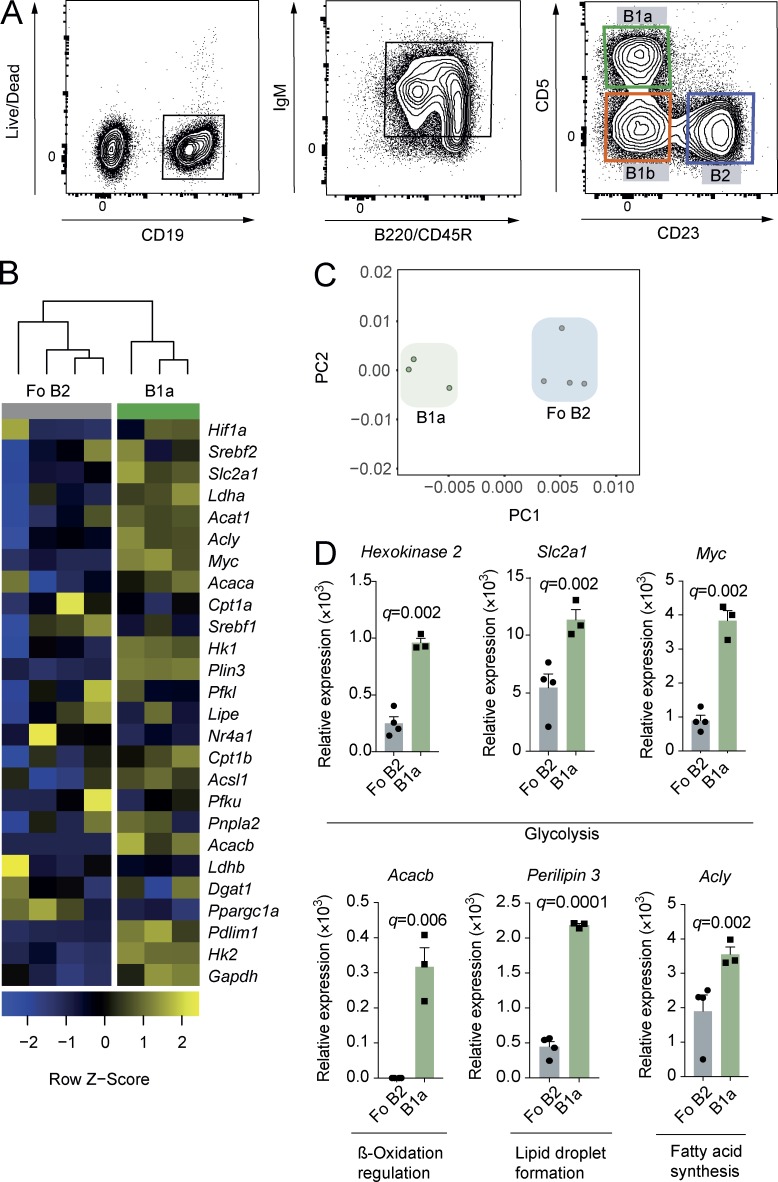
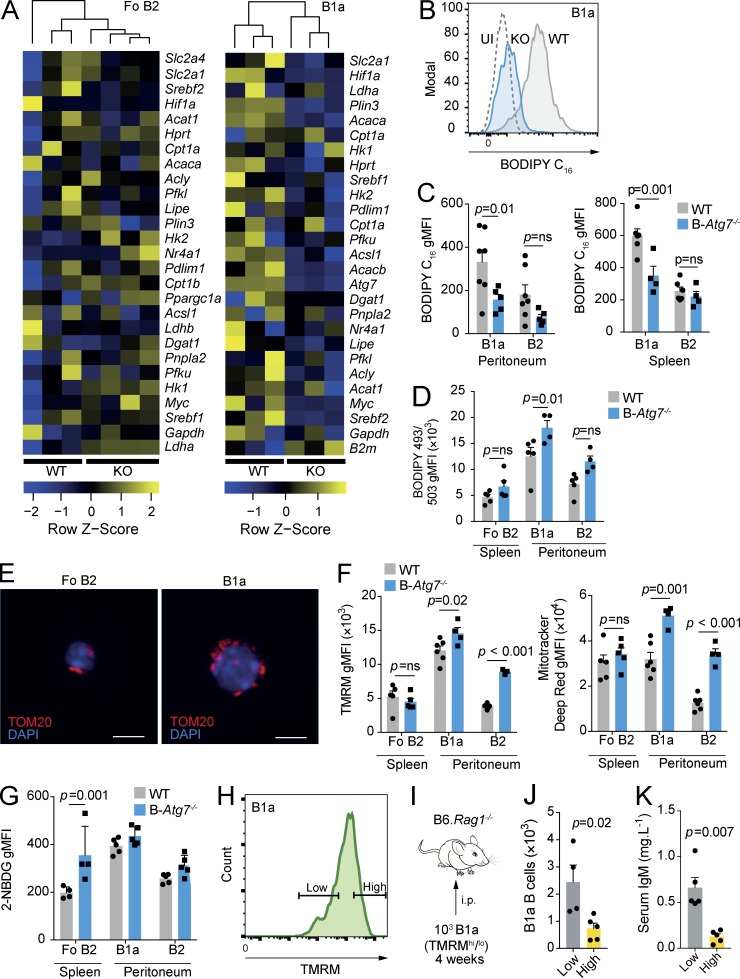
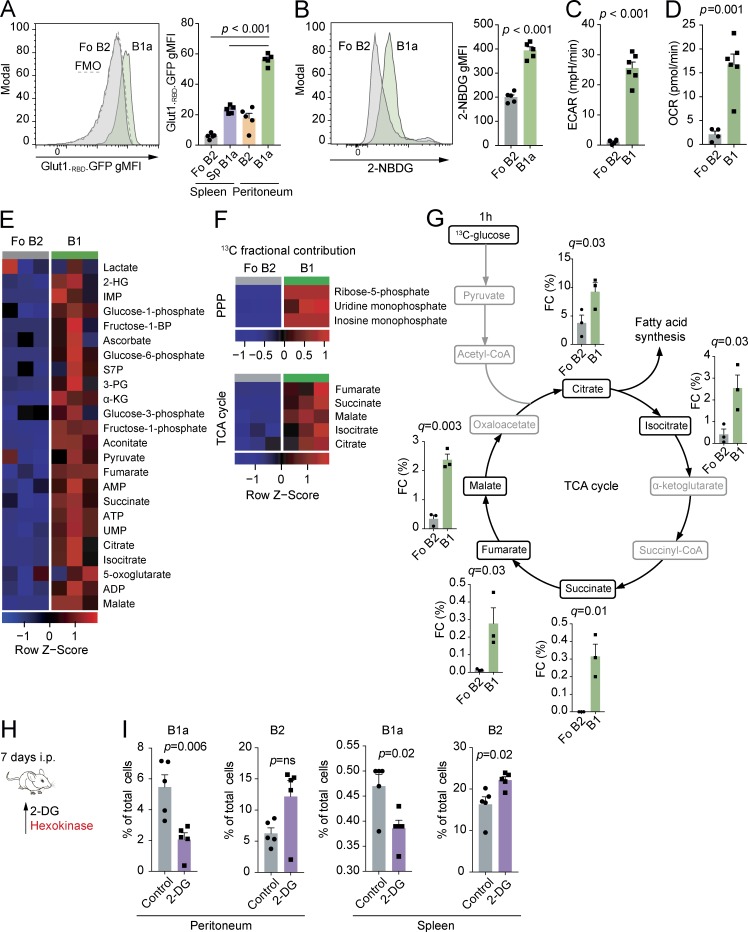
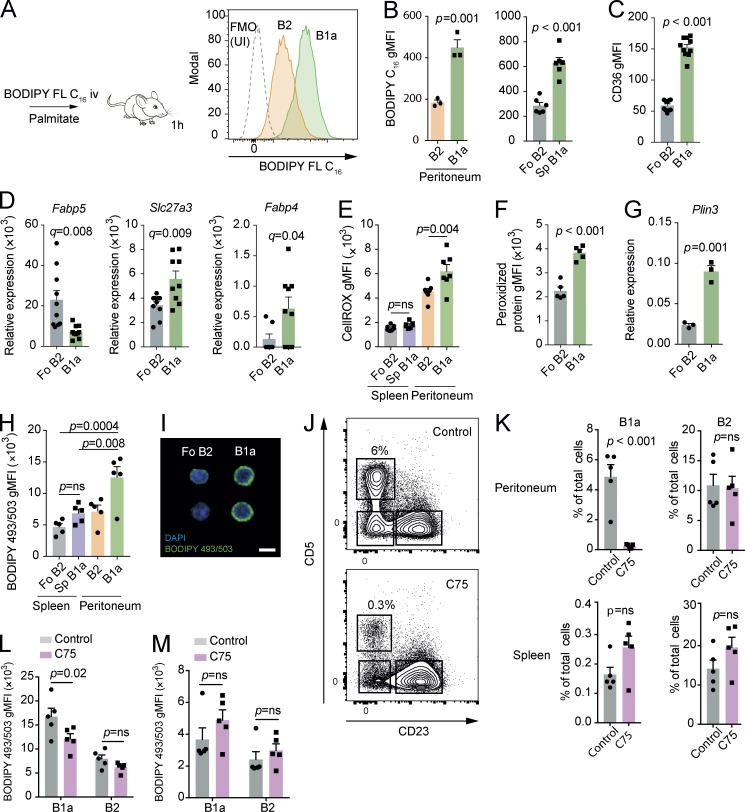
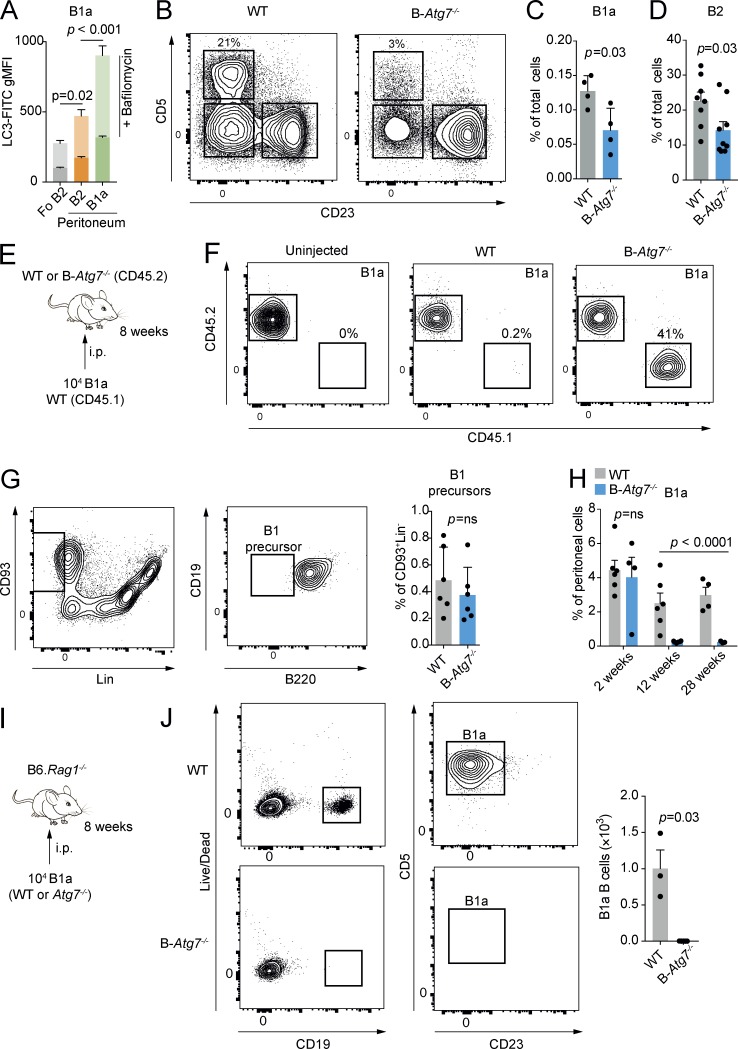
Specific metabolic programs are activated by immune cells to fulfill their functional roles, which include adaptations to their microenvironment. B1 B cells are tissue-resident, innate-like B cells. They have many distinct properties, such as the capacity to self-renew and the ability to rapidly respond to a limited repertoire of epitopes. The metabolic pathways that support these functions are unknown. We show that B1 B cells are bioenergetically more active than B2 B cells, with higher rates of glycolysis and oxidative phosphorylation, and depend on glycolysis. They acquire exogenous fatty acids and store lipids in droplet form. Autophagy is differentially activated in B1a B cells, and deletion of the autophagy gene leads to a selective loss of B1a B cells caused by a failure of self-renewal. Autophagy-deficient B1a B cells down-regulate critical metabolic genes and accumulate dysfunctional mitochondria. B1 B cells, therefore, have evolved a distinct metabolism adapted to their residence and specific functional properties.
免疫细胞激活特定的代谢程序以履行其功能作用,包括适应其微环境。B1 B 细胞是组织驻留的先天样 B 细胞。它们具有许多独特的特性,例如自我更新的能力和对有限表位库快速响应的能力。支持这些功能的代谢途径尚不清楚。我们表明,B1 B 细胞比 B2 B 细胞具有更高的生物能量活性,具有更高的糖酵解和氧化磷酸化速率,并依赖糖酵解。它们摄取外源性脂肪酸并以液滴形式储存脂质。自噬在 B1a B 细胞中被差异激活,并且自噬基因的缺失导致 B1a B 细胞的选择性缺失,这是由于自我更新失败所致。自噬缺陷的 B1a B 细胞下调关键代谢基因并积累功能失调的线粒体。因此,B1 B 细胞已经进化出一种适应其驻留和特定功能特性的独特代谢。