Skalsky Jarkander M, Grindefjord M, Carlstedt K
Department of Pediatric Dentistry, Public Dental Service, Stockholm, Sweden.
Divisions of Pediatric Dentistry, Department of Dental Medicine, Karolinska Institutet, Solna, Sweden.
Eur Arch Paediatr Dent. 2018 Feb;19(1):23-31. doi: 10.1007/s40368-017-0317-5. Epub 2018 Jan 11.
To investigate the prevalence and risk factors of dental erosion (DE) among a group of adolescents in Stockholm County.
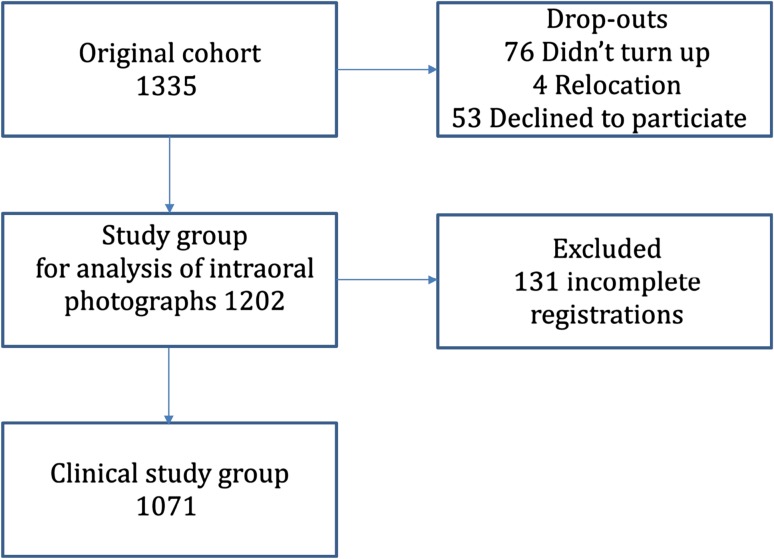
This cross sectional cohort study was conducted at three clinics of the Public Dental Service in Stockholm County. Fifteen and 17 year old adolescents (1335) who scheduled their regular dental health examination were asked to participate. After drop-outs a sample of 1071 individuals, 547 males and 524 females were enrolled in the study. Presence of erosive wear was diagnosed (yes/no) on marker teeth by trained dentists/dental hygienists and photographs were taken. The adolescents answered a questionnaire regarding oral symptoms, dietary and behavioural factors. Two calibrated specialist dentists performed evaluation of the photographs for severity of DE using a modified version of the Simplified Erosion Partial Recording System (SEPRS).
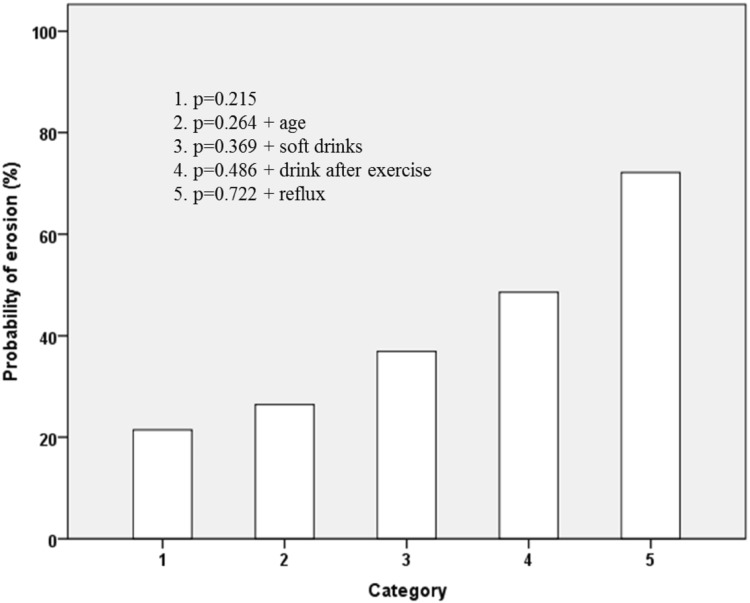
DE was clinically diagnosed in 28.3% of 15 years old and 34.3% of 17 years old. Severe erosive wear (grade 3 and 4 according to SEPRS) was found in 18.3% of the adolescents based upon the intra-oral photographs. DE was more prevalent and severe among males than females. Clinically diagnosed erosive lesions correlated significantly with soft drink consumption (p < 0.001), the use of juice or sport drinks as a thirst quencher after exercise (p = 0.006) and tooth hypersensitivity when eating and drinking (p = 0.012). Furthermore, self-assessed gastric reflux was a factor strongly associated with DE (p < 0.001).
The study indicated that DE was common among adolescents in Stockholm County and associated with both internal and external risk factors.
调查斯德哥尔摩郡一组青少年中牙侵蚀(DE)的患病率及危险因素。
这项横断面队列研究在斯德哥尔摩郡公共牙科服务的三家诊所进行。邀请计划进行常规牙齿健康检查的15岁和17岁青少年(共1335名)参与。剔除退出者后,研究纳入了1071名个体,其中男性547名,女性524名。由训练有素的牙医/口腔保健员对标记牙进行侵蚀性磨损诊断(是/否)并拍照。青少年回答了一份关于口腔症状、饮食和行为因素的问卷。两名经过校准的专科牙医使用改良版简化侵蚀部分记录系统(SEPRS)对照片进行DE严重程度评估。
15岁青少年中28.3%临床诊断为DE,17岁青少年中为34.3%。根据口腔内照片,18.3%的青少年存在严重侵蚀性磨损(根据SEPRS为3级和4级)。男性的DE比女性更普遍且更严重。临床诊断的侵蚀性病变与软饮料消费(p<0.001)、运动后用果汁或运动饮料解渴(p=0.006)以及饮食时牙齿过敏(p=0.012)显著相关。此外,自我评估的胃食管反流是与DE密切相关的一个因素(p<0.001)。
该研究表明,DE在斯德哥尔摩郡青少年中很常见,且与内在和外在危险因素相关。