Xiao Ran, Shida-Tokeshi Joanne, Vanderbilt Douglas L, Smith Beth A
Division of Biokinesiology and Physical Therapy, University of Southern California, Los Angeles, California, United States of America.
Department of Pediatrics, Division of General Pediatrics, Keck School of Medicine, University of Southern California, Los Angeles, California, United States of America.
PLoS One. 2018 Jan 12;13(1):e0190276. doi: 10.1371/journal.pone.0190276. eCollection 2018.
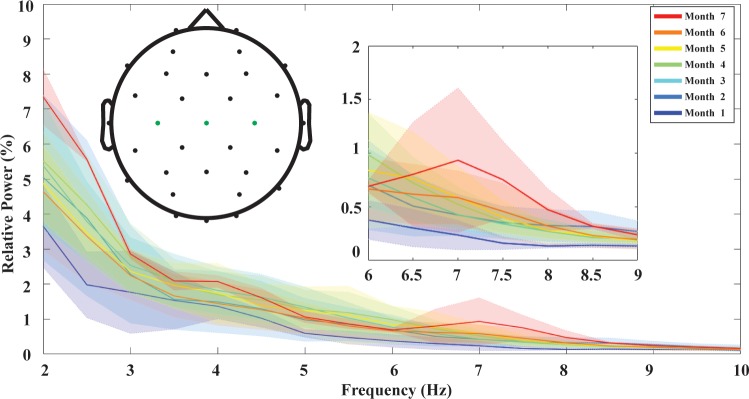
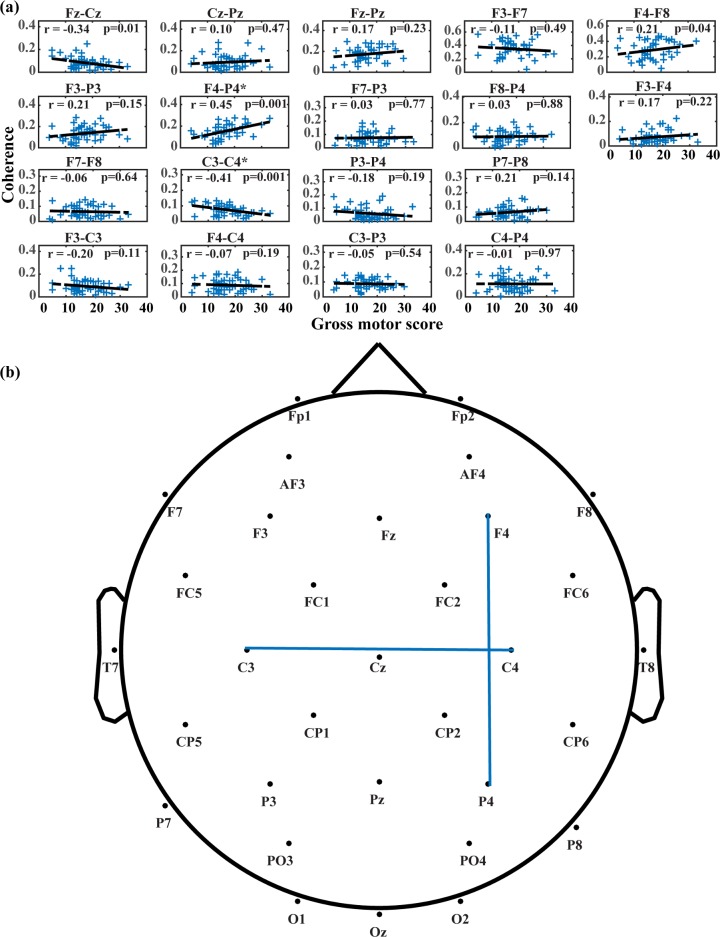
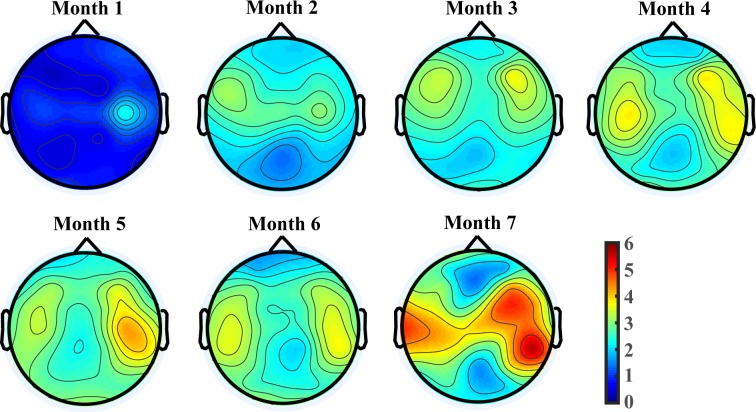
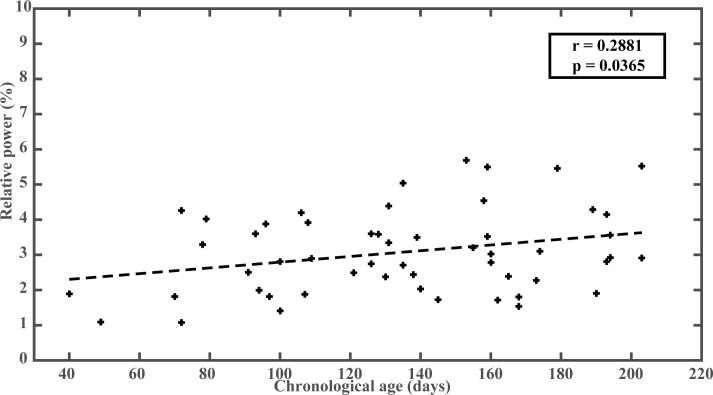
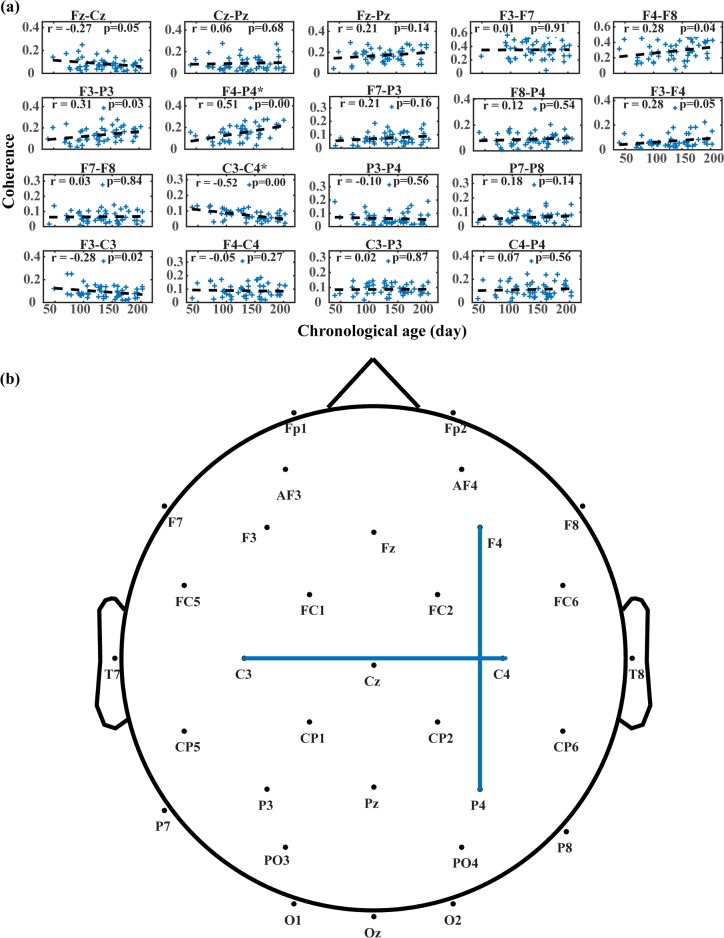
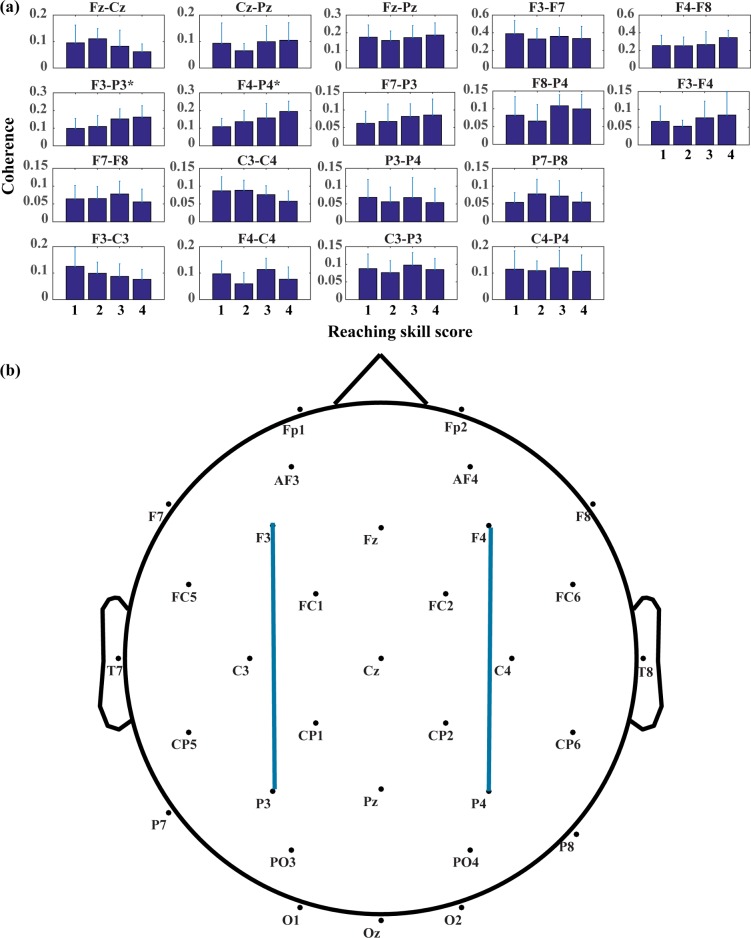
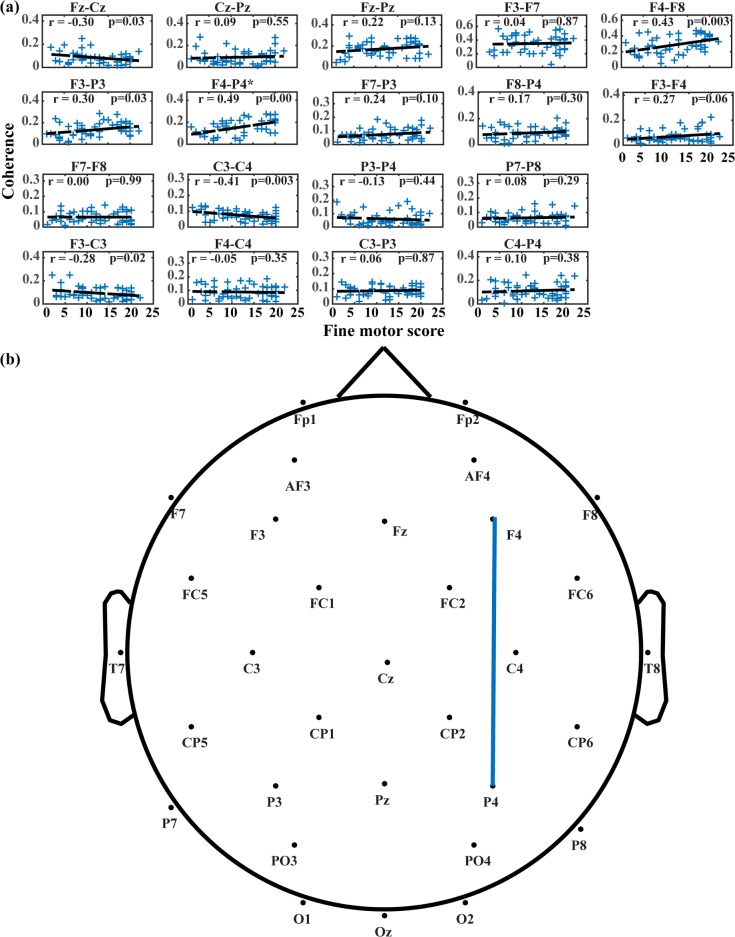
Existing research in infants has correlated electroencephalography (EEG) measures of power and coherence to cognitive development and to locomotor experience, but only in infants older than 5 months of age. Our goal was to explore the relationship between EEG measures of power and coherence and motor skill development in younger infants who are developing reaching skill. Twenty-one infants with typical development between 38 and 203 days of age participated. Longitudinal EEG recording sessions were recorded in monthly increments, with 3-5 sessions acquired for 19 participants and 1 session for 2 participants, resulting in 71 sessions in total. EEG variables of interest were relative power in the 6-9 Hz range and coherence between selected electrode pairs. We describe the development of the peak in relative power in the 6-9 Hz frequency band of EEG; it is not present around 1 month of age and starts to appear across the following months. Coherence generally increased in the bilateral frontal-parietal networks, while the interhemispheric connectivity in motor cortices generally decreased. The results of this relatively small pilot study provide a foundational description of neural function changes observed as motor skills are changing across the first half year of life. This is a first step in understanding experience-dependent plasticity of the infant brain and has the potential to aid in the early detection of atypical brain development.
现有针对婴儿的研究已将脑电图(EEG)的功率和相干性测量结果与认知发展及运动经验相关联,但这仅适用于5个月以上的婴儿。我们的目标是探究功率和相干性的脑电图测量结果与正在发展够物技能的较小婴儿的运动技能发展之间的关系。21名年龄在38至203天之间发育正常的婴儿参与了研究。纵向脑电图记录以每月一次的频率进行,19名参与者共进行了3至5次记录,2名参与者进行了1次记录,总计71次记录。感兴趣的脑电图变量为6至9赫兹范围内的相对功率以及选定电极对之间的相干性。我们描述了脑电图6至9赫兹频段相对功率峰值的发展情况;1个月左右时不存在该峰值,在接下来的几个月中开始出现。双侧额顶网络中的相干性总体上有所增加,而运动皮层中的半球间连接性总体上有所下降。这项规模相对较小的初步研究结果为婴儿出生后半年内运动技能变化时观察到的神经功能变化提供了基础描述。这是理解婴儿大脑经验依赖性可塑性的第一步,并且有可能有助于早期发现非典型脑发育。