Division of Vascular Neurology and Rehabilitation, Department of Neurology, University Hospital Zurich, Zurich, Switzerland.
College of Biomedical and Life Sciences, School of Psychology, Cardiff University, Cardiff, United Kingdom.
Sci Rep. 2018 Jan 12;8(1):687. doi: 10.1038/s41598-017-18716-w.
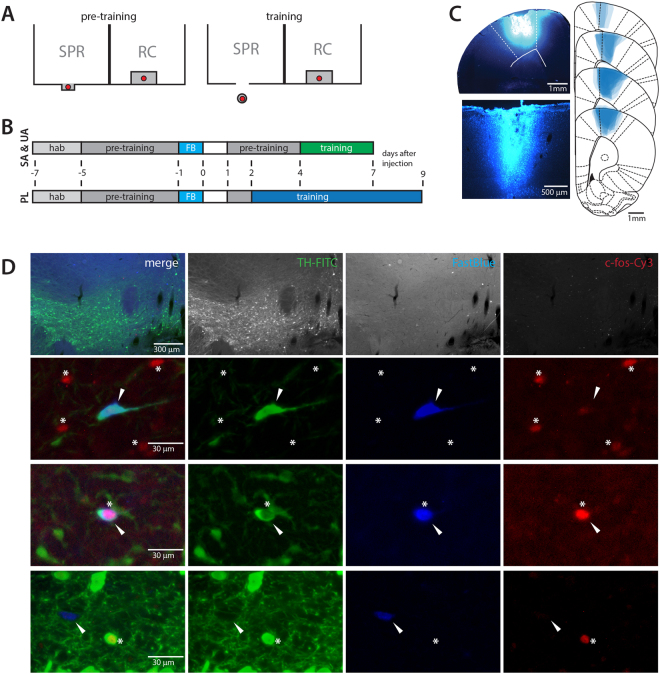
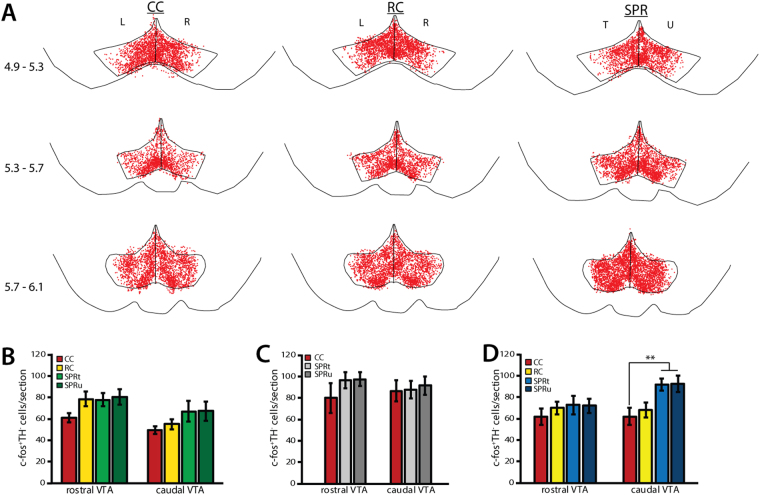
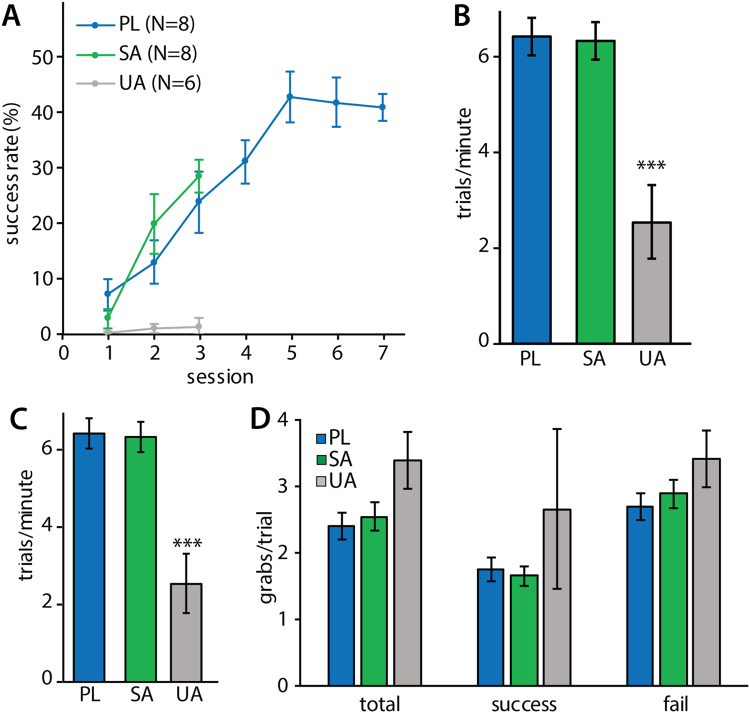
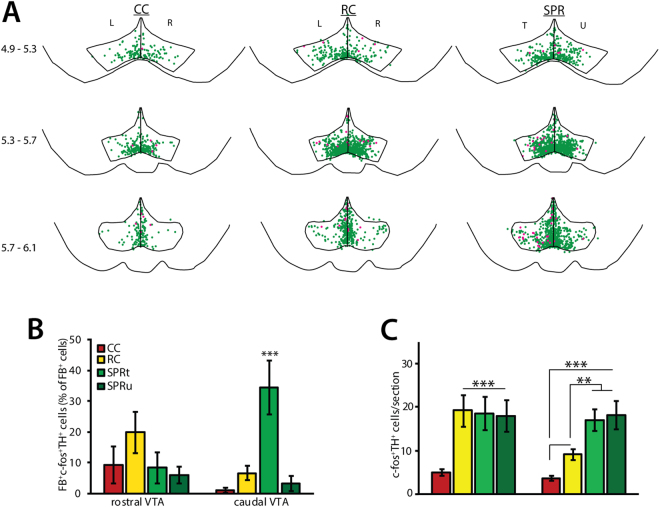
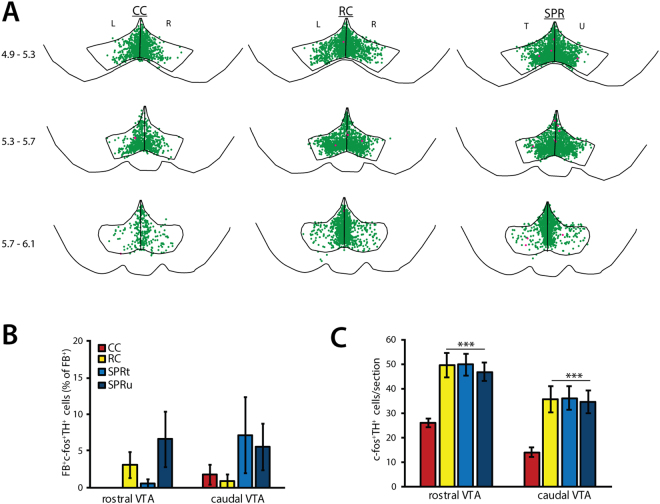
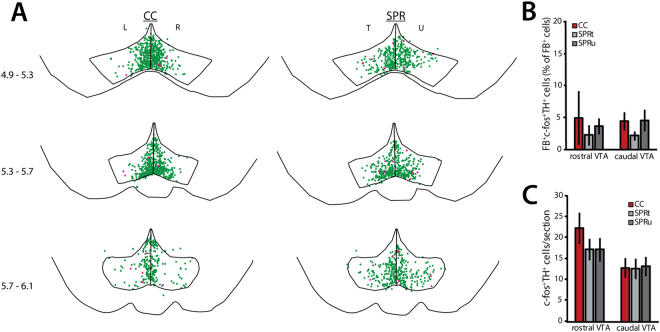
Dopamine release from the ventral tegmental area (VTA) terminals in the primary motor cortex (M1) enables motor skill acquisition. Here, we test the hypothesis that dopaminergic VTA neurons projecting to M1 are activated when rewards are obtained during motor skill acquisition, but not during task execution at plateau performance, or by rewards obtained without performing skilled movements. Rats were trained to perform a skilled reaching task for 3 days (acquisition) or 7 days (plateau). In combination with retrograde labelling of VTA-to-M1 projection neurons, double immunofluorescence for c-fos and tyrosine hydroxylase (TH) was used to assess activation of dopaminergic and non-dopaminergic VTA neurons. Dopaminergic VTA-to-M1 projection neurons were indeed activated during successful motor skill acquisition, but not when rats failed to learn or had reached plateau performance, nor by food rewards alone. By contrast, dopaminergic VTA neurons that did not project to M1 were activated by both skilled reaching and food rewards. Non-dopaminergic neurons were found to be activated by motor task performance at plateau, but not during skill acquisition. These results indicate that distinct populations of VTA neurons are activated by motor skill acquisition and task performance. Moreover, this activation is not merely related to consumption of food rewards.
腹侧被盖区(VTA)终末在初级运动皮层(M1)中的多巴胺释放使运动技能获得。在这里,我们检验了这样一个假设,即在运动技能获得期间获得奖励时,投射到 M1 的多巴胺能 VTA 神经元会被激活,但在执行达到高原性能的任务或执行无熟练运动的任务时不会被激活。大鼠接受训练以在 3 天(获得)或 7 天(高原)内执行熟练的伸展任务。与 VTA 到 M1 投射神经元的逆行标记相结合,使用 c-fos 和酪氨酸羟化酶(TH)的双重免疫荧光来评估多巴胺能和非多巴胺能 VTA 神经元的激活。多巴胺能 VTA 到 M1 的投射神经元确实在成功的运动技能获得期间被激活,但在大鼠未能学习或达到高原性能时,或者在没有执行熟练运动时,神经元并未被激活。相比之下,投射到 M1 的多巴胺能 VTA 神经元则被熟练的伸展和食物奖励激活。发现非多巴胺能神经元在高原的运动任务表现期间被激活,但在技能获得期间没有被激活。这些结果表明,不同群体的 VTA 神经元通过运动技能获得和任务表现而被激活。此外,这种激活不仅仅与食物奖励的消耗有关。