Forsberg Per-Ola, Ohlsson Henrik, Sundquist Kristina
Center for Primary Health Care Research, Lund University, Sweden.
Center for Primary Health Care Research, Lund University, Sweden.
Health Place. 2018 Mar;50:1-5. doi: 10.1016/j.healthplace.2017.12.006. Epub 2018 Jan 10.
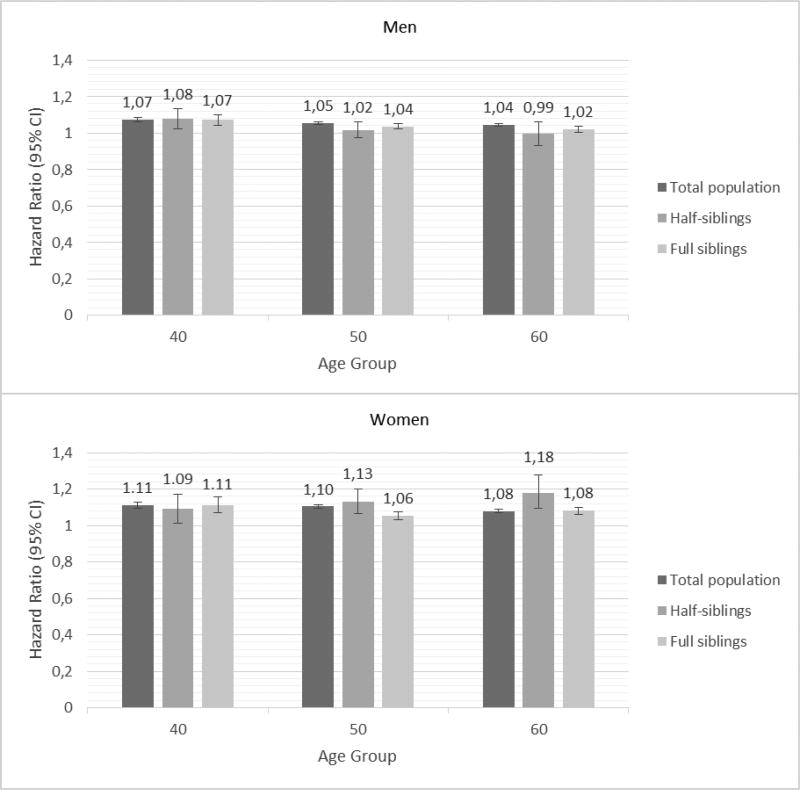
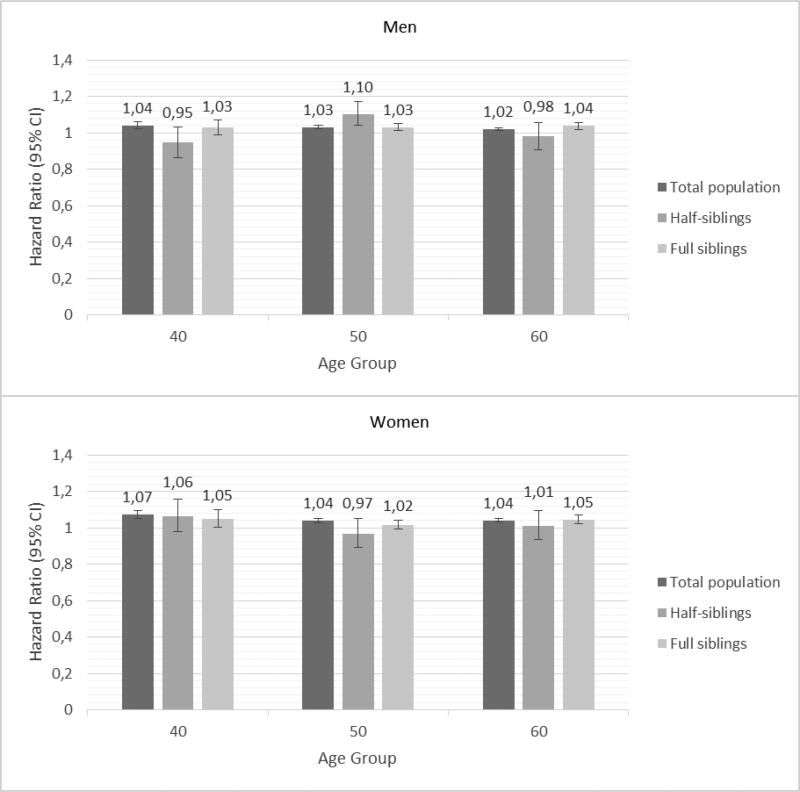
We studied the association between neighborhood socioeconomic status (SES) and incidence of coronary heart disease (CHD) or ischemic stroke in the total population and in full- and half-siblings to determine whether these associations are causal or a result from familial confounding. Data were retrieved from nationwide Swedish registers containing individual clinical data linked to neighborhood of residence. After adjustment for individual SES, the association between neighborhood SES and CHD showed no decrease with increasing genetic resemblance, particularly in women. This indicates that the association between neighborhood SES and CHD incidence is partially causal among women, which represents a novel finding.
我们研究了邻里社会经济地位(SES)与冠心病(CHD)或缺血性中风发病率在总人口以及全同胞和半同胞中的关联,以确定这些关联是因果关系还是家族混杂因素导致的结果。数据取自瑞典全国性登记册,其中包含与居住邻里相关的个人临床数据。在对个体SES进行调整后,邻里SES与CHD之间的关联并未随着遗传相似性的增加而减弱,尤其是在女性中。这表明邻里SES与CHD发病率之间的关联在女性中部分是因果关系,这是一个新发现。