Park Jun Seok, Kang Hyun, Park Soo Yeun, Kim Hye Jin, Lee In Taek, Choi Gyu-Seog
Colorectal Cancer Center, Kyungpook National University Medical Center, Kyungpook National University School of Medicine, Daegu, Korea.
Department of Anesthesiology and Pain Medicine, Chung-Ang University College of Medicine, Seoul, Korea.
Ann Surg Treat Res. 2018 Jan;94(1):26-35. doi: 10.4174/astr.2018.94.1.26. Epub 2017 Dec 28.
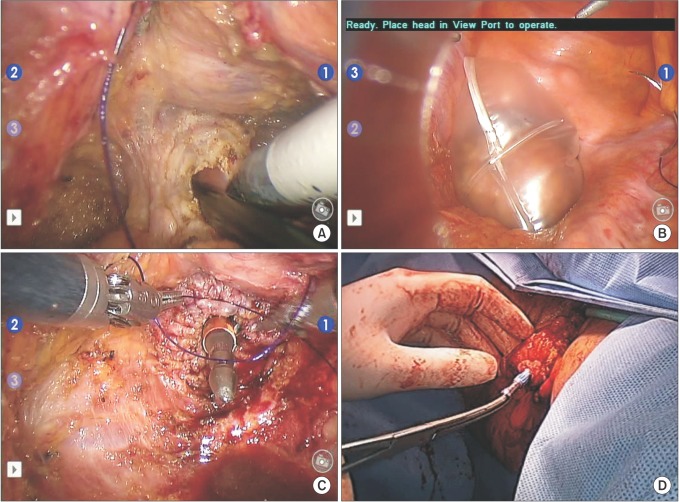
The aim of this study was to compare the long-term outcomes of total laparoscopic surgery with Natural Orifice Specimen Extraction (NOSE) with those for conventional laparoscopy (CL)-assisted surgery for treating rectal cancers.
We reviewed the prospectively collected records of 844 patients (163 NOSE and 681 CL) who underwent curative surgery for mid- or upper rectal cancers from January 2006 to November 2012. We applied propensity score analyses and compared oncological outcomes for the NOSE and CL groups in a 1:1 matched cohort.
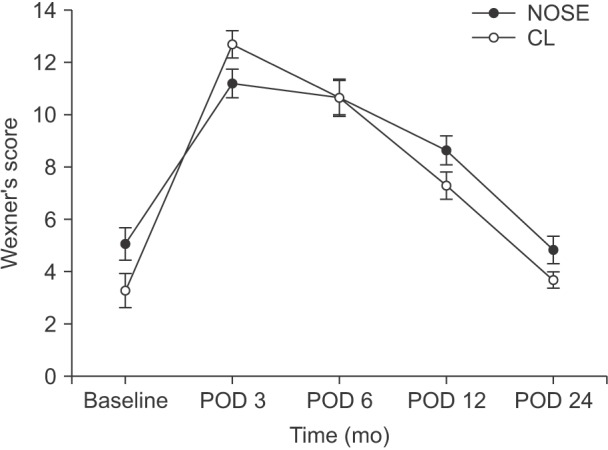
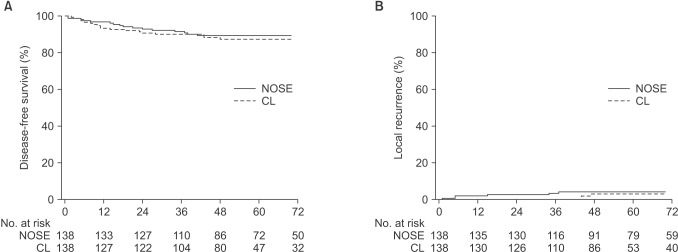
After propensity score matching, each group included 138 patients; the NOSE and CL groups did not differ significantly in terms of baseline clinical characteristics. The median follow-up was 57.7 months (interquartile range, 42.4-82.5 months). The combined 5-year local recurrence rate for all tumor stages was 4.1% (95% confidence interval [CI], 0.9%-7.4%) in the NOSE group and 3.0% (95% CI, 0%-6.3%) in the CL group (P = 0.355). The combined 5-year disease-free survival rates for all stages were 89.3% (95% CI, 84.3%-94.3%) in the NOSE group and 87.3% (95% CI, 81.8%-92.9%) in the CL group (P = 0.639). The postoperative mean fecal incontinence scores at 6, 12, and 24 months were similar between the 2 groups.
In our experience, NOSE for mid- and upper rectal cancer had acceptable long-term oncologic outcomes comparable to those of conventional minimal invasive surgery and seems to be a safe alternative to reduce access trauma.
本研究旨在比较全腹腔镜自然腔道标本取出术(NOSE)治疗直肠癌与传统腹腔镜(CL)辅助手术的长期疗效。
我们回顾了2006年1月至2012年11月期间844例行中高位直肠癌根治性手术患者(163例NOSE手术和681例CL手术)的前瞻性收集记录。我们应用倾向评分分析,并在1:1匹配队列中比较NOSE组和CL组的肿瘤学结局。
倾向评分匹配后,每组各有138例患者;NOSE组和CL组在基线临床特征方面无显著差异。中位随访时间为57.7个月(四分位间距,42.4 - 82.5个月)。NOSE组所有肿瘤分期的5年局部复发率合并为4.1%(95%置信区间[CI],0.9% - 7.4%),CL组为3.0%(95% CI,0% - 6.3%)(P = 0.355)。所有分期的5年无病生存率合并后,NOSE组为89.3%(95% CI,84.3% - 94.3%),CL组为87.3%(95% CI,81.8% - 92.9%)(P = 0.639)。两组术后6个月、12个月和24个月时的平均粪便失禁评分相似。
根据我们的经验,中高位直肠癌的NOSE手术具有可接受的长期肿瘤学结局,与传统微创手术相当,似乎是减少手术创伤的一种安全替代方法。