Department of Biophysics, Ankara University Faculty of Medicine, Ankara, Turkey.
Department of Cardiovascular Surgery, Heart Center, Ankara University Faculty of Medicine, Ankara, Turkey.
J Cell Mol Med. 2018 Mar;22(3):1944-1956. doi: 10.1111/jcmm.13480. Epub 2018 Jan 15.
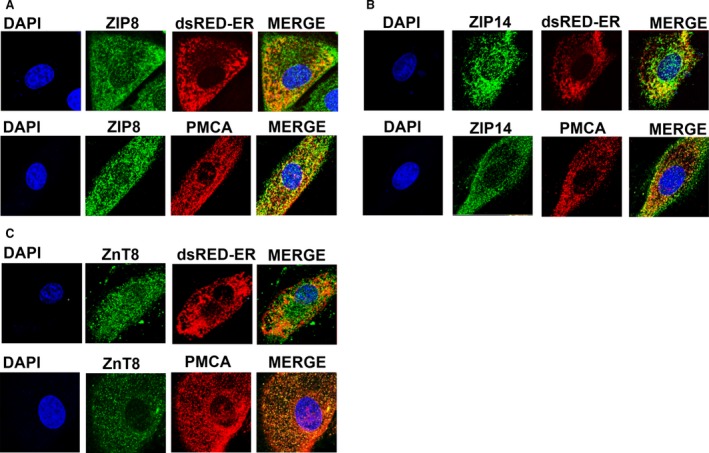
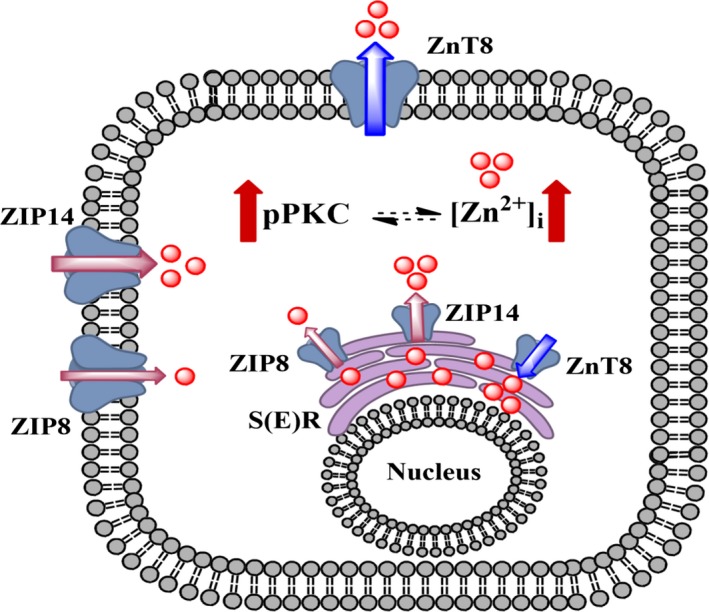
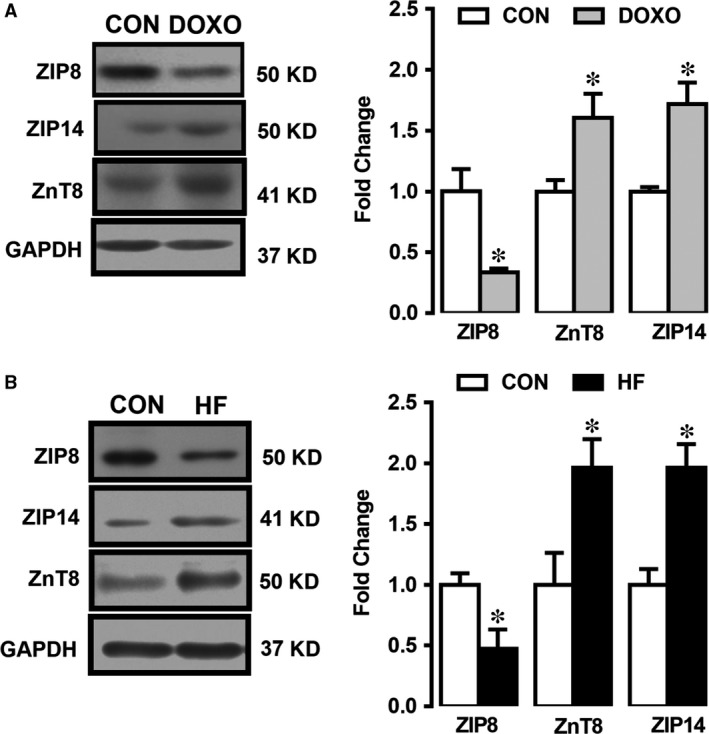
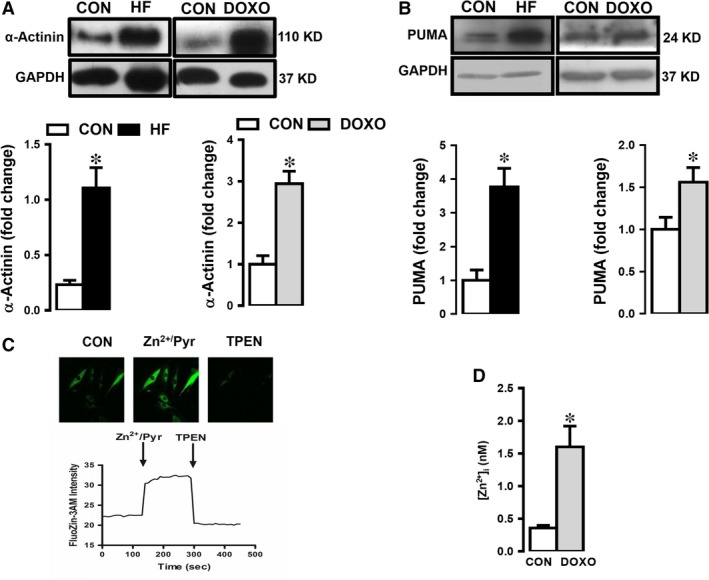
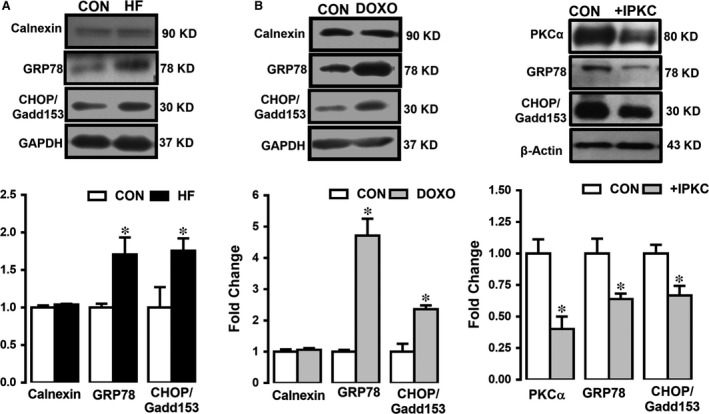
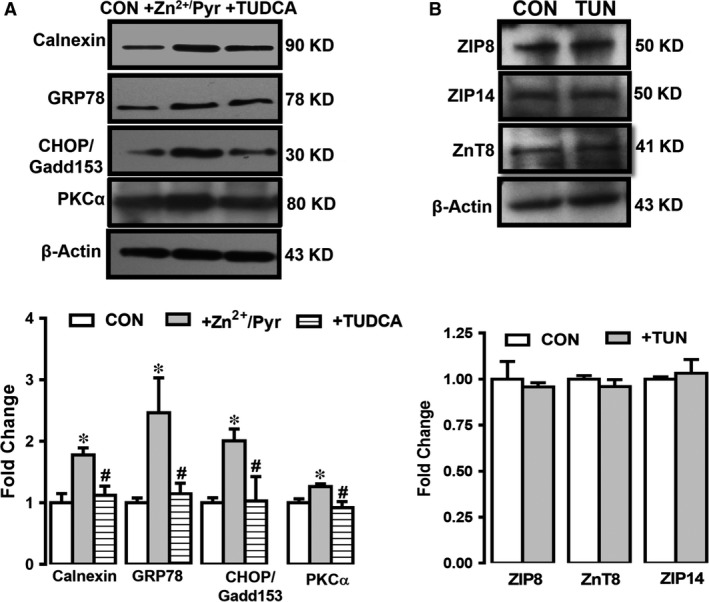
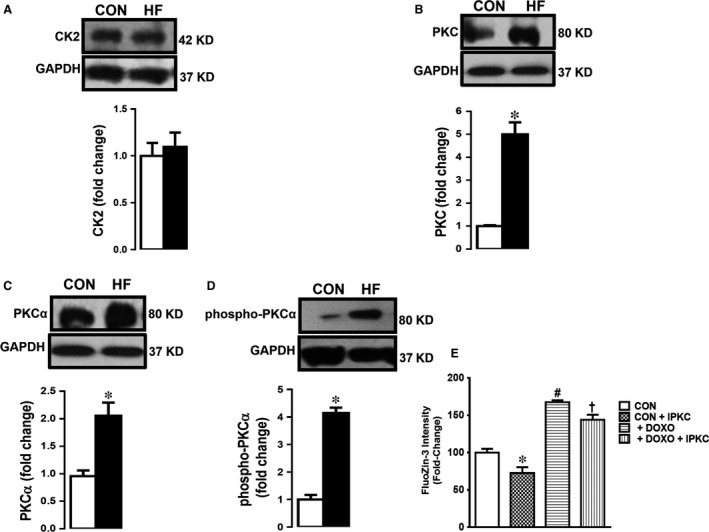
Zn -homoeostasis including free Zn ([Zn ] ) is regulated through Zn -transporters and their comprehensive understanding may be important due to their contributions to cardiac dysfunction. Herein, we aimed to examine a possible role of Zn -transporters in the development of heart failure (HF) via induction of ER stress. We first showed localizations of ZIP8, ZIP14 and ZnT8 to both sarcolemma and S(E)R in ventricular cardiomyocytes (H9c2 cells) using confocal together with calculated Pearson's coefficients. The expressions of ZIP14 and ZnT8 were significantly increased with decreased ZIP8 level in HF. Moreover, [Zn ] was significantly high in doxorubicin-treated H9c2 cells compared to their controls. We found elevated levels of ER stress markers, GRP78 and CHOP/Gadd153, confirming the existence of ER stress. Furthermore, we measured markedly increased total PKC and PKCα expression and PKCα-phosphorylation in HF. A PKC inhibition induced significant decrease in expressions of these ER stress markers compared to controls. Interestingly, direct increase in [Zn ] using zinc-ionophore induced significant increase in these markers. On the other hand, when we induced ER stress directly with tunicamycin, we could not observe any effect on expression levels of these Zn transporters. Additionally, increased [Zn ] could induce marked activation of PKCα. Moreover, we observed marked decrease in [Zn ] under PKC inhibition in H9c2 cells. Overall, our present data suggest possible role of Zn transporters on an intersection pathway with increased [Zn ] and PKCα activation and induction of HF, most probably via development of ER stress. Therefore, our present data provide novel information how a well-controlled [Zn ] via Zn transporters and PKCα can be important therapeutic approach in prevention/treatment of HF.
锌稳态包括游离锌 ([Zn]) 的调节是通过锌转运体进行的,全面了解锌转运体的功能可能很重要,因为它们有助于心脏功能障碍。在此,我们旨在通过内质网应激诱导来研究锌转运体在心力衰竭 (HF) 发展中的可能作用。我们首先使用共聚焦显微镜和计算的 Pearson 系数显示,ZIP8、ZIP14 和 ZnT8 在心室肌细胞 (H9c2 细胞) 的肌膜和 S(E)R 上的定位。在 HF 中,ZIP14 和 ZnT8 的表达显著增加,而 ZIP8 水平降低。此外,与对照组相比,阿霉素处理的 H9c2 细胞中的 [Zn] 明显升高。我们发现内质网应激标志物 GRP78 和 CHOP/Gadd153 的水平升高,证实了内质网应激的存在。此外,我们测量到 HF 中总 PKC 和 PKCα 的表达和 PKCα 磷酸化明显增加。与对照组相比,PKC 抑制剂的抑制作用可显著降低这些内质网应激标志物的表达。有趣的是,使用锌离子载体直接增加 [Zn] 可显著增加这些标志物的表达。另一方面,当我们用衣霉素直接诱导内质网应激时,我们观察不到这些锌转运体表达水平的任何变化。此外,增加 [Zn] 可显著激活 PKCα。此外,我们在 H9c2 细胞中观察到 PKC 抑制时 [Zn] 明显减少。总之,我们目前的数据表明,锌转运体可能通过增加 [Zn] 和 PKCα 的激活以及诱导 HF 发挥作用,这很可能是通过内质网应激的发展。因此,我们目前的数据提供了新的信息,即通过锌转运体和 PKCα 对 [Zn] 的良好控制可能是预防/治疗 HF 的重要治疗方法。