Lyon Robert C, Zanella Fabian, Omens Jeffrey H, Sheikh Farah
Department of Medicine, University of California San Diego, 9500 Gilman Drive, La Jolla, CA, 92093, USA.
Department of Bioengineering, University of California San Diego, 9500 Gilman Drive, La Jolla, CA, 92093, USA.
Circ Res. 2015 Apr 10;116(8):1462-1476. doi: 10.1161/CIRCRESAHA.116.304937.
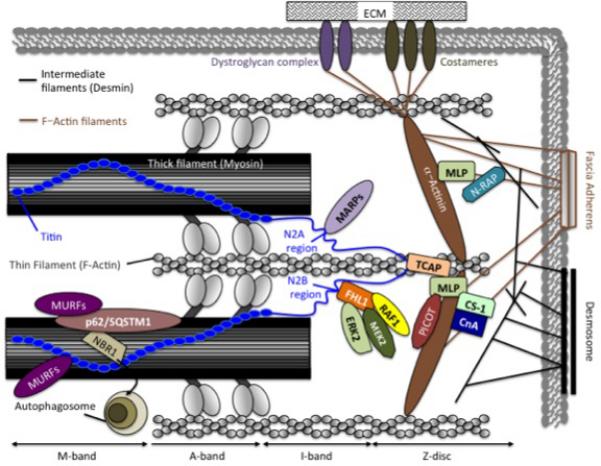
Cardiac muscle cells have an intrinsic ability to sense and respond to mechanical load through a process known as mechanotransduction. In the heart, this process involves the conversion of mechanical stimuli into biochemical events that induce changes in myocardial structure and function. Mechanotransduction and its downstream effects function initially as adaptive responses that serve as compensatory mechanisms during adaptation to the initial load. However, under prolonged and abnormal loading conditions, the remodeling processes can become maladaptive, leading to altered physiological function and the development of pathological cardiac hypertrophy and heart failure. Although the mechanisms underlying mechanotransduction are far from being fully elucidated, human and mouse genetic studies have highlighted various cytoskeletal and sarcolemmal structures in cardiac myocytes as the likely candidates for load transducers, based on their link to signaling molecules and architectural components important in disease pathogenesis. In this review, we summarize recent developments that have uncovered specific protein complexes linked to mechanotransduction and mechanotransmission within the sarcomere, the intercalated disc, and at the sarcolemma. The protein structures acting as mechanotransducers are the first step in the process that drives physiological and pathological cardiac hypertrophy and remodeling, as well as the transition to heart failure, and may provide better insights into mechanisms driving mechanotransduction-based diseases.
心肌细胞具有一种内在能力,可通过一种称为机械转导的过程感知并响应机械负荷。在心脏中,这一过程涉及将机械刺激转化为生化事件,从而引起心肌结构和功能的变化。机械转导及其下游效应最初作为适应性反应发挥作用,在适应初始负荷期间充当补偿机制。然而,在长期和异常负荷条件下,重塑过程可能会变得适应不良,导致生理功能改变以及病理性心肌肥大和心力衰竭的发展。尽管机械转导的潜在机制远未完全阐明,但基于人类和小鼠的基因研究表明,心肌细胞中的各种细胞骨架和肌膜结构可能是负荷传感器的候选者,因为它们与疾病发病机制中重要的信号分子和结构成分相关。在这篇综述中,我们总结了最近的进展,这些进展揭示了与肌节、闰盘和肌膜内的机械转导和机械传递相关的特定蛋白质复合物。作为机械转导器的蛋白质结构是驱动生理性和病理性心肌肥大与重塑以及向心力衰竭转变这一过程的第一步,并且可能为深入了解基于机械转导的疾病机制提供更好的见解。