Cocks E, Taggart M, Rind F C, White K
Institute of Genetic Medicine, Newcastle University, Central Parkway, Newcastle upon Tyne, NE1 3BZ, UK.
Institute of Neuroscience, Newcastle University, Framlington Place, Newcastle upon Tyne, NE2 4HH, UK.
J Microsc. 2018 May;270(2):217-234. doi: 10.1111/jmi.12676. Epub 2018 Jan 15.
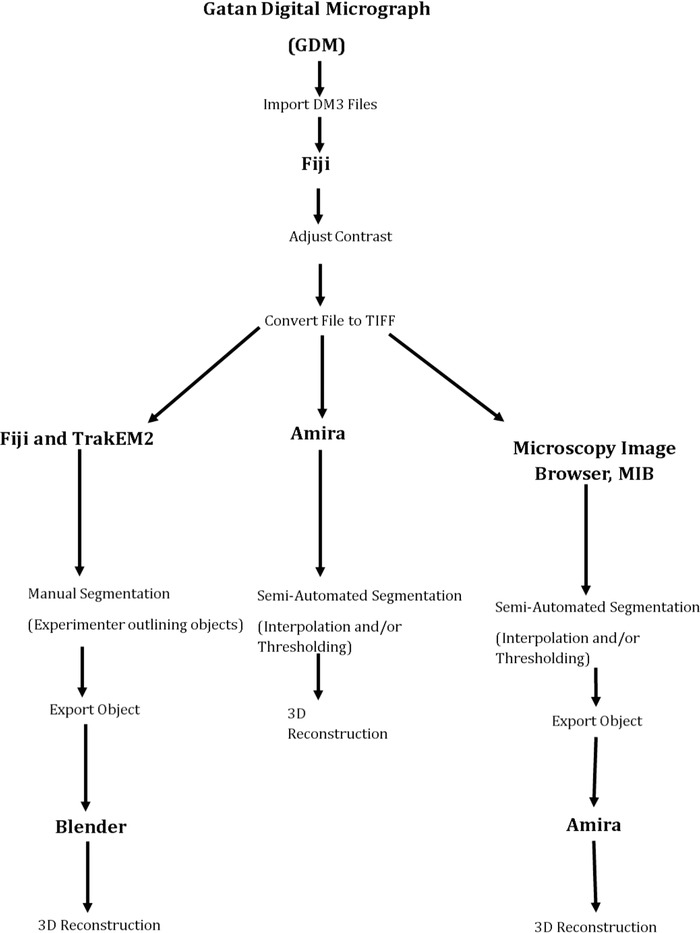
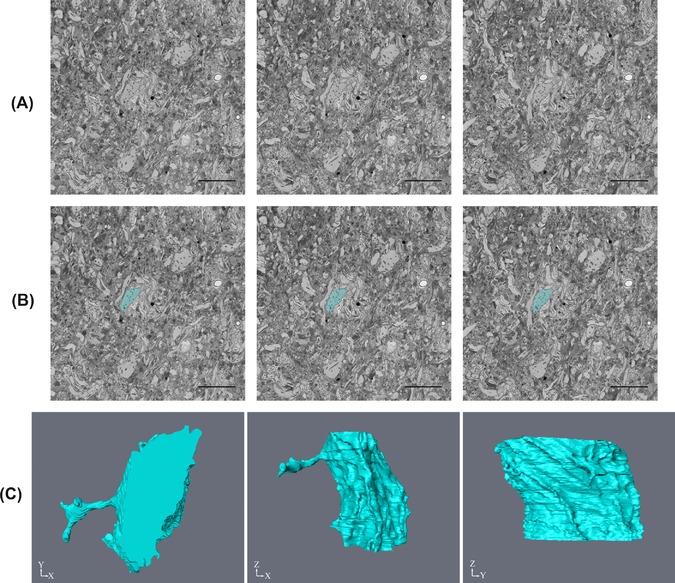
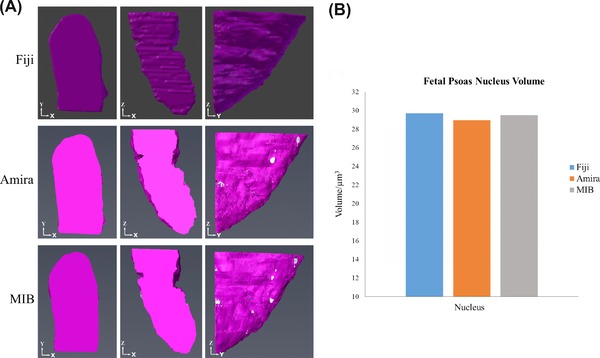
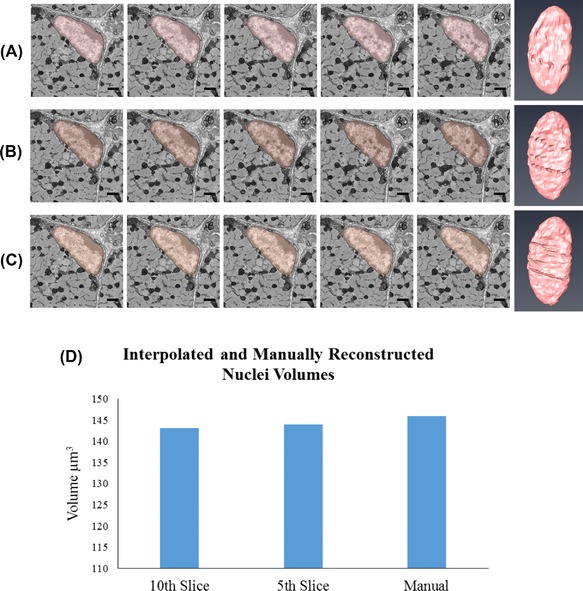
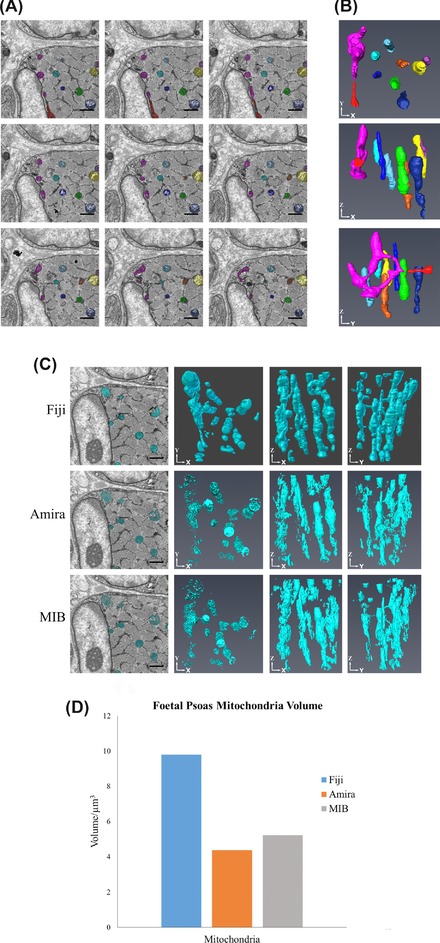
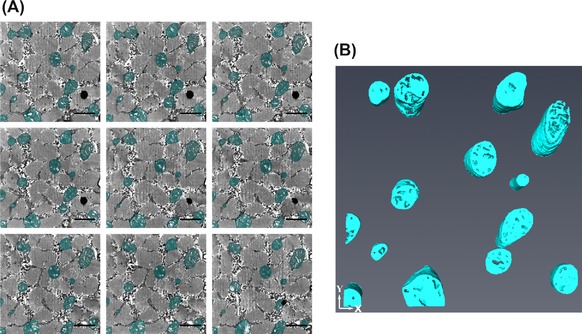
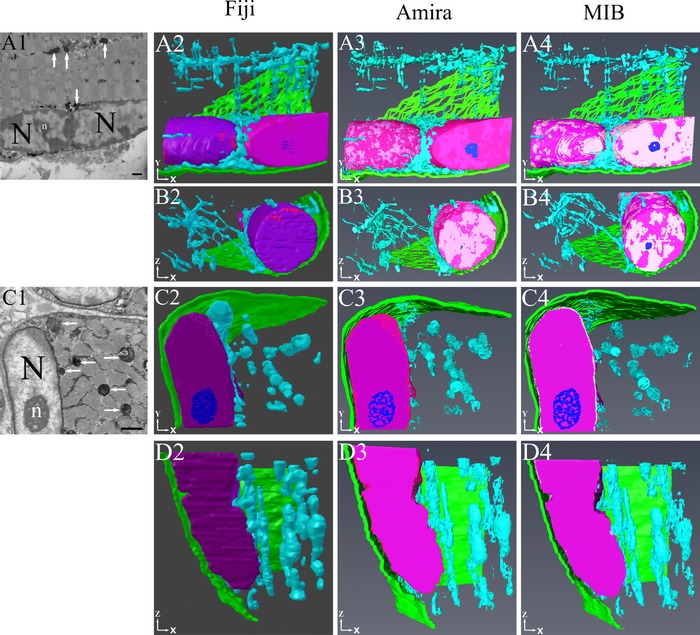
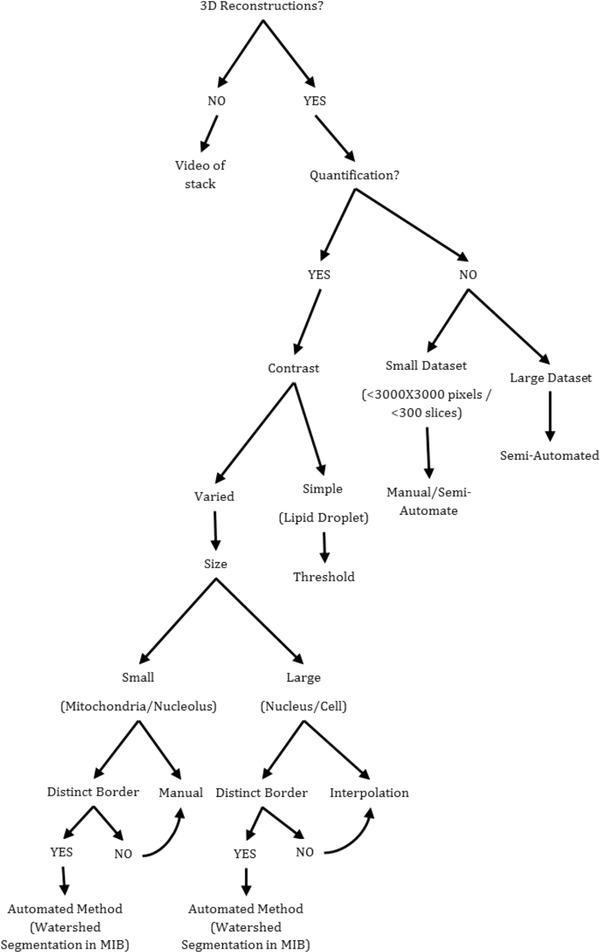
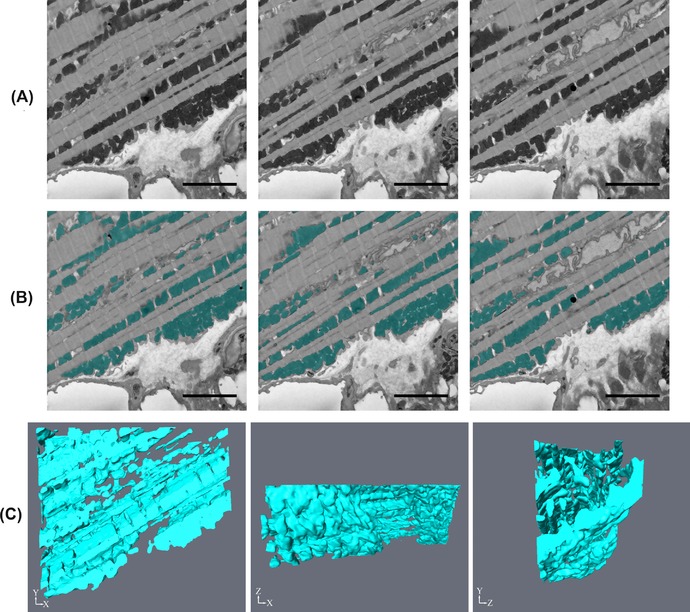
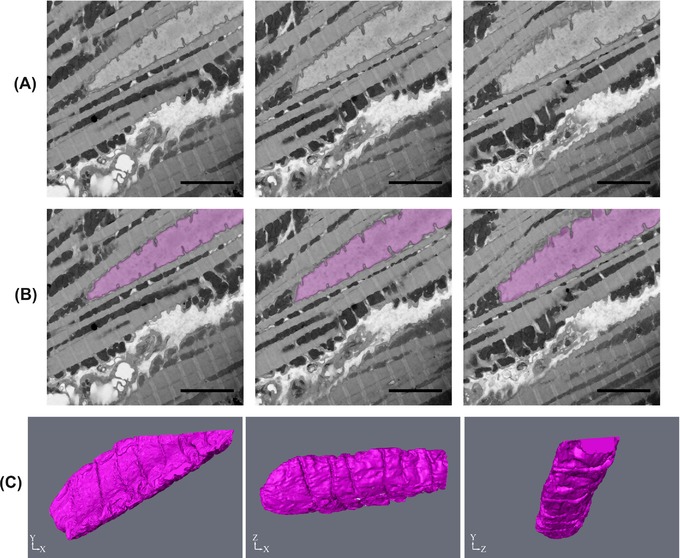
Serial block face scanning electron microscopy (SBF-SEM) is a relatively new technique that allows the acquisition of serially sectioned, imaged and digitally aligned ultrastructural data. There is a wealth of information that can be obtained from the resulting image stacks but this presents a new challenge for researchers - how to computationally analyse and make best use of the large datasets produced. One approach is to reconstruct structures and features of interest in 3D. However, the software programmes can appear overwhelming, time-consuming and not intuitive for those new to image analysis. There are a limited number of published articles that provide sufficient detail on how to do this type of reconstruction. Therefore, the aim of this paper is to provide a detailed step-by-step protocol, accompanied by tutorial videos, for several types of analysis programmes that can be used on raw SBF-SEM data, although there are more options available than can be covered here. To showcase the programmes, datasets of skeletal muscle from foetal and adult guinea pigs are initially used with procedures subsequently applied to guinea pig cardiac tissue and locust brain. The tissue is processed using the heavy metal protocol developed specifically for SBF-SEM. Trimmed resin blocks are placed into a Zeiss Sigma SEM incorporating the Gatan 3View and the resulting image stacks are analysed in three different programmes, Fiji, Amira and MIB, using a range of tools available for segmentation. The results from the image analysis comparison show that the analysis tools are often more suited to a particular type of structure. For example, larger structures, such as nuclei and cells, can be segmented using interpolation, which speeds up analysis; single contrast structures, such as the nucleolus, can be segmented using the contrast-based thresholding tools. Knowing the nature of the tissue and its specific structures (complexity, contrast, if there are distinct membranes, size) will help to determine the best method for reconstruction and thus maximize informative output from valuable tissue.
连续块面扫描电子显微镜(SBF-SEM)是一种相对较新的技术,它能够获取连续切片、成像并进行数字对齐的超微结构数据。从所得的图像堆栈中可以获得大量信息,但这给研究人员带来了新的挑战——如何通过计算分析并充分利用所产生的大型数据集。一种方法是对感兴趣的结构和特征进行三维重建。然而,对于图像分析新手来说,软件程序可能显得繁杂、耗时且不直观。关于如何进行此类重建的已发表文章数量有限。因此,本文的目的是提供一份详细的分步协议,并配有教程视频,介绍几种可用于原始SBF-SEM数据的分析程序,尽管可供选择的程序比本文所涵盖的要多。为了展示这些程序,最初使用了来自胎儿和成年豚鼠骨骼肌的数据集,随后将程序应用于豚鼠心脏组织和蝗虫大脑。使用专门为SBF-SEM开发的重金属协议对组织进行处理。将修整后的树脂块放入配备Gatan 3View的蔡司Sigma扫描电子显微镜中,然后使用一系列用于分割的工具,在三个不同的程序Fiji、Amira和MIB中对所得的图像堆栈进行分析。图像分析比较的结果表明,分析工具通常更适合特定类型的结构。例如,较大的结构,如细胞核和细胞,可以使用插值法进行分割,这可以加快分析速度;单一对比度的结构,如核仁,可以使用基于对比度的阈值工具进行分割。了解组织的性质及其特定结构(复杂性、对比度、是否有明显的膜、大小)将有助于确定最佳的重建方法,从而从宝贵的组织中最大化信息输出。