Institute of Tropical Medicine and International Health, Charité-Universitätsmedizin Berlin, Campus Virchow-Klinikum, Augustenburger Platz 1, 13353 Berlin, Germany.
Division of Noncommunicable Diseases and Life-Course, World Health Organization (WHO) Regional Office for Europe, UN-City, Marmorvej 51, DK-2100 Copenhagen Ø, Denmark.
Nutrients. 2018 Jan 16;10(1):98. doi: 10.3390/nu10010098.
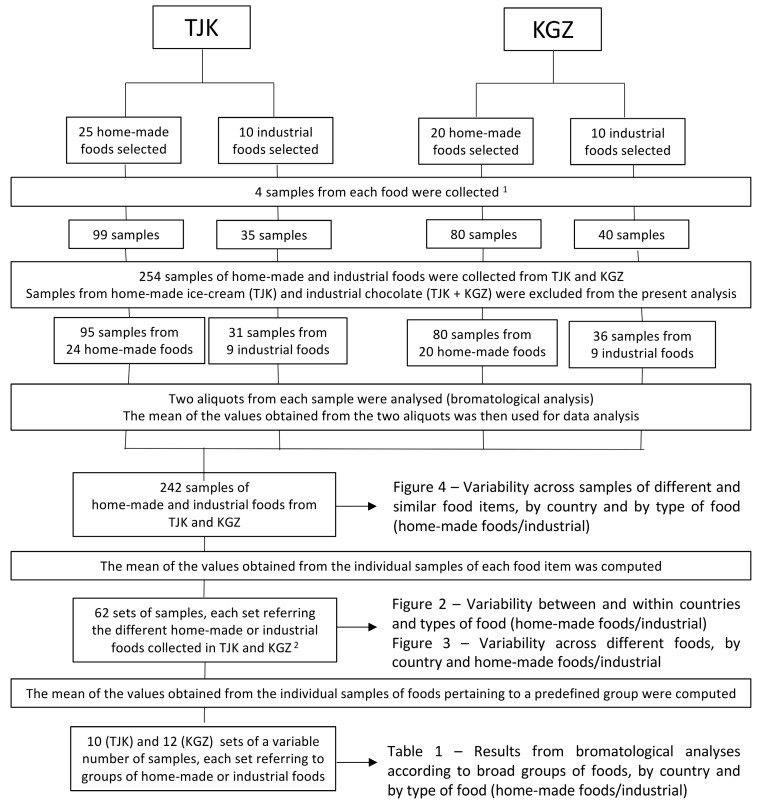
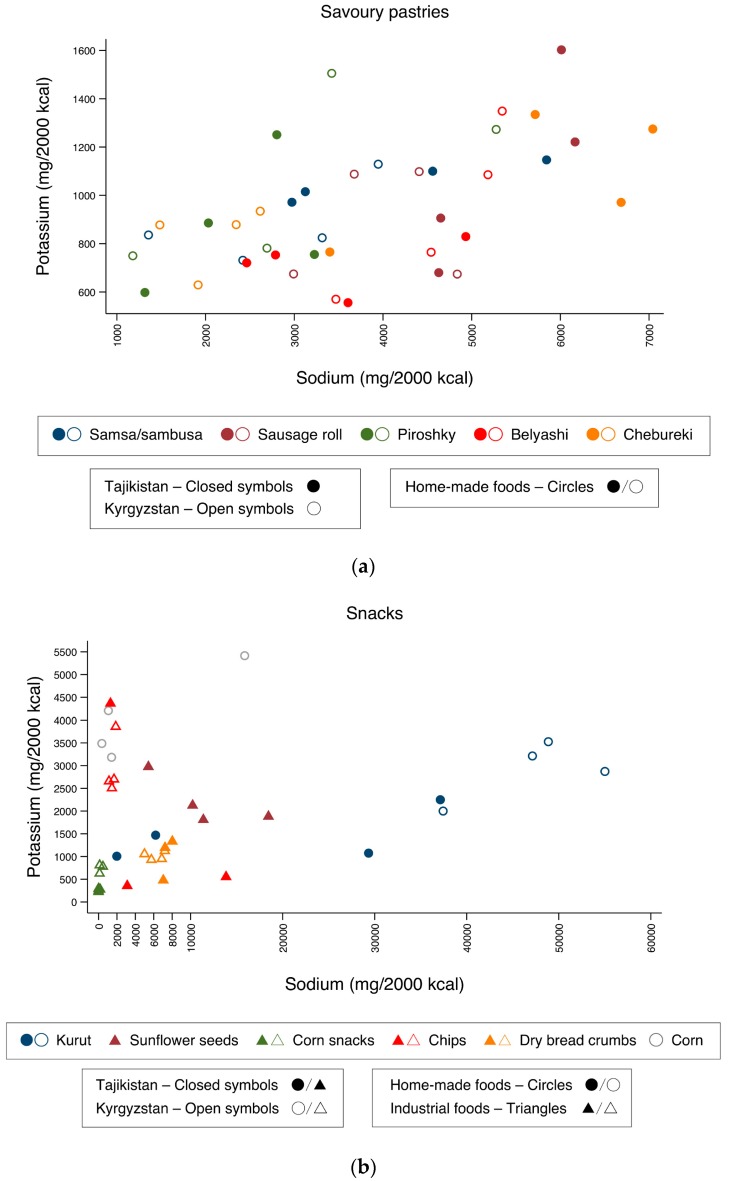
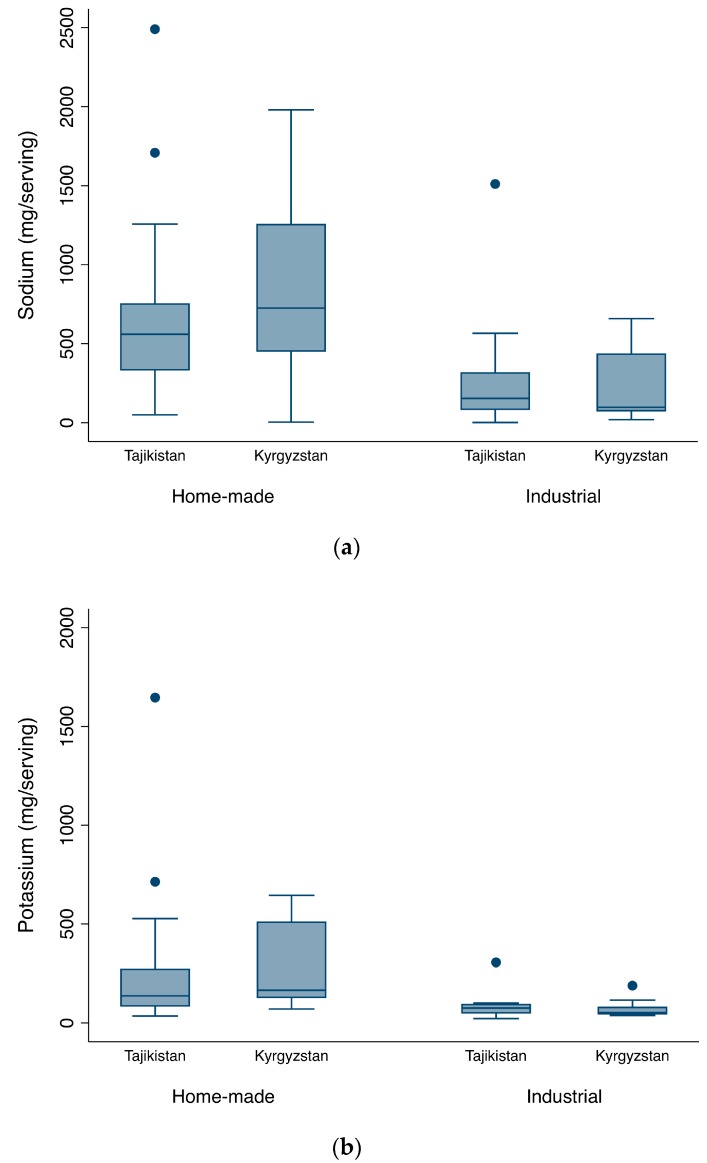
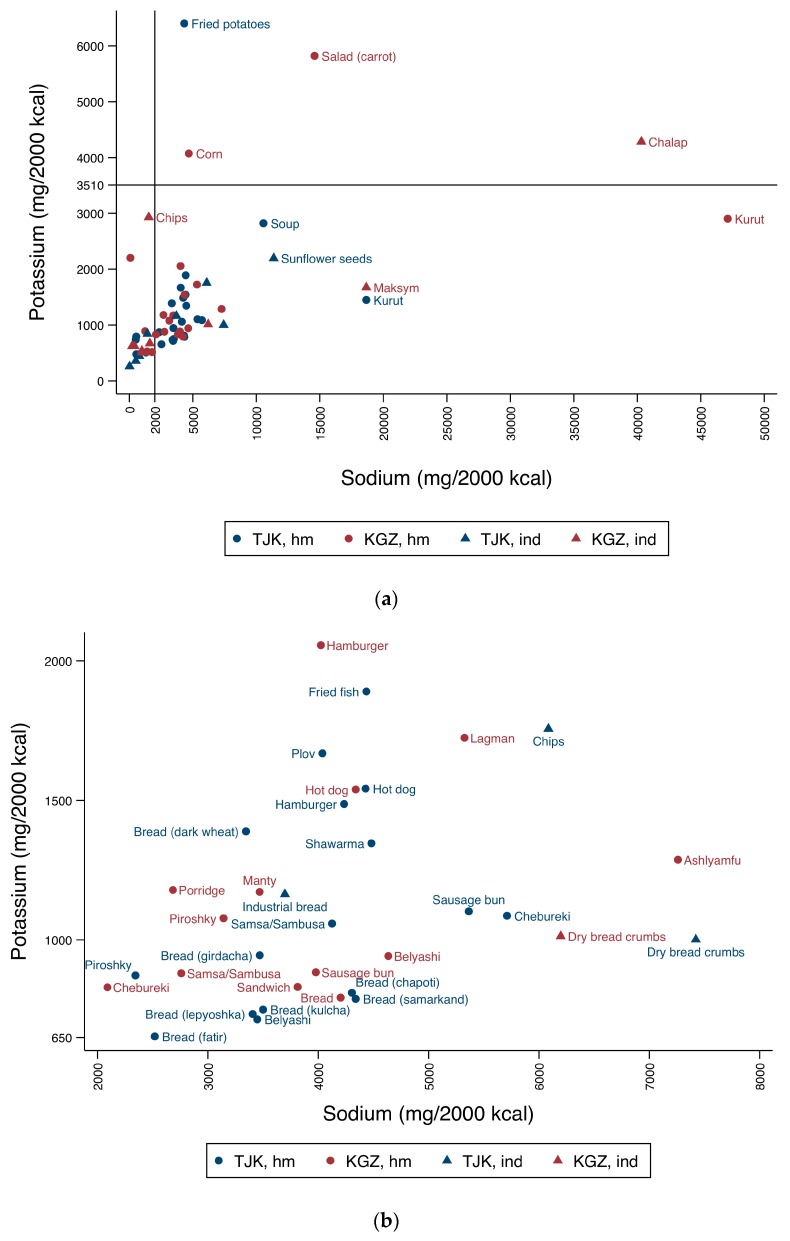
This cross-sectional study is aimed at assessing sodium (Na) and potassium (K) content and the molar Na:K ratios of the most commonly available ready-to-eat street foods in Tajikistan and Kyrgyzstan. Four different samples of each of these foods were collected and 62 food categories were evaluated through bromatological analysis. Flame photometry was used to quantify sodium and potassium concentrations. The results show that home-made foods can be important sources of sodium. In particular, main dishes and sandwiches, respectively, contain more than 1400 and nearly 1000 mg Na in an average serving and provide approximately 70% and 50% of the maximum daily recommended values. Wide ranges of sodium content were found between individual samples of the same home-made food collected from different vending sites from both countries. In industrial foods, sodium contents ranged from 1 to 1511 mg/serving in Tajikistan, and from 19 to 658 mg/serving in Kyrgyzstan. Most Na:K ratios exceeded the recommended level of 1.0 and the highest ratios were found in home-made snacks (21.2) from Tajikistan and industrial beverages (16.4) from Kyrgyzstan. These findings not only improve data on the nutritional composition of foods in these countries, but may also serve as baseline information for future policies and interventions.
本横断面研究旨在评估塔吉克斯坦和吉尔吉斯斯坦最常见的即食街头食品中的钠(Na)和钾(K)含量以及摩尔比 Na:K。采集了每种食品的四个不同样本,并通过营养分析评估了 62 种食品类别。火焰光度法用于定量测定钠和钾浓度。结果表明,自制食品可能是钠的重要来源。特别是,主菜和三明治在一份平均份量中分别含有超过 1400 和近 1000 毫克的 Na,分别提供了每日推荐最大值的 70%和 50%。在来自两个国家不同销售点的同一自制食品的个别样本中,发现了钠含量的广泛差异。在工业食品中,塔吉克斯坦每份食品的钠含量范围为 1 至 1511 毫克,吉尔吉斯斯坦为 19 至 658 毫克。大多数 Na:K 比值超过 1.0 的推荐水平,最高比值出现在塔吉克斯坦的自制小吃(21.2)和吉尔吉斯斯坦的工业饮料(16.4)中。这些发现不仅改善了这些国家食品营养成分的数据,而且还可以作为未来政策和干预措施的基线信息。