Department of Cell Stress Biology, Roswell Park Cancer Institute, Elm and Carlton St, Buffalo, New York.
Institute for Translational Research, Ariel University, Ariel, Israel.
Cancer Res. 2018 Mar 15;78(6):1431-1443. doi: 10.1158/0008-5472.CAN-17-2690. Epub 2018 Jan 16.
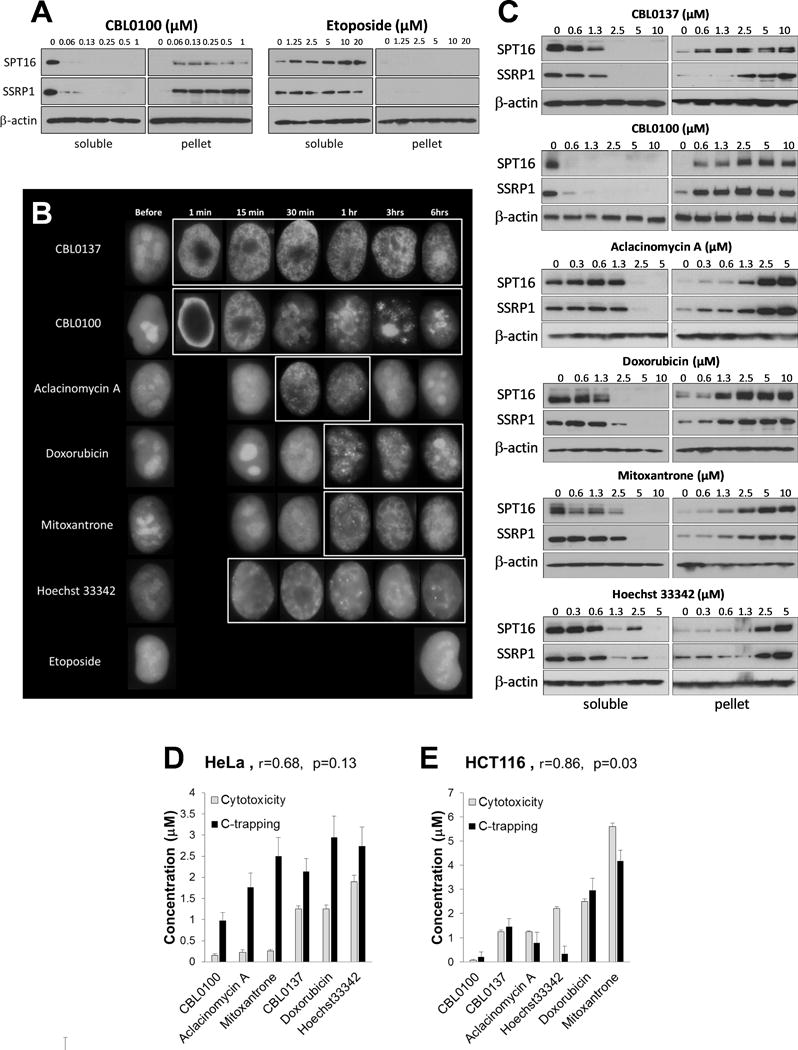
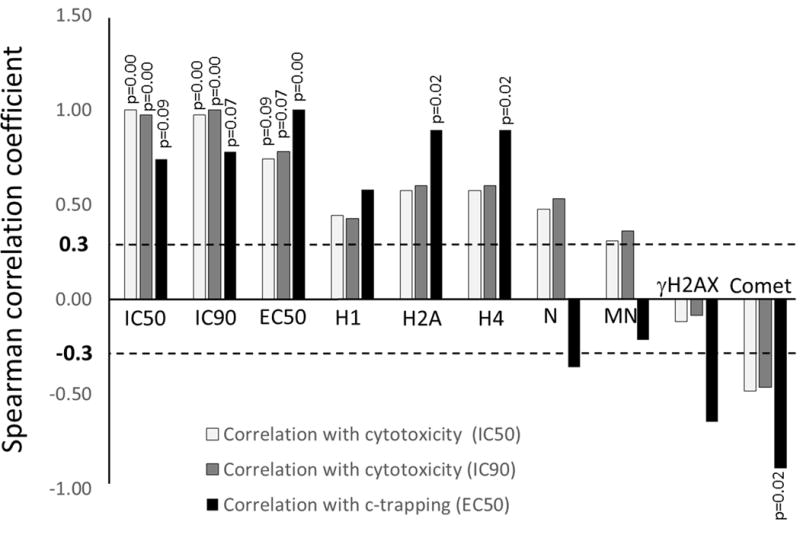
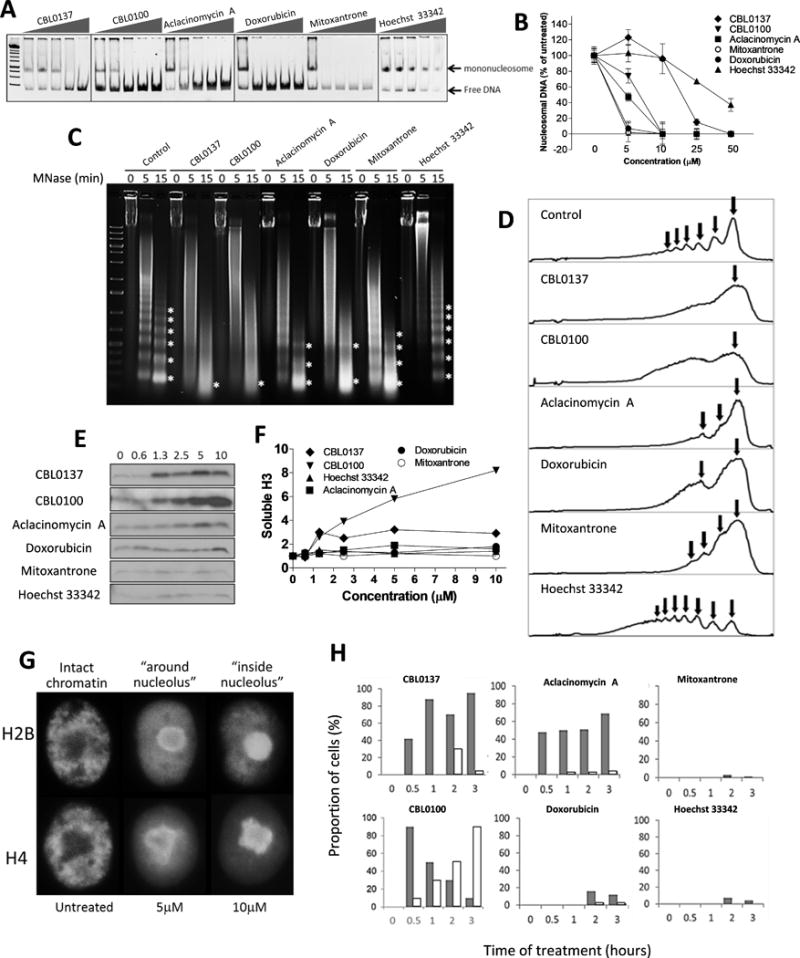
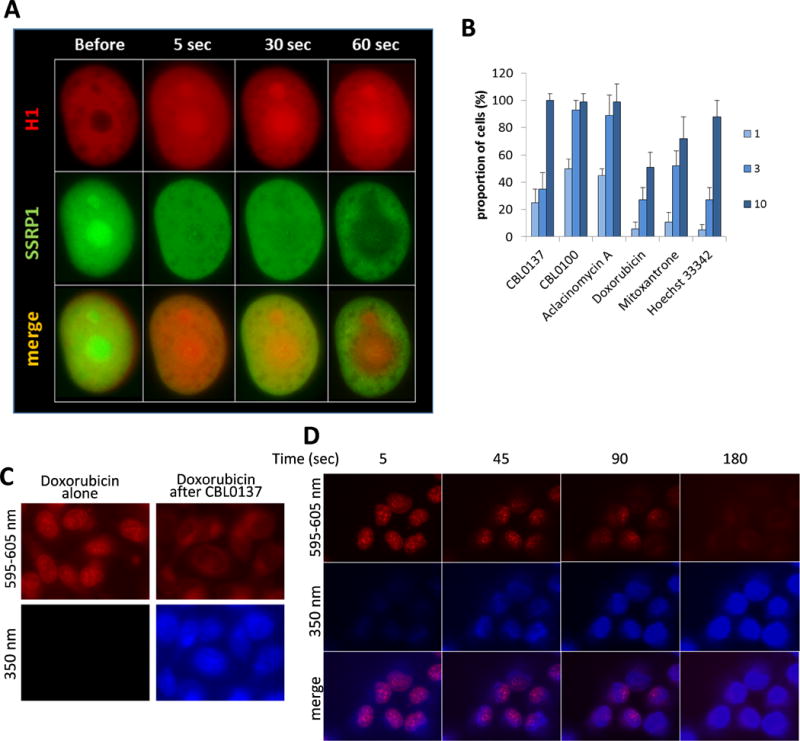
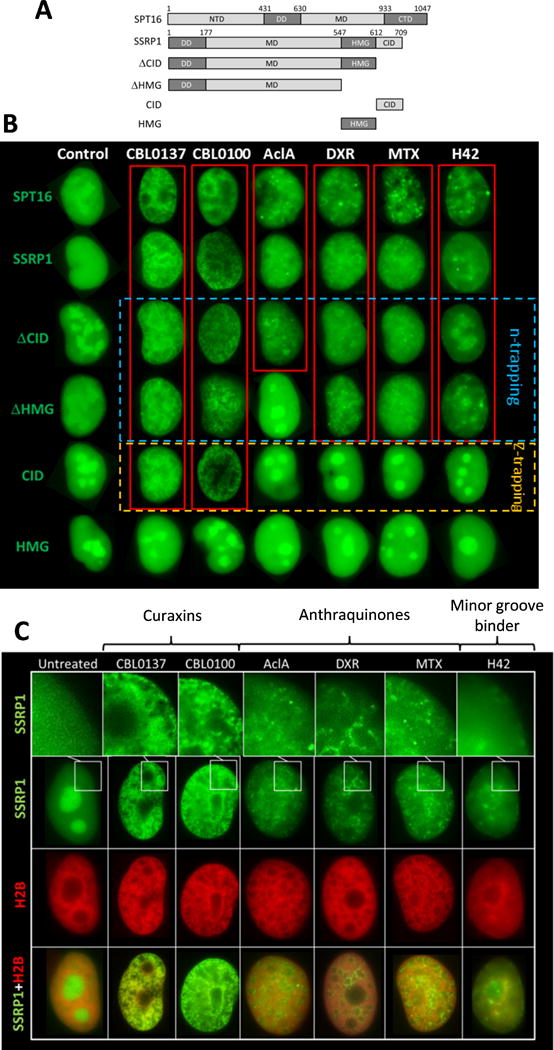
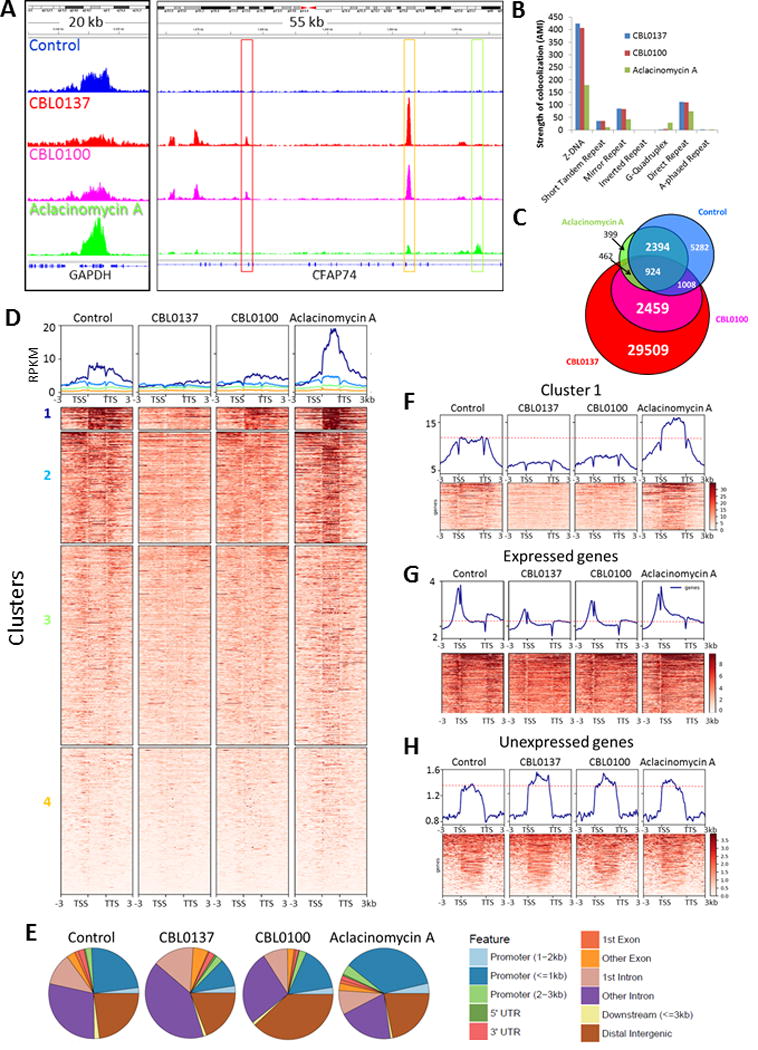
Precisely how DNA-targeting chemotherapeutic drugs trigger cancer cell death remains unclear, as it is difficult to separate direct DNA damage from other effects in cells. Recent work on curaxins, a class of small-molecule drugs with broad anticancer activity, shows that they interfere with histone-DNA interactions and destabilize nucleosomes without causing detectable DNA damage. Chromatin damage caused by curaxins is sensed by the histone chaperone FACT, which binds unfolded nucleosomes becoming trapped in chromatin. In this study, we investigated whether classical DNA-targeting chemotherapeutic drugs also similarly disturbed chromatin to cause chromatin trapping of FACT (c-trapping). Drugs that directly bound DNA induced both chromatin damage and c-trapping. However, chromatin damage occurred irrespective of direct DNA damage and was dependent on how a drug bound DNA, specifically, in the way it bound chromatinized DNA in cells. FACT was sensitive to a plethora of nucleosome perturbations induced by DNA-binding small molecules, including displacement of the linker histone, eviction of core histones, and accumulation of negative supercoiling. Strikingly, we found that the cytotoxicity of DNA-binding small molecules correlated with their ability to cause chromatin damage, not DNA damage. Our results suggest implications for the development of chromatin-damaging agents as selective anticancer drugs. These provocative results suggest that the anticancer efficacy of traditional DNA-targeting chemotherapeutic drugs may be based in large part on chromatin damage rather than direct DNA damage. .
DNA 靶向化疗药物如何引发癌细胞死亡仍不清楚,因为很难将直接的 DNA 损伤与细胞中的其他效应区分开来。最近对 curaxins 的研究表明,它们干扰组蛋白-DNA 相互作用并使核小体不稳定,而不会引起可检测的 DNA 损伤。curaxins 引起的染色质损伤被组蛋白伴侣 FACT 感知,FACT 结合展开的核小体并被困在染色质中。在这项研究中,我们研究了经典的 DNA 靶向化疗药物是否也类似地扰乱染色质以引起 FACT 的染色质捕获(c-trapping)。直接结合 DNA 的药物会同时引起染色质损伤和 c 捕获。然而,染色质损伤的发生与直接 DNA 损伤无关,并且取决于药物与 DNA 结合的方式,特别是药物在细胞中与染色质化 DNA 结合的方式。FACT 对由 DNA 结合小分子引起的大量核小体扰动敏感,包括连接组蛋白的置换、核心组蛋白的逐出以及负超螺旋的积累。引人注目的是,我们发现 DNA 结合小分子的细胞毒性与其引起染色质损伤的能力相关,而不是与 DNA 损伤相关。我们的结果表明,作为选择性抗癌药物,开发染色质损伤剂具有重要意义。这些有启发性的结果表明,传统的 DNA 靶向化疗药物的抗癌疗效在很大程度上可能基于染色质损伤而不是直接的 DNA 损伤。