Stein Eye Institute, David Geffen School of Medicine at UCLA, Los Angeles, California, United States.
Vanderbilt Mass Spectrometry Research Center and Department of Biochemistry, Vanderbilt University School of Medicine, Nashville, Tennessee, United States.
Invest Ophthalmol Vis Sci. 2018 Jan 1;59(1):212-222. doi: 10.1167/iovs.17-22509.
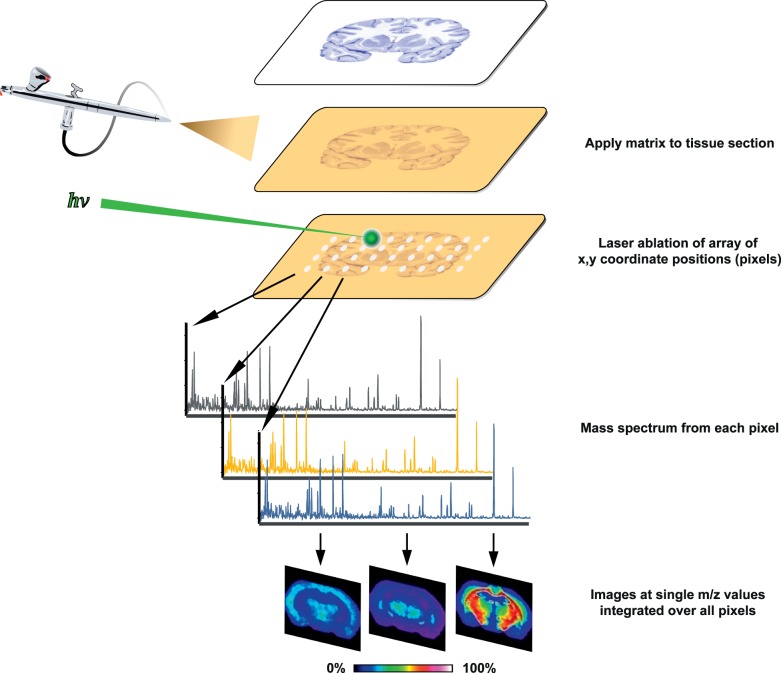
Mammalian central nervous system axons fail to regenerate after injury. Contributing factors include limited intrinsic growth capacity and an inhibitory glial environment. Inflammation-induced optic nerve regeneration (IIR) is thought to boost retinal ganglion cell (RGC) intrinsic growth capacity through progrowth gene expression, but effects on the inhibitory glial environment of the optic nerve are unexplored. To investigate progrowth molecular changes associated with reactive gliosis during IIR, we developed an imaging mass spectrometry (IMS)-based approach that identifies discriminant molecular signals in and around optic nerve crush (ONC) sites.
ONC was performed in rats, and IIR was established by intravitreal injection of a yeast cell wall preparation. Optic nerves were collected at various postcrush intervals, and longitudinal sections were analyzed with matrix-assisted laser desorption/ionization (MALDI) IMS and data mining. Immunohistochemistry and confocal microscopy were used to compare discriminant molecular features with cellular features of reactive gliosis.
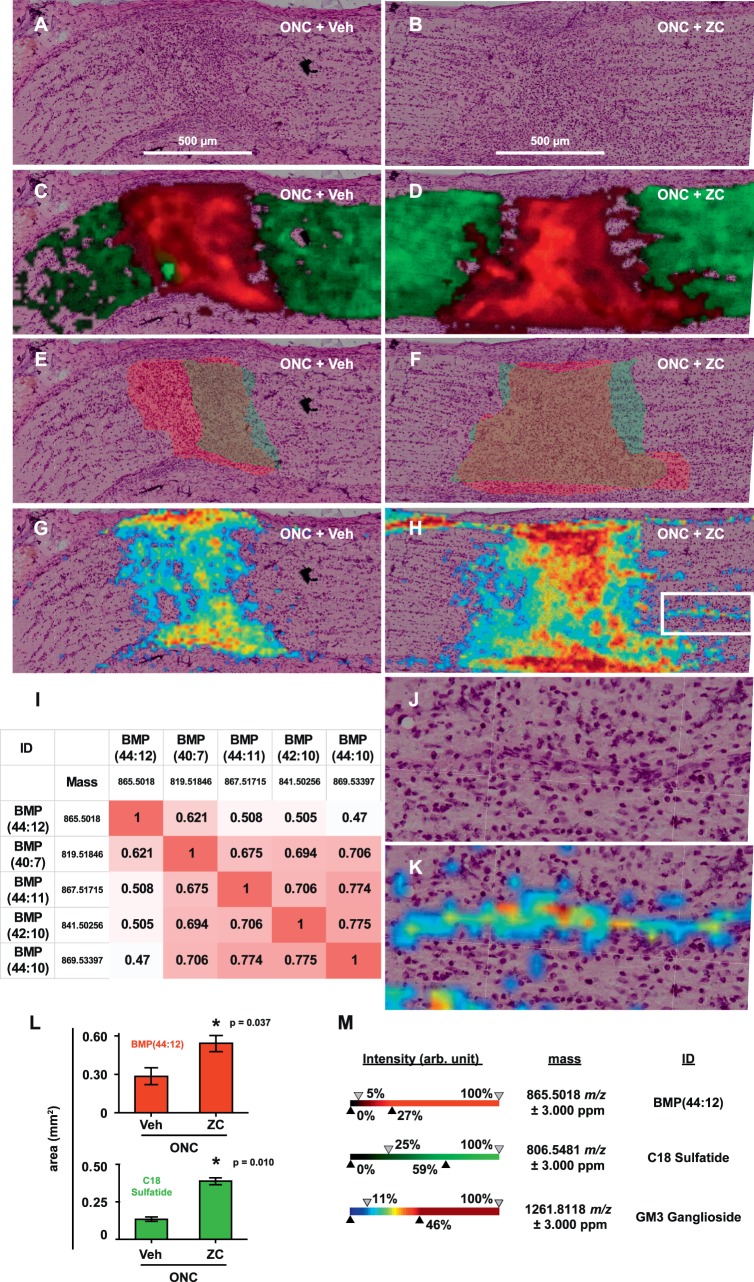
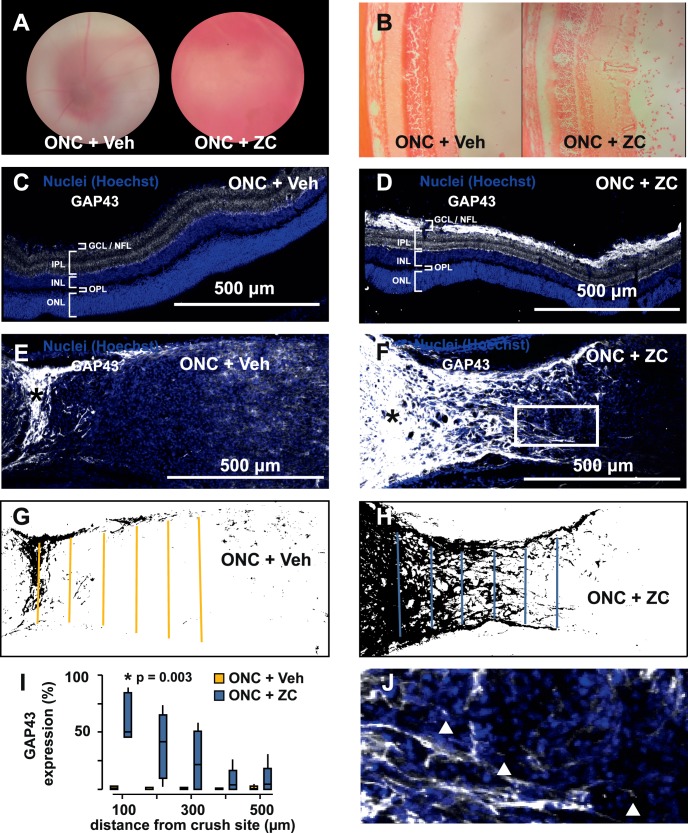
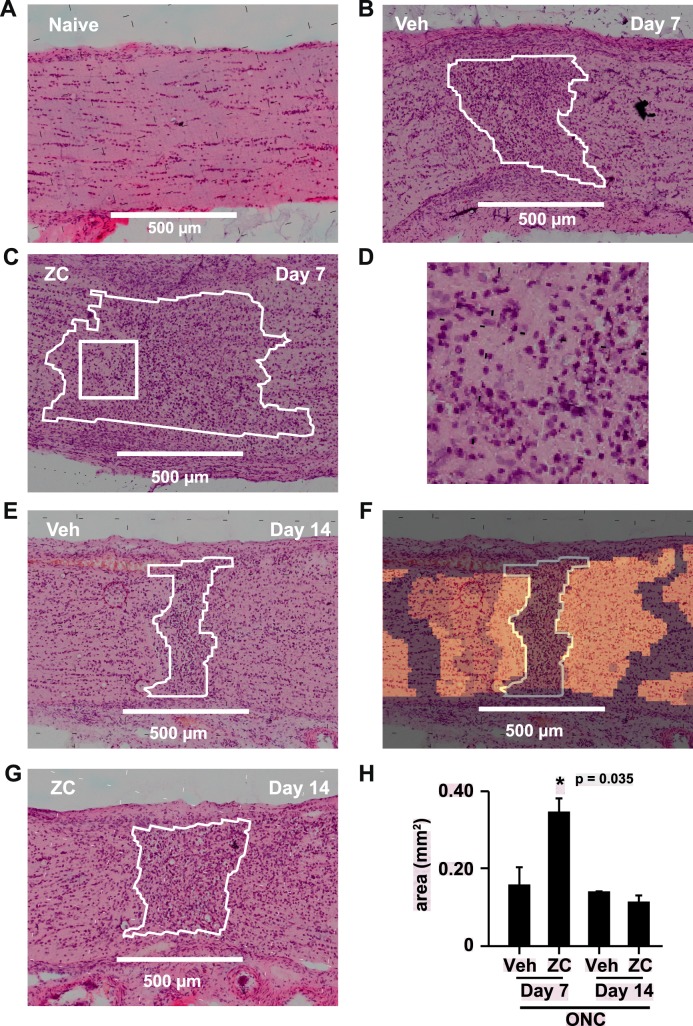
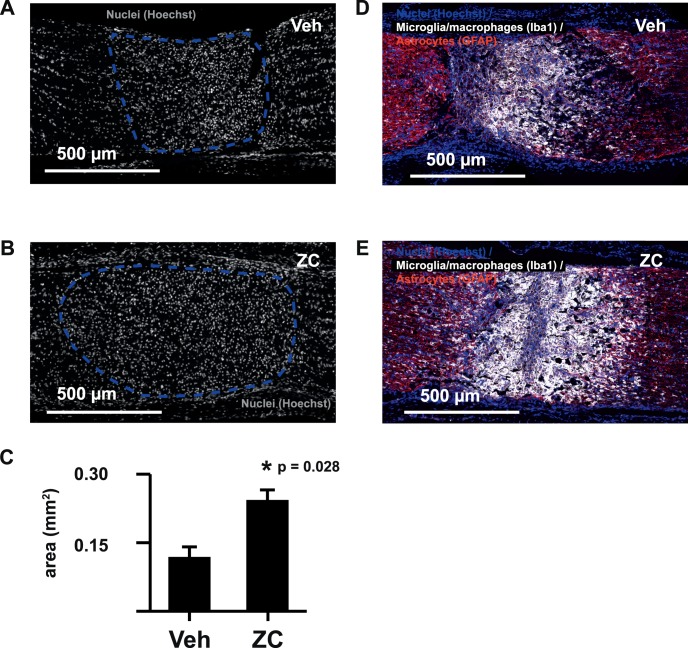
IIR increased the area of the crush site that was occupied by a dense cellular infiltrate and mass spectral features consistent with lysosome-specific lipids. IIR also increased immunohistochemical labeling for microglia and macrophages. IIR enhanced clearance of lipid sulfatide myelin-associated inhibitors of axon growth and accumulation of simple GM3 gangliosides in a spatial distribution consistent with degradation of plasma membrane from degenerated axons.
IIR promotes a robust phagocytic response that improves clearance of myelin and axon debris. This growth-permissive molecular remodeling of the crush injury site extends our current understanding of IIR to include mechanisms extrinsic to the RGC.
哺乳动物中枢神经系统轴突在损伤后无法再生。其致病因素包括内在生长能力有限和抑制性神经胶质环境。炎症诱导的视神经再生(IIR)被认为通过生长基因表达来增强视网膜神经节细胞(RGC)的内在生长能力,但对视神经抑制性神经胶质环境的影响尚未得到探索。为了研究与 IIR 中反应性神经胶质相关的促生长分子变化,我们开发了一种基于成像质谱(IMS)的方法,该方法可识别视神经挤压(ONC)部位及其周围的有区别的分子信号。
在大鼠中进行 ONC,通过眼内注射酵母细胞壁制剂来建立 IIR。在各种挤压后间隔收集视神经,并通过基质辅助激光解吸/电离(MALDI)IMS 和数据挖掘对纵向切片进行分析。免疫组织化学和共聚焦显微镜用于比较有区别的分子特征与反应性神经胶质的细胞特征。
IIR 增加了挤压部位的面积,该部位被密集的细胞浸润和与溶酶体特异性脂质一致的质谱特征所占据。IIR 还增加了小胶质细胞和巨噬细胞的免疫组织化学标记。IIR 增强了脂质硫脂髓鞘轴突生长抑制剂的清除和简单 GM3 神经节苷脂的积累,其空间分布与从退化轴突降解的质膜一致。
IIR 促进了强大的吞噬反应,改善了髓鞘和轴突碎片的清除。挤压损伤部位的这种生长促进的分子重塑扩展了我们对 IIR 的现有理解,包括 RGC 以外的机制。