Mesentier-Louro Louise Alessandra, Zaverucha-do-Valle Camila, da Silva-Junior Almir Jordão, Nascimento-Dos-Santos Gabriel, Gubert Fernanda, de Figueirêdo Ana Beatriz Padilha, Torres Ana Luiza, Paredes Bruno D, Teixeira Camila, Tovar-Moll Fernanda, Mendez-Otero Rosalia, Santiago Marcelo F
Instituto de Biofísica Carlos Chagas Filho, Universidade Federal do Rio de Janeiro, Rio de Janeiro, Brazil; Instituto Nacional de Ciência e Tecnologia de Biologia Estrutural e Bioimagem, INBEB, Rio de Janeiro, Brazil.
National Center of Structural Biology and Bioimaging (CENABIO), Universidade Federal do Rio de Janeiro, Rio de Janeiro, Brazil.
PLoS One. 2014 Oct 27;9(10):e110722. doi: 10.1371/journal.pone.0110722. eCollection 2014.
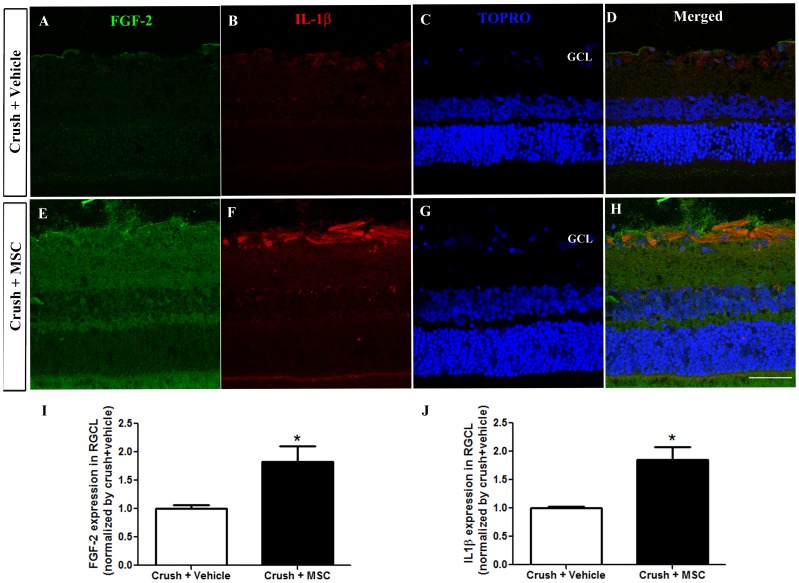
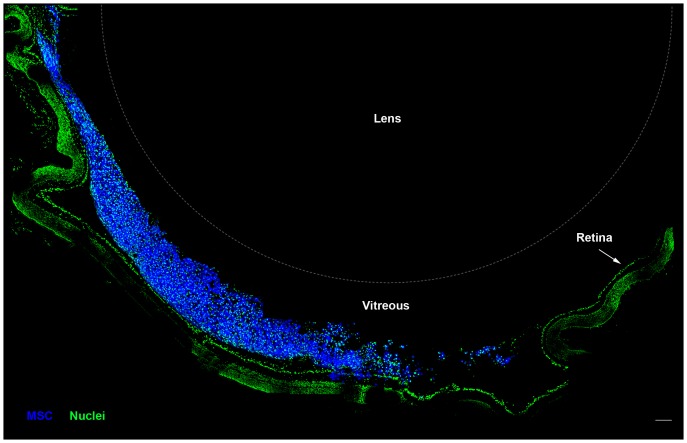
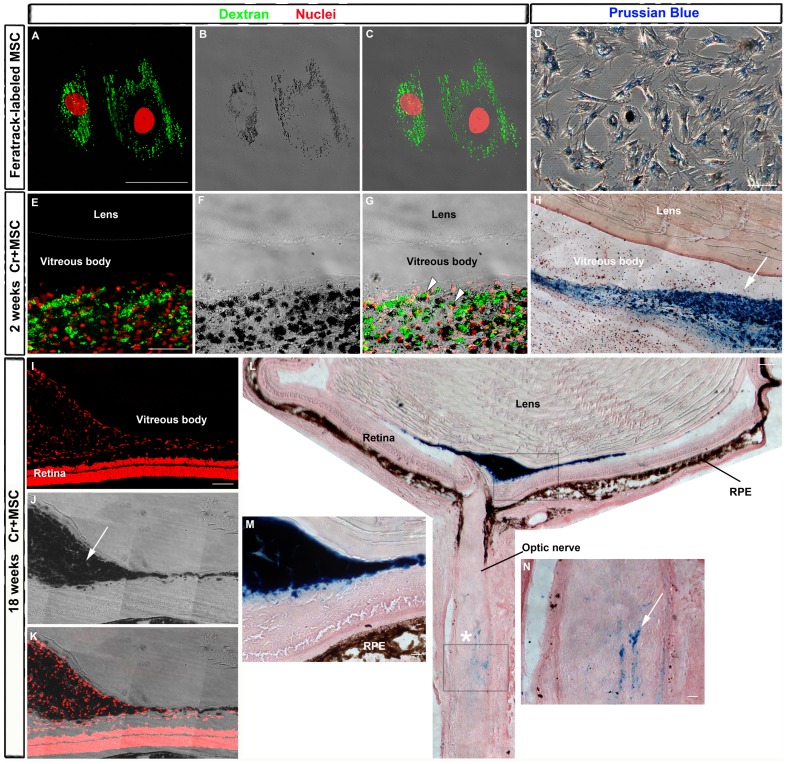
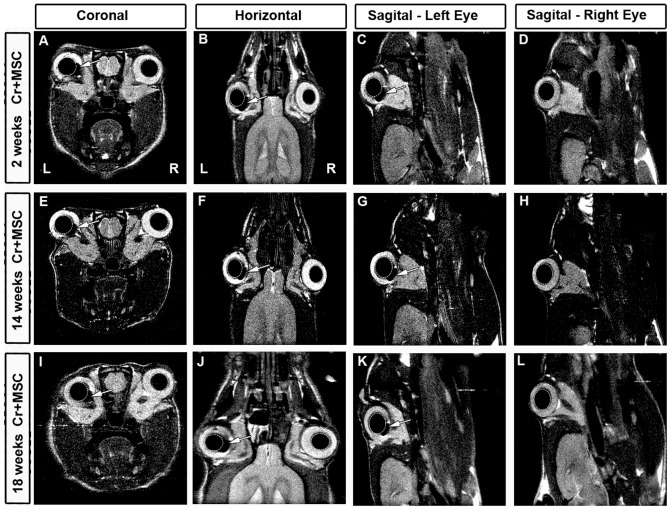
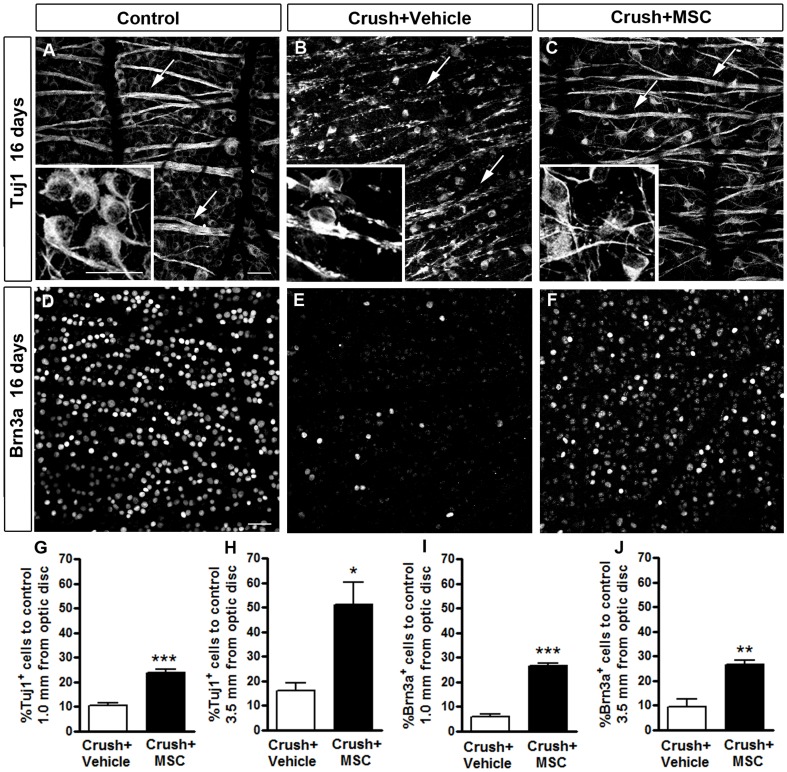
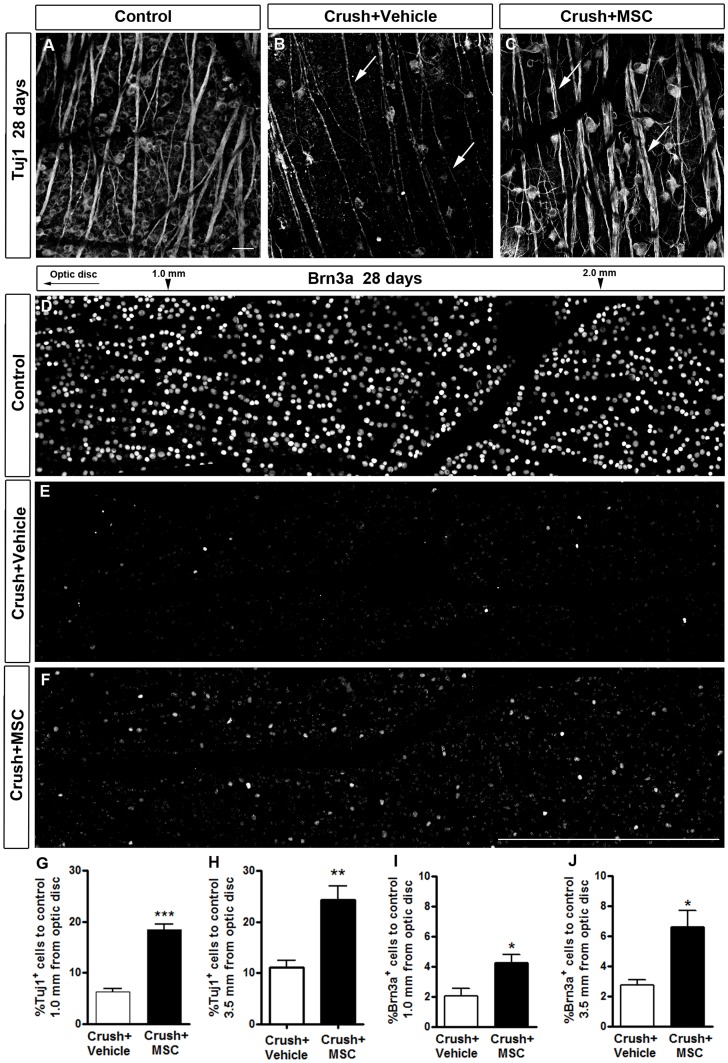
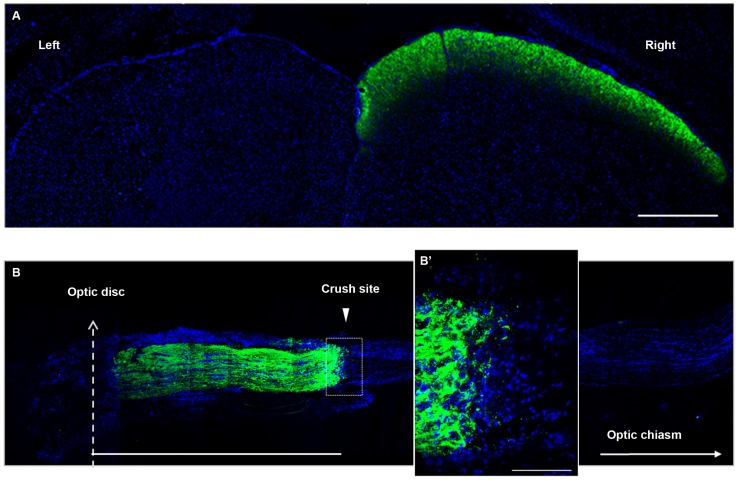
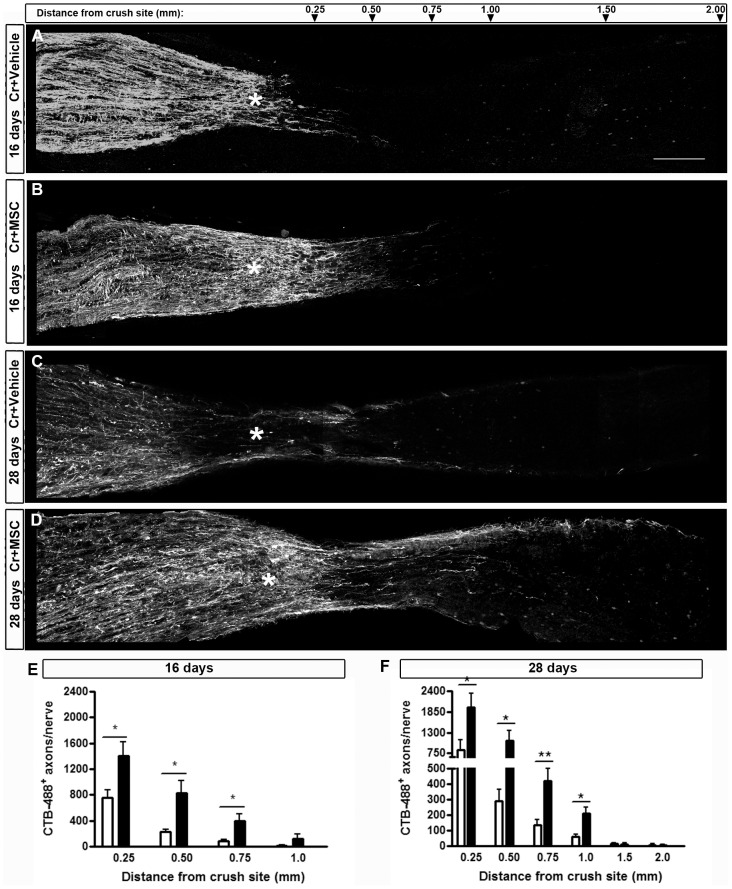
Bone marrow-derived cells have been used in different animal models of neurological diseases. We investigated the therapeutic potential of mesenchymal stem cells (MSC) injected into the vitreous body in a model of optic nerve injury. Adult (3-5 months old) Lister Hooded rats underwent unilateral optic nerve crush followed by injection of MSC or the vehicle into the vitreous body. Before they were injected, MSC were labeled with a fluorescent dye or with superparamagnetic iron oxide nanoparticles, which allowed us to track the cells in vivo by magnetic resonance imaging. Sixteen and 28 days after injury, the survival of retinal ganglion cells was evaluated by assessing the number of Tuj1- or Brn3a-positive cells in flat-mounted retinas, and optic nerve regeneration was investigated after anterograde labeling of the optic axons with cholera toxin B conjugated to Alexa 488. Transplanted MSC remained in the vitreous body and were found in the eye for several weeks. Cell therapy significantly increased the number of Tuj1- and Brn3a-positive cells in the retina and the number of axons distal to the crush site at 16 and 28 days after optic nerve crush, although the RGC number decreased over time. MSC therapy was associated with an increase in the FGF-2 expression in the retinal ganglion cells layer, suggesting a beneficial outcome mediated by trophic factors. Interleukin-1β expression was also increased by MSC transplantation. In summary, MSC protected RGC and stimulated axon regeneration after optic nerve crush. The long period when the transplanted cells remained in the eye may account for the effect observed. However, further studies are needed to overcome eventually undesirable consequences of MSC transplantation and to potentiate the beneficial ones in order to sustain the neuroprotective effect overtime.
骨髓来源的细胞已被用于多种神经疾病的动物模型。我们在视神经损伤模型中研究了注入玻璃体的间充质干细胞(MSC)的治疗潜力。成年(3 - 5个月大)的利斯特戴帽大鼠接受单侧视神经挤压,随后将MSC或赋形剂注入玻璃体。在注射前,MSC用荧光染料或超顺磁性氧化铁纳米颗粒标记,这使我们能够通过磁共振成像在体内追踪细胞。损伤后16天和28天,通过评估平铺视网膜中Tuj1或Brn3a阳性细胞的数量来评估视网膜神经节细胞的存活情况,并在用与Alexa 488偶联的霍乱毒素B对视神经轴突进行顺行标记后研究视神经再生。移植的MSC留在玻璃体内,并在眼中存在数周。细胞治疗在视神经挤压后16天和28天显著增加了视网膜中Tuj1和Brn3a阳性细胞的数量以及挤压部位远端的轴突数量,尽管视网膜神经节细胞数量随时间减少。MSC治疗与视网膜神经节细胞层中FGF - 2表达增加有关,提示由营养因子介导的有益结果。MSC移植也增加了白细胞介素 - 1β的表达。总之,MSC在视神经挤压后保护了视网膜神经节细胞并刺激了轴突再生。移植细胞在眼中停留的较长时间可能解释了观察到的效果。然而,需要进一步研究以最终克服MSC移植的不良后果并增强有益效果,以便长期维持神经保护作用。