Vascular Biology Center, Medical College of Georgia at Augusta University, United States.
Vascular Biology Center, Medical College of Georgia at Augusta University, United States; Departments of Pharmacology and Toxicology, Medical College of Georgia at Augusta University, United States.
Mol Cell Endocrinol. 2018 Sep 15;473:79-88. doi: 10.1016/j.mce.2018.01.006. Epub 2018 Jan 16.
Inflammation in adipose tissues in obesity promotes insulin resistance and metabolic disease. The Duffy antigen receptor for chemokines (DARC) is a promiscuous non-signaling receptor expressed on erythrocytes and other cell types that modulates tissue inflammation by binding chemokines such as monocyte chemoattractant protein-1 (MCP-1) and by acting as a chemokine reservoir. DARC allelic variants are common in humans, but the role of DARC in modulating obesity-related metabolic disease is unknown.
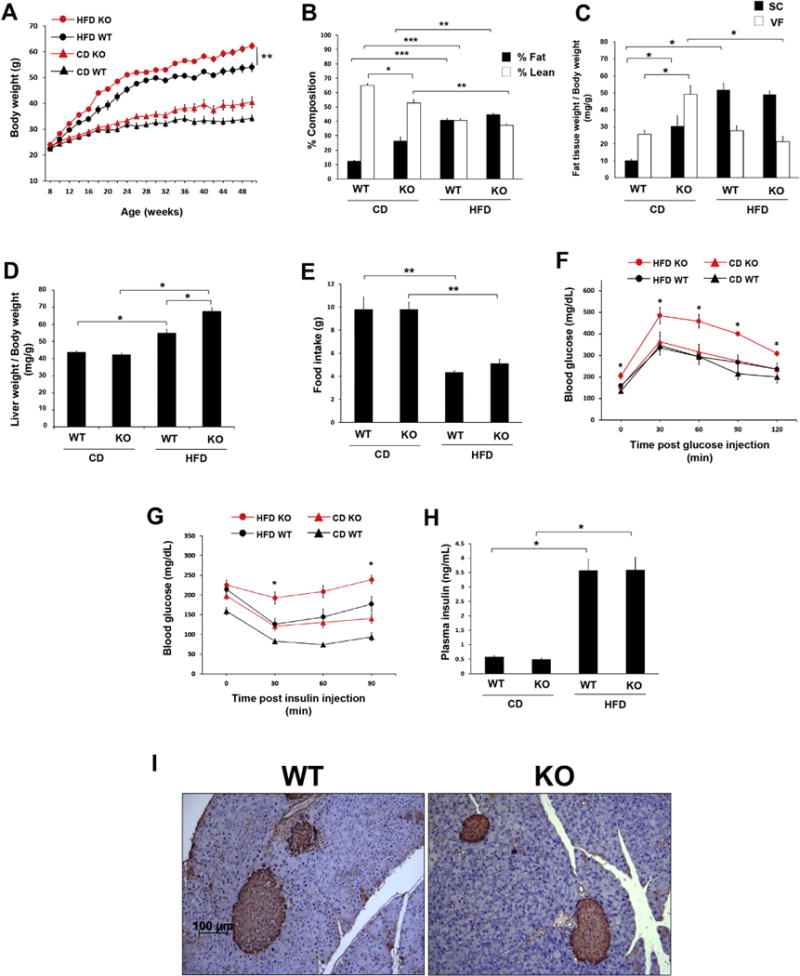
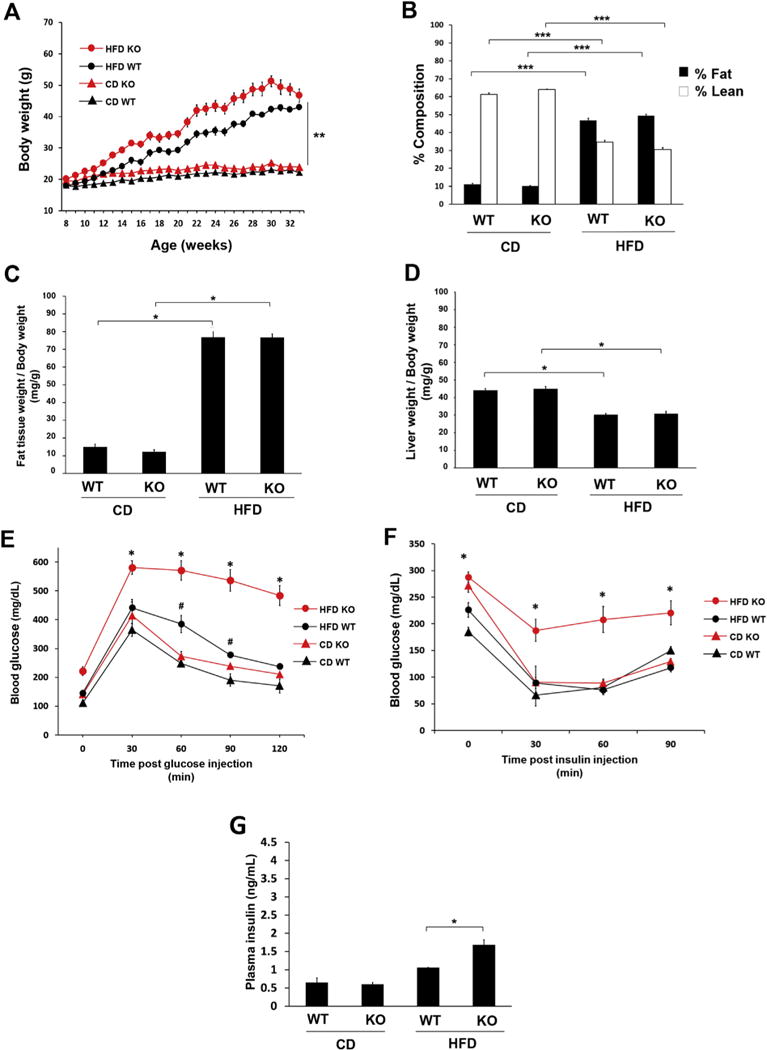
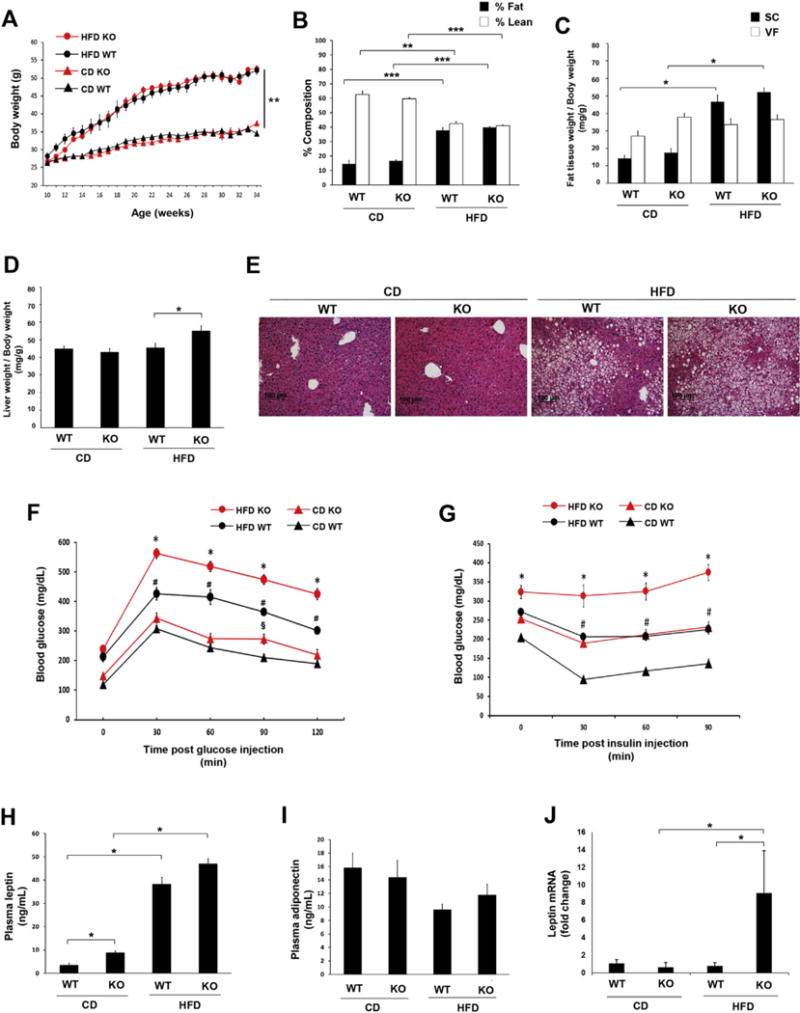
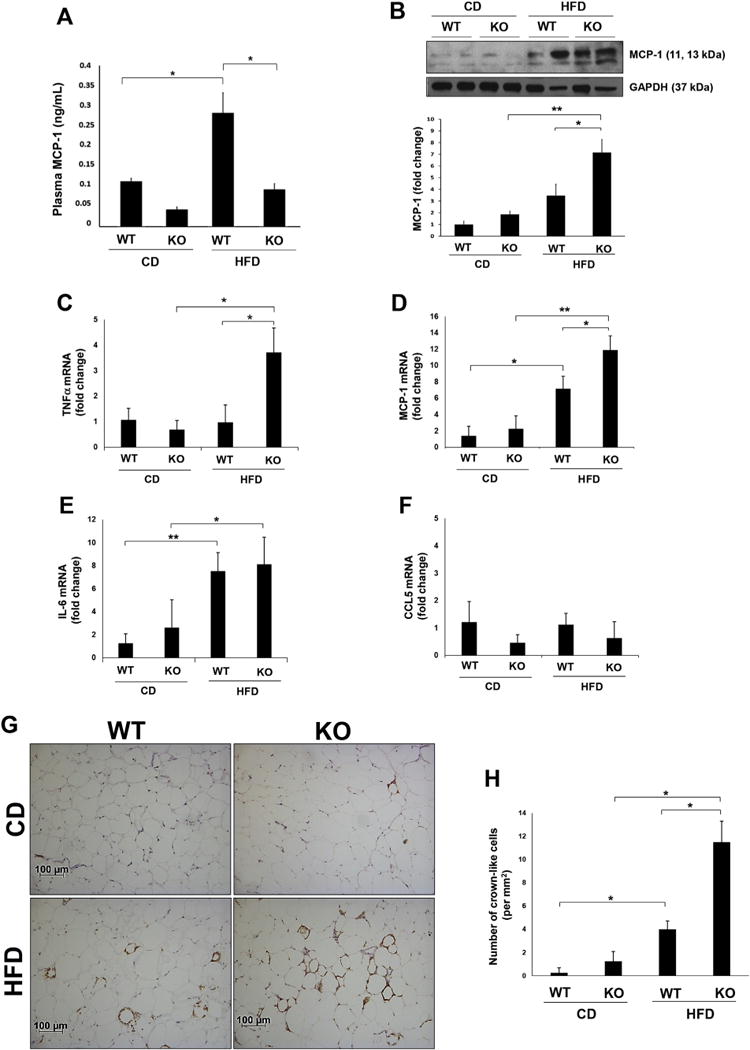
We examined body weight gain, tissue adiposity, metabolic parameters and inflammatory marker expression in wild-type and DARC knockout mice fed a chow diet (CD) and high fat diet (HFD).
Compared to wild-type mice, HFD-fed DARC knockout mice developed glucose intolerance and insulin resistance independent of increases in body weight or adiposity. Interestingly, insulin sensitivity was also diminished in lean male DARC knockout mice fed a chow diet. Insulin production was not reduced by DARC gene deletion, and plasma leptin levels were similar in HFD fed wild-type and DARC knockout mice. MCP-1 levels in plasma rose significantly in the HFD fed wild-type mice, but not in the DARC knockout mice. Conversely, adipose tissue MCP-1 levels were higher, and more macrophage crown-like structures were detected, in the HFD fed DARC knockout mice as compared with the wild-type mice, consistent with augmented adipose tissue inflammation that is not accurately reflected by plasma levels of DARC-bound MCP-1 in these mice.
These findings suggest that DARC regulates metabolic function and adipose tissue inflammation, which may impact obesity-related disease in ethnic populations with high frequencies of DARC allelic variants.
肥胖症脂肪组织中的炎症会促进胰岛素抵抗和代谢疾病。趋化因子的达菲抗原受体(DARC)是一种在红细胞和其他细胞类型上表达的混杂非信号受体,通过结合趋化因子(如单核细胞趋化蛋白-1(MCP-1))和充当趋化因子储库来调节组织炎症。DARC 等位基因变体在人类中很常见,但 DARC 在调节肥胖相关代谢疾病中的作用尚不清楚。
我们研究了在给予普通饮食(CD)和高脂肪饮食(HFD)的野生型和 DARC 敲除小鼠中,体重增加、组织肥胖、代谢参数和炎症标志物表达情况。
与野生型小鼠相比,HFD 喂养的 DARC 敲除小鼠在不增加体重或肥胖的情况下出现葡萄糖不耐受和胰岛素抵抗。有趣的是,在给予普通饮食的瘦雄性 DARC 敲除小鼠中,胰岛素敏感性也降低了。DARC 基因缺失并未降低胰岛素的产生,并且 HFD 喂养的野生型和 DARC 敲除小鼠的血浆瘦素水平相似。在 HFD 喂养的野生型小鼠中,MCP-1 水平显著升高,但在 DARC 敲除小鼠中则没有升高。相反,与野生型小鼠相比,HFD 喂养的 DARC 敲除小鼠的脂肪组织 MCP-1 水平更高,并且检测到更多的巨噬细胞冠状结构,这表明脂肪组织炎症增强,但这些小鼠中 DARC 结合的 MCP-1 的血浆水平不能准确反映这种情况。
这些发现表明,DARC 调节代谢功能和脂肪组织炎症,这可能会影响具有高频率 DARC 等位基因变体的种族人群中的肥胖相关疾病。