Hirata Michiko, Tominari Tsukasa, Matsumoto Chiho, Kasuga Urara, Ikeda Keisuke, Miyaura Chisato, Grundler Florian M W, Inada Masaki
Department of Biotechnology and Life Science, Tokyo University of Agriculture and Technology, 2-24-16 Nakacho, Koganei-shi 184-8588, Tokyo, Japan.
Inada Research Unit, Institute of Global Innovation Research, Tokyo University of Agriculture and Technology, 2-24-16 Nakacho, Koganei-shi 184-8588, Tokyo, Japan.
Nutrients. 2025 Feb 27;17(5):822. doi: 10.3390/nu17050822.
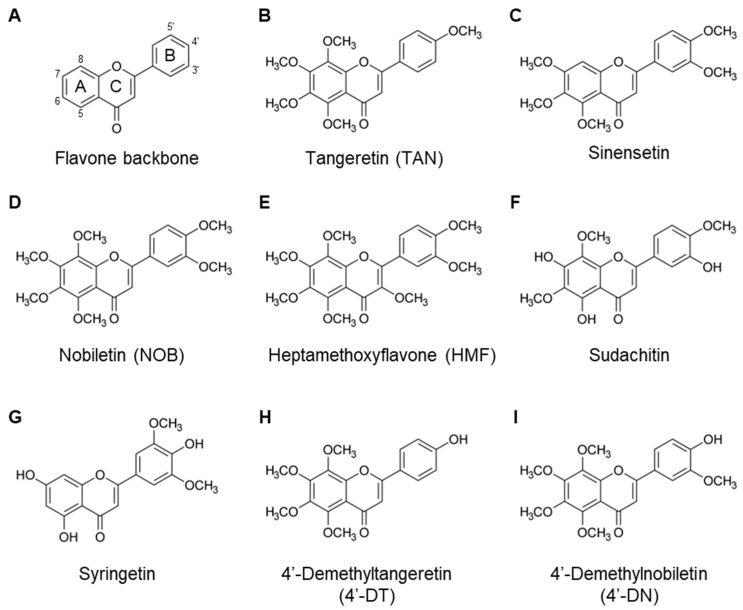
Phytochemicals, such as flavonoids, are bioactive compounds produced by plants, including citrus fruits, that exhibit antioxidant effects on mammalian cells and tissues. Polymethoxyflavones (PMFs) are a family of flavonoids found in the pulp and peel of citrus fruits, and have been reported to have potent antioxidant activity implicated in the prevention of human diseases. Several studies have shown that PMFs have a protective effect on bone resorption in mouse models of diseases, including osteoporosis, rheumatoid arthritis, and periodontal disease. PMFs significantly suppressed the differentiation of osteoclasts (bone resorptive cells) through indirect and direct mechanisms. The indirect effect of PMFs is the suppression of inflammatory mediator production, such as prostaglandin E2 (PGE2), and the reduction of osteoclastic inducers, such as the receptor activator of NF-κB ligand (RANKL), in osteoblasts (bone-forming cells). The direct effect of PMF suppresses osteoclast differentiation and function by inhibiting the NF-κB signaling pathway. In silico molecular docking studies indicated that PMFs target the ATP-binding pocket of IKKβ and inhibit the NF-κB signaling pathway. These findings suggest that PMFs protect against bone destruction by interfering with the NF-κB pathway in osteoblasts and osteoclasts. In this review, we summarize the latest findings regarding the effects of PMFs on various bone resorption-related diseases in mouse models.
植物化学物质,如黄酮类化合物,是包括柑橘类水果在内的植物产生的生物活性化合物,对哺乳动物细胞和组织具有抗氧化作用。多甲氧基黄酮(PMFs)是一类存在于柑橘类水果果肉和果皮中的黄酮类化合物,据报道具有强大的抗氧化活性,与预防人类疾病有关。多项研究表明,PMFs在包括骨质疏松症、类风湿性关节炎和牙周病在内的疾病小鼠模型中对骨吸收具有保护作用。PMFs通过间接和直接机制显著抑制破骨细胞(骨吸收细胞)的分化。PMFs的间接作用是抑制成骨细胞(骨形成细胞)中炎性介质的产生,如前列腺素E2(PGE2),并减少破骨细胞诱导剂,如核因子κB受体活化因子配体(RANKL)。PMF的直接作用是通过抑制核因子κB信号通路来抑制破骨细胞的分化和功能。计算机模拟分子对接研究表明,PMFs靶向IKKβ的ATP结合口袋并抑制核因子κB信号通路。这些发现表明,PMFs通过干扰成骨细胞和破骨细胞中的核因子κB途径来预防骨质破坏。在这篇综述中,我们总结了关于PMFs对小鼠模型中各种骨吸收相关疾病影响的最新发现。