Mayorova Tatiana D, Smith Carolyn L, Hammar Katherine, Winters Christine A, Pivovarova Natalia B, Aronova Maria A, Leapman Richard D, Reese Thomas S
Laboratory of Neurobiology, National Institute of Neurological Disorders and Stroke, National Institutes of Health, Bethesda, Maryland, United States of America.
Laboratory of Developmental Neurobiology, Koltzov Institute of Developmental Biology, Russian Academy of Science, Moscow, Russia.
PLoS One. 2018 Jan 17;13(1):e0190905. doi: 10.1371/journal.pone.0190905. eCollection 2018.
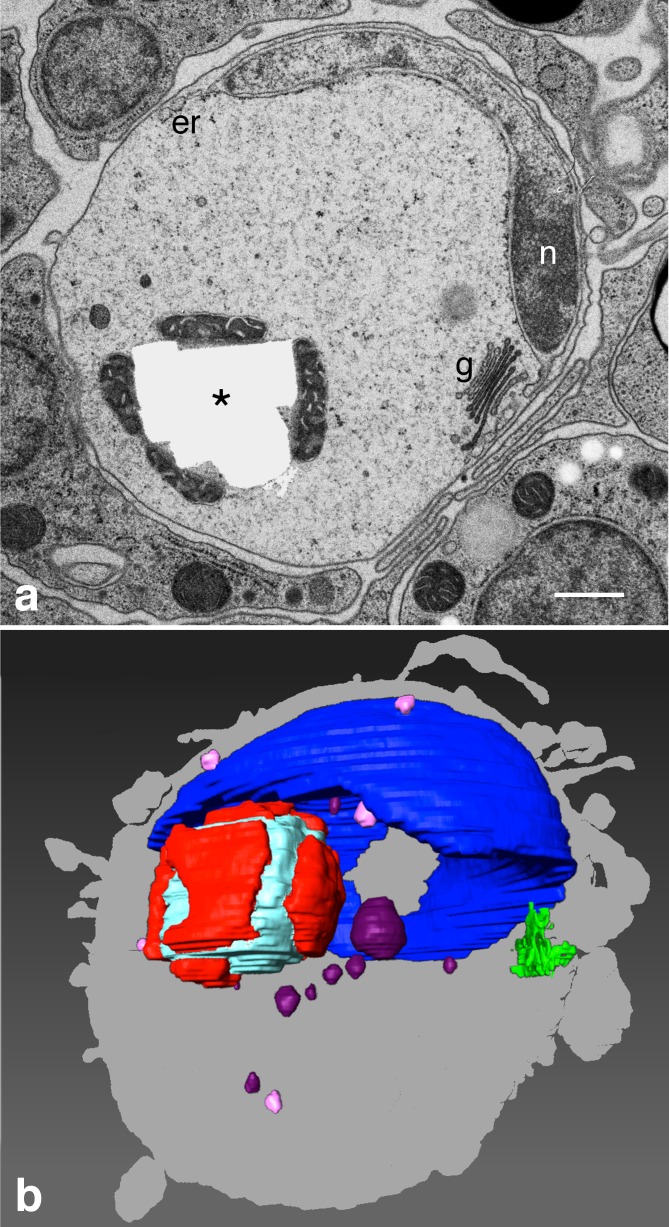
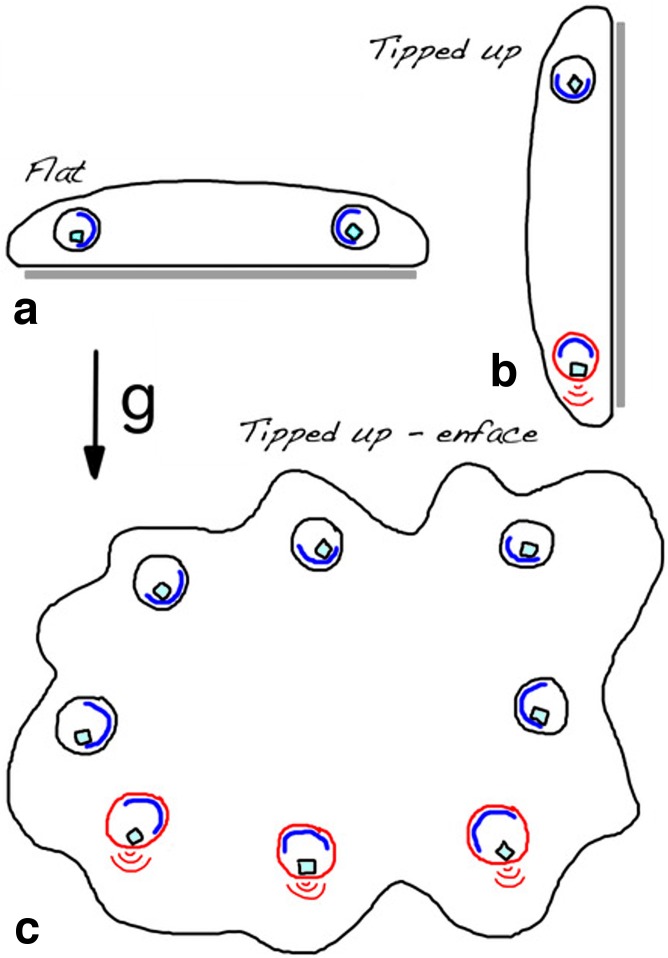
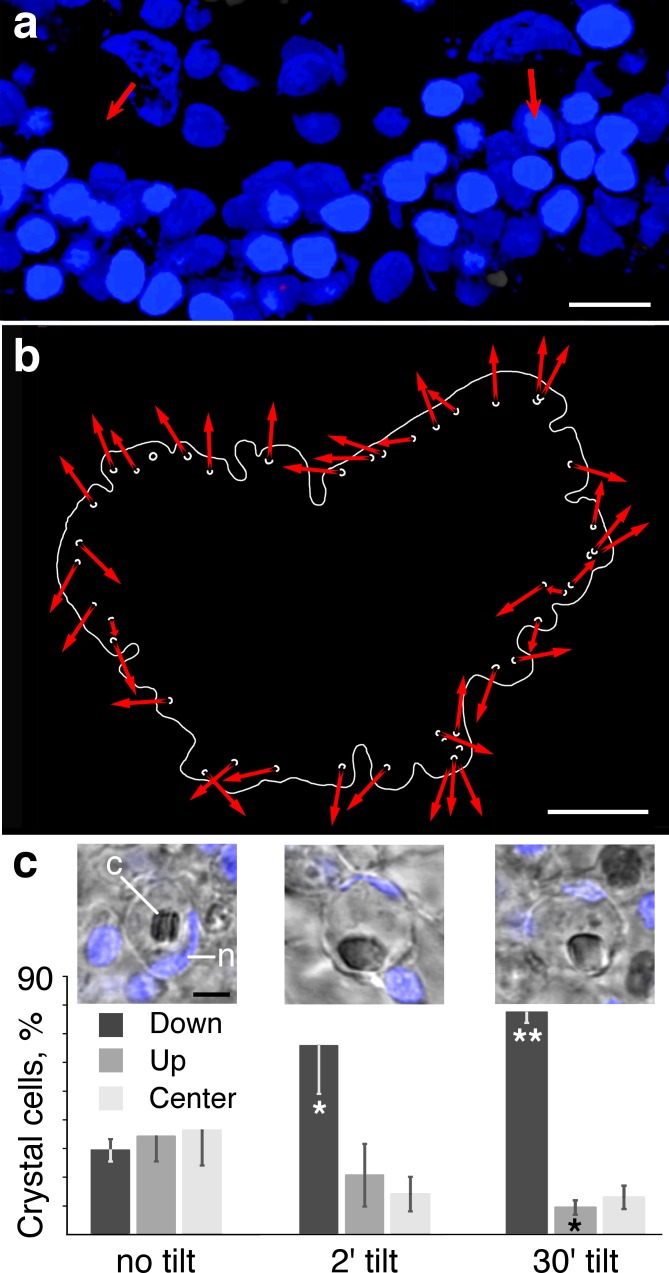
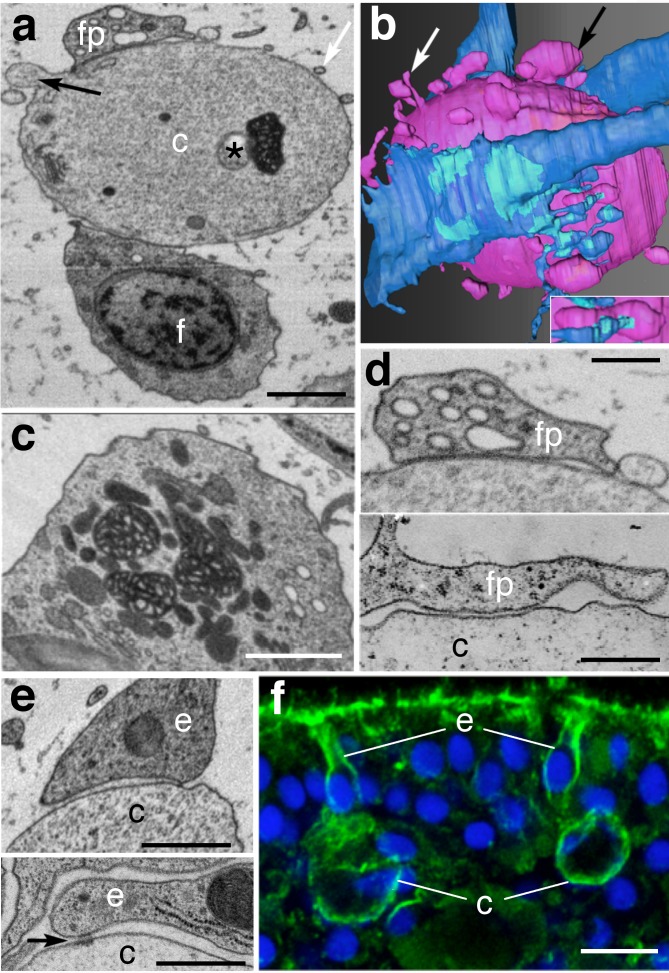
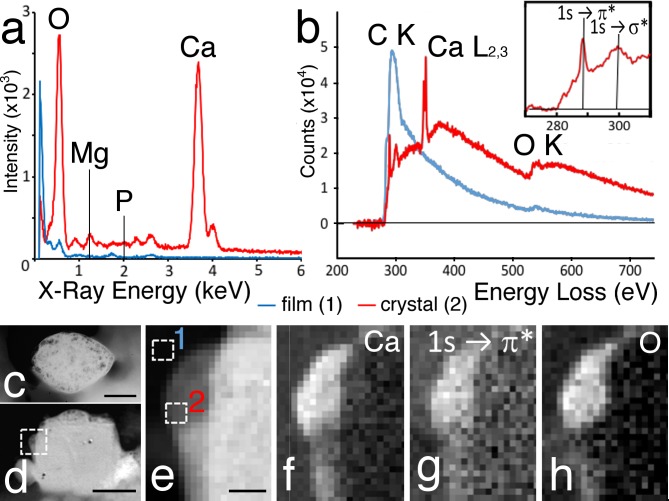
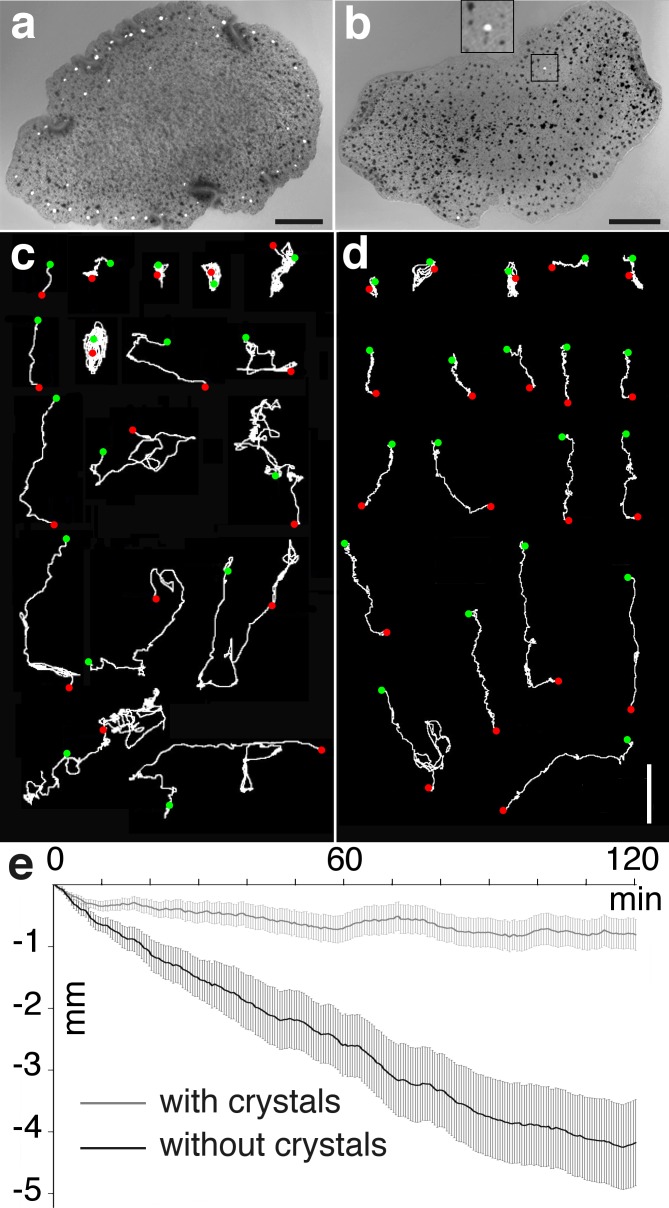
Trichoplax adhaerens has only six cell types. The function as well as the structure of crystal cells, the least numerous cell type, presented an enigma. Crystal cells are arrayed around the perimeter of the animal and each contains a birefringent crystal. Crystal cells resemble lithocytes in other animals so we looked for evidence they are gravity sensors. Confocal microscopy showed that their cup-shaped nuclei are oriented toward the edge of the animal, and that the crystal shifts downward under the influence of gravity. Some animals spontaneously lack crystal cells and these animals behaved differently upon being tilted vertically than animals with a typical number of crystal cells. EM revealed crystal cell contacts with fiber cells and epithelial cells but these contacts lacked features of synapses. EM spectroscopic analyses showed that crystals consist of the aragonite form of calcium carbonate. We thus provide behavioral evidence that Trichoplax are able to sense gravity, and that crystal cells are likely to be their gravity receptors. Moreover, because placozoans are thought to have evolved during Ediacaran or Cryogenian eras associated with aragonite seas, and their crystals are made of aragonite, they may have acquired gravity sensors during this early era.
黏丝盘虫只有六种细胞类型。数量最少的细胞类型——晶细胞的功能和结构一直是个谜。晶细胞排列在动物体的周边,每个晶细胞都含有一个双折射晶体。晶细胞类似于其他动物中的石细胞,因此我们寻找它们作为重力传感器的证据。共聚焦显微镜显示,它们杯状的细胞核朝向动物体边缘,并且晶体在重力影响下向下移动。一些动物自然地缺少晶细胞,与具有典型数量晶细胞的动物相比,这些动物在垂直倾斜时表现不同。电子显微镜显示晶细胞与纤维细胞和上皮细胞有接触,但这些接触缺乏突触的特征。电子能谱分析表明,晶体由文石形式的碳酸钙组成。因此,我们提供了行为学证据,证明黏丝盘虫能够感知重力,并且晶细胞可能是它们的重力感受器。此外,由于扁盘动物被认为是在与文石海相关的埃迪卡拉纪或成冰纪时期进化而来的,并且它们的晶体由文石制成,它们可能在这个早期阶段就获得了重力传感器。