State Key Laboratory for Infectious Disease Prevention and Control, Collaborative Innovation Center for Diagnosis and Treatment of Infectious Diseases, National Institute for Communicable Disease Control and Prevention, Chinese Center for Disease Control and Prevention, Beijing, 102206, China.
Department of Microbiology and Immunology, Peter Doherty Institute for Infection and Immunity, The University of Melbourne, Melbourne, Victoria, Australia.
EBioMedicine. 2018 Feb;28:128-135. doi: 10.1016/j.ebiom.2018.01.010. Epub 2018 Jan 11.
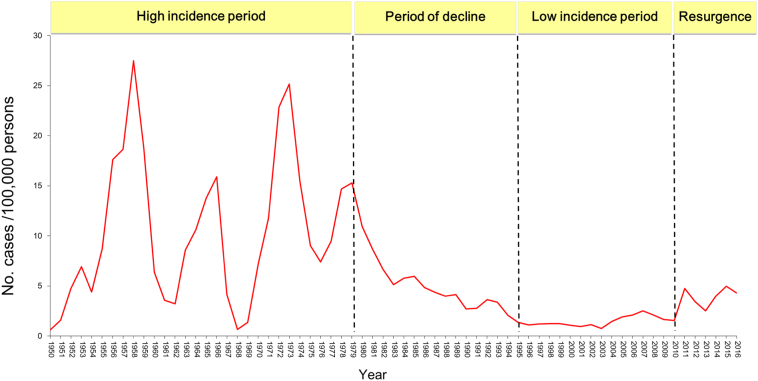
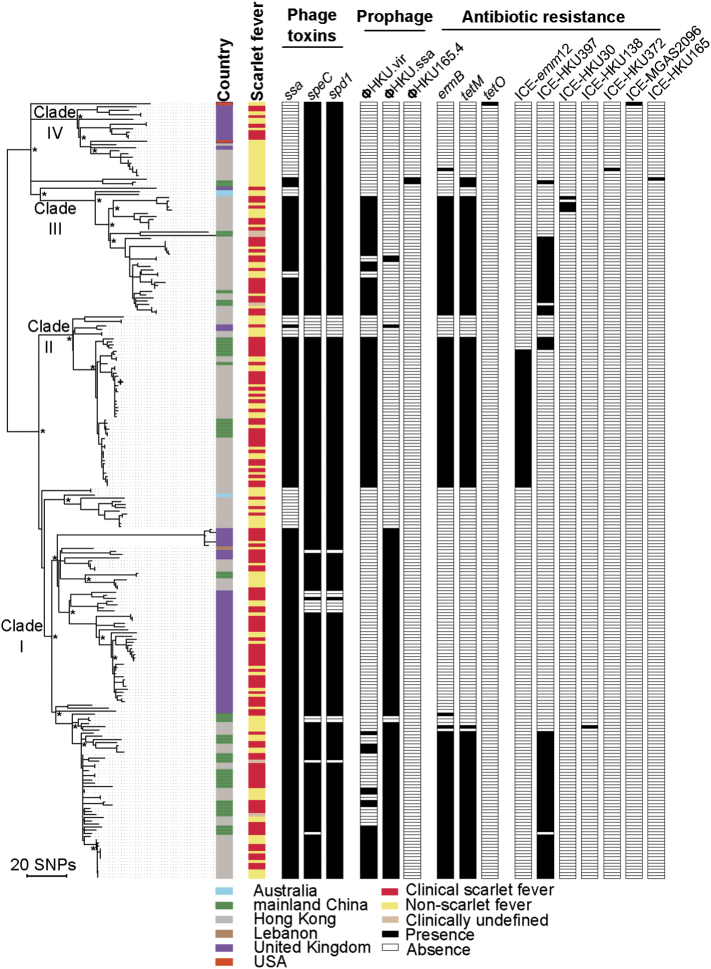
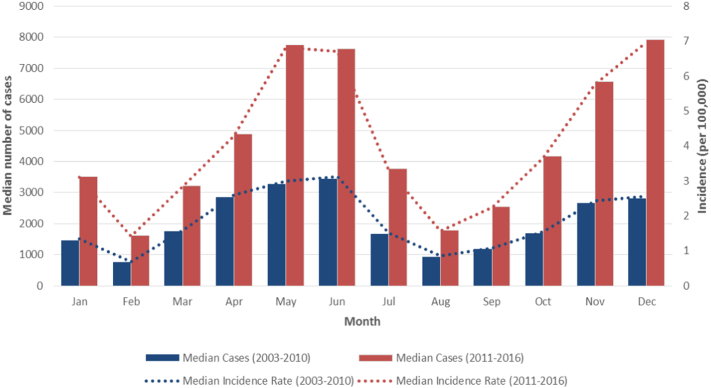
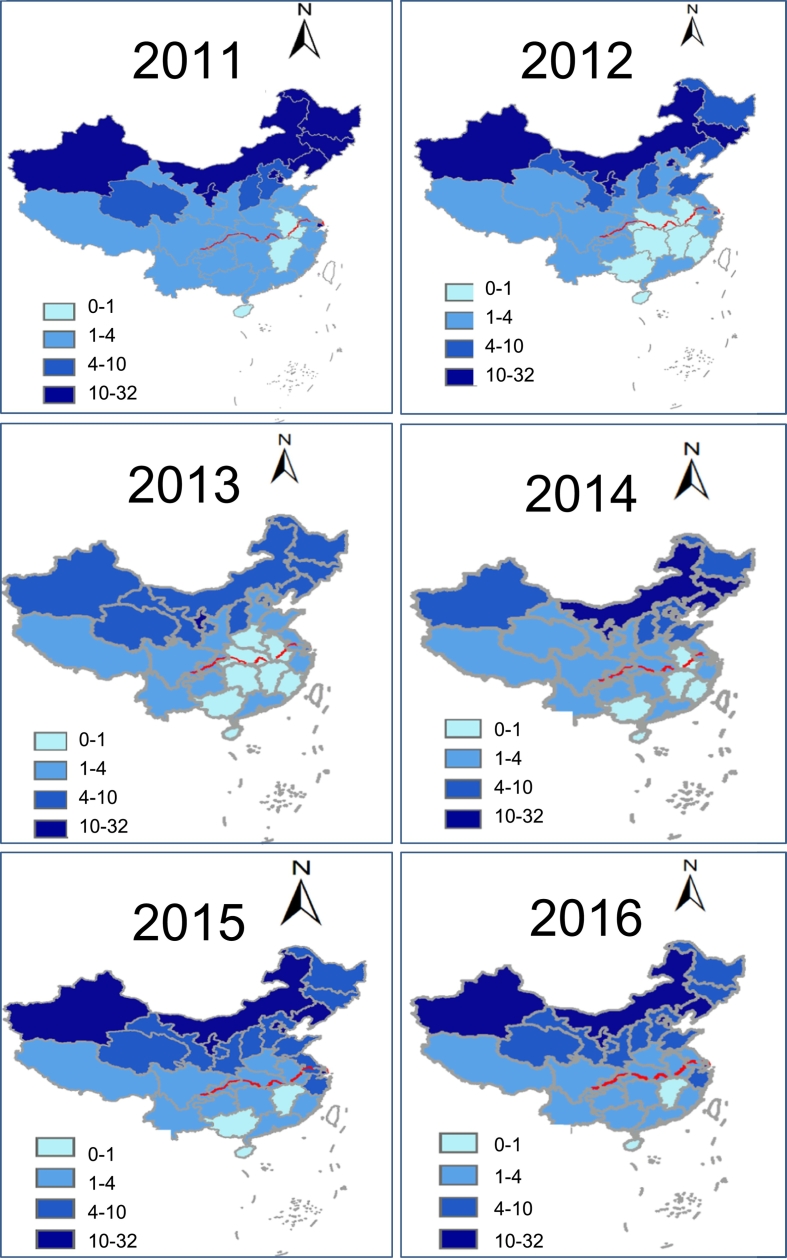
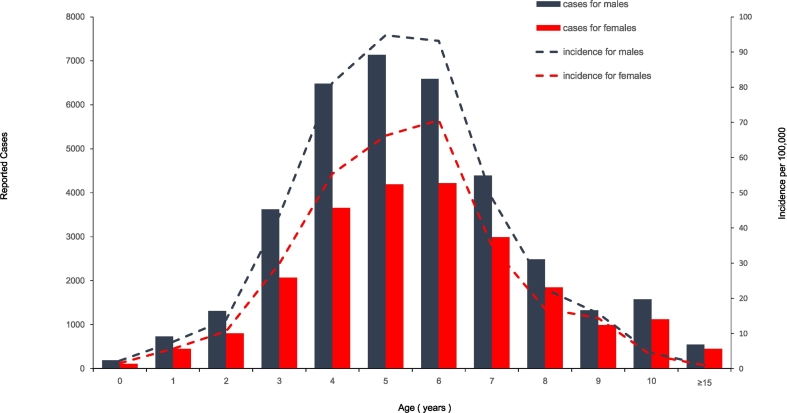
From 2011, Hong Kong and mainland China have witnessed a sharp increase in reported cases, with subsequent reports of epidemic scarlet fever in North Asia and the United Kingdom. Here we examine epidemiological data and investigate the genomic context of the predominantly serotype M12 Streptococcus pyogenes scarlet fever isolates from mainland China. Incident case data was obtained from the Chinese Nationwide Notifiable Infectious Diseases Reporting Information System. The relative risk of scarlet fever in recent outbreak years 2011-2016 was calculated using the median age-standardised incidence rate, compared to years 2003-2010 prior this outbreak. Whole genome sequencing was performed on 32 emm12 scarlet fever isolates and 13 emm12 non-scarlet fever isolates collected from different geographic regions of China, and compared with 203 published emm12 S. pyogenes genomes predominantly from scarlet fever outbreaks in Hong Kong (n=134) and the United Kingdom (n=63). We found during the outbreak period (2011-2016), the median age-standardised incidence in China was 4.14/100,000 (95% confidence interval (CI) 4.11-4.18), 2.62-fold higher (95% CI 2.57-2.66) than that of 1.58/100,000 (95% CI 1.56-1.61) during the baseline period prior to the outbreak (2003-2010). Highest incidence was reported for children 5years of age (80.5/100,000). Streptococcal toxin encoding prophage φHKU.vir and φHKU.ssa in addition to the macrolide and tetracycline resistant ICE-emm12 and ICE-HKU397 elements were found amongst mainland China multi-clonal emm12 isolates suggesting a role in selection and expansion of scarlet fever lineages in China. Global dissemination of toxin encoded prophage has played a role in the expansion of scarlet fever emm12 clones. These findings emphasize the role of comprehensive surveillance approaches for monitoring of epidemic human disease.
自 2011 年以来,香港和中国大陆报告的猩红热病例急剧增加,随后在北亚和英国也有猩红热流行的报告。在这里,我们研究了流行病学数据,并调查了来自中国大陆的主要血清型 M12 化脓性链球菌猩红热分离株的基因组背景。从中国全国传染病报告信息系统中获取了发病数据。使用中位年龄标准化发病率,比较了发病前的 2003-2010 年(n=134)与 2011-2016 年(n=134)的猩红热发病率。对来自中国不同地理区域的 32 株 emm12 猩红热分离株和 13 株 emm12 非猩红热分离株进行了全基因组测序,并与香港(n=134)和英国(n=63)猩红热流行期间的 203 株发表的 emm12 S. pyogenes 基因组进行了比较。我们发现,在流行期间(2011-2016 年),中国的中位年龄标准化发病率为 4.14/100,000(95%置信区间(CI)4.11-4.18),是流行前(2003-2010 年)的 2.62 倍(95%CI 2.57-2.66)。发病率最高的是 5 岁儿童(80.5/100,000)。除了大环内酯类和四环素耐药的 ICE-emm12 和 ICE-HKU397 元件外,噬菌体质粒 φHKU.vir 和 φHKU.ssa 编码链球菌毒素也存在于中国大陆多克隆 emm12 分离株中,这表明其在选择和扩展中国猩红热谱系方面发挥了作用。编码毒素的噬菌体质粒的全球传播在猩红热 emm12 克隆的扩展中发挥了作用。这些发现强调了综合监测方法在监测人类传染病方面的作用。