School of Public Health, PGIMER, Sector-12, Chandigarh, 160012, India.
Department of Health Services Research, Care and Public Health Research Institute, Faculty of Health, Medicine and Life Sciences, Maastricht University, Maastricht, The Netherlands.
BMC Med Educ. 2018 Jan 17;18(1):16. doi: 10.1186/s12909-018-1123-4.
There is a significant shortage of health workers across and within countries. It is of utmost importance to determine the factors that motivate students to opt for medical studies. The objective of this study is to group and review all the studies that investigated the motivational factors that underpin students' selection of medical study in recent years.
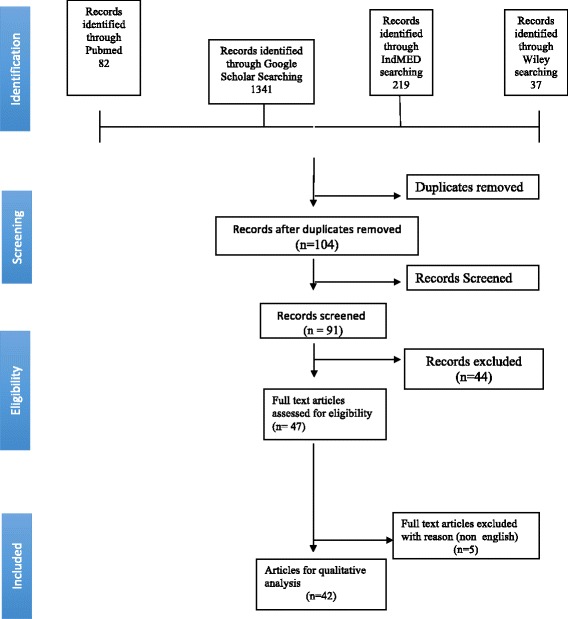
The literature search was carried out by two researchers independently in PubMed, Google Scholar, Wiley and IndMED databases for articles published from year 2006 till 2016. A total of 38 combinations of MeSH words were used for search purpose. Studies related to medical students and interns have been included. The application of inclusion and exclusion criteria and PRISMA guidelines for reporting systematic review led to the final selection of 24 articles.
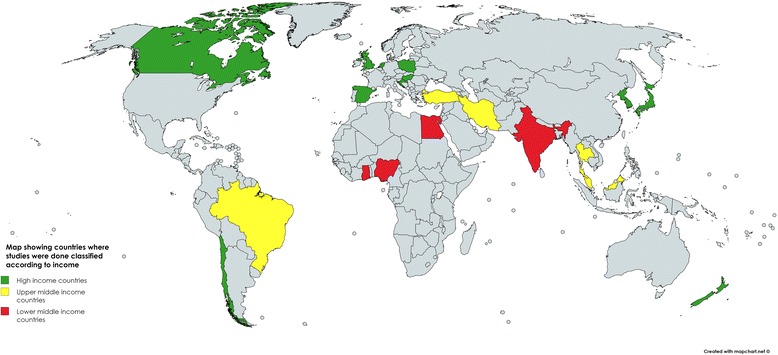
The majority of the studies (n = 16; 66.6%) were from high-income countries followed by an equal number from upper-middle and lower-middle income countries (n = 4,16.7%). None of the studies were from low-income countries. All of the studies were cross-sectional in nature. The main motivating factors that emerged were scientific (interest in science / medicine, social interest and academia, flexible work hours and work independence), societal (prestige, job security, financial security) and humanitarian (serving the poor and under priviledged) in high-, upper-middle and lower-middle income countries, respectively. The findings were comparable to Maslow's hierarchy of needs theory of motivation.
This systematic review identifies the motivational factors influencing students to join medical studies in different parts of the globe. These factors vary per country depending on the level of income. This study offers cues to policy makers and educators to formulate policy in order to tackle the shortage of health workers, i.e. medical doctors. However, more research is needed to translate health policy into concrete and effective measures.
全球和各国都面临着卫生工作者短缺的问题。确定激励学生选择医学研究的因素至关重要。本研究旨在对近年来调查支撑学生选择医学研究的动机因素的所有研究进行分组和综述。
两位研究人员分别在 PubMed、Google Scholar、Wiley 和 IndMED 数据库中进行了文献检索,检索了 2006 年至 2016 年期间发表的文章。共使用了 38 组 MeSH 词进行搜索。纳入了与医学生和实习医生相关的研究。纳入和排除标准的应用以及 PRISMA 指南用于报告系统评价,最终选择了 24 篇文章。
大多数研究(n=16;66.6%)来自高收入国家,其次是来自中上收入和中下收入国家的同等数量(n=4;16.7%)。没有来自低收入国家的研究。所有研究均为横断面研究。出现的主要激励因素在高、中上和中下收入国家分别为科学(对科学/医学的兴趣、社会兴趣和学术界、灵活的工作时间和工作独立性)、社会(声望、工作保障、经济保障)和人道主义(为贫困和弱势群体服务)。研究结果与 Maslow 的激励需求层次理论相符。
本系统评价确定了影响全球不同地区学生选择医学研究的动机因素。这些因素因国家而异,取决于收入水平。本研究为政策制定者和教育工作者提供了线索,以制定政策来解决卫生工作者(即医生)短缺的问题。然而,需要更多的研究将卫生政策转化为具体有效的措施。