
关于HIV自我检测的争论:我们目前的立场是什么?
The HIV self-testing debate: where do we stand?
作者信息
Gagnon Marilou, French Martin, Hébert Yamilee
机构信息
School of Nursing, Faculty of Health Sciences, University of Ottawa, 451 Smyth Road, Ottawa, ON, K1H8M5, Canada.
Department of Sociology and Anthropology, Faculty of Arts and Science, Concordia University, 1455 de Maisonneuve Blvd. W. Montréal, Ottawa, H3G 1M8, Canada.
出版信息
BMC Int Health Hum Rights. 2018 Jan 18;18(1):5. doi: 10.1186/s12914-018-0146-6.
BACKGROUND
Emphasis on HIV testing as a gateway to prevention, treatment and care has grown tremendously over the past decade. In turn, this emphasis on testing has created a demand for new policies, programs, and technologies that can potentially increase access to and uptake of HIV testing. HIV self-testing (HST) technologies have gained important momentum following the approval of the over-the-counter self-tests in the United States, the UK, and France. While the renewed interest in HST has given rise to a number of high quality reviews of empirical studies conducted on this topic, we have yet to find an article that captures the extent of the debate on HST.
MAPPING THE DEBATE
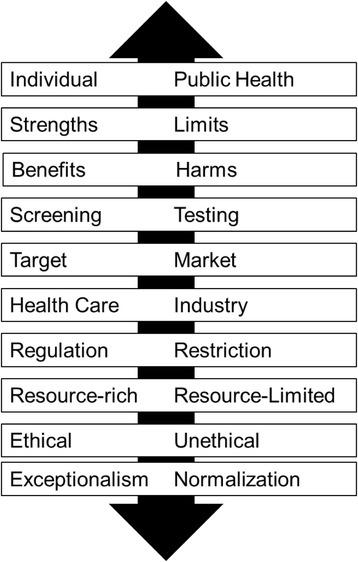
A critical review of the literature on HST was conducted and organized into three categories based on the focus of the article: 1) Empirical research, 2) Arguments, and 3) Context. We focused exclusively on the second category which included ethical analyses, policy analyses, editorials, opinion pieces, commentaries, letters to the editor and so forth. 10 lines of argument on HST were identified in the literature: 1) Individual - Public Health, 2) Strengths - Limits, 3) Benefits - Harms, 4) Screening - Testing, 5) Target - Market, 6) Health Care - Industry, 7) Regulation - Restriction, 8) Resource-Rich Settings - Resource-Limited Settings, 9) Ethical - Unethical, and 10) Exceptionalism - Normalization. Each line of argument is presented and discussed in the paper.
CONCLUSION
We conclude by providing examples of critical questions that should be raised in order to take the debate to another level and generate new ways of thinking about HST.
背景
在过去十年中,将艾滋病毒检测作为预防、治疗和护理途径的重视程度大幅提高。相应地,这种对检测的重视催生了对新政策、项目和技术的需求,这些政策、项目和技术有可能增加艾滋病毒检测的可及性和接受度。在美国、英国和法国非处方自测获得批准后,艾滋病毒自我检测(HST)技术获得了重要发展势头。虽然对HST重新燃起的兴趣引发了对该主题实证研究的一些高质量综述,但我们尚未找到一篇文章能涵盖关于HST的辩论范围。
梳理辩论内容
对关于HST的文献进行了批判性综述,并根据文章重点分为三类:1)实证研究,2)论点,3)背景。我们专门关注第二类,其中包括伦理分析、政策分析、社论、评论文章、评论、给编辑的信等等。在文献中确定了关于HST的10条辩论思路:1)个人 - 公共卫生,2)优势 - 局限,3)益处 - 危害,4)筛查 - 检测,5)目标 - 市场,6)医疗保健 - 行业,7)监管 - 限制,8)资源丰富环境 - 资源有限环境,9)伦理 - 不伦理,10)例外主义 - 常态化。本文对每条辩论思路都进行了阐述和讨论。
结论
我们通过提供一些关键问题的例子来得出结论,这些问题应该被提出,以便将辩论提升到另一个层次,并产生关于HST的新思维方式。


 Zotero 插件