Matentzoglu Nicolas, Malone James, Mungall Chris, Stevens Robert
School of Computer Science, University of Manchester, Oxford Road, Manchester, UK.
FactBio, Innovation Centre, Cambridge Science Park, Cambridge, CB4 0EY, UK.
J Biomed Semantics. 2018 Jan 18;9(1):6. doi: 10.1186/s13326-017-0172-7.
Creation and use of ontologies has become a mainstream activity in many disciplines, in particular, the biomedical domain. Ontology developers often disseminate information about these ontologies in peer-reviewed ontology description reports. There appears to be, however, a high degree of variability in the content of these reports. Often, important details are omitted such that it is difficult to gain a sufficient understanding of the ontology, its content and method of creation.
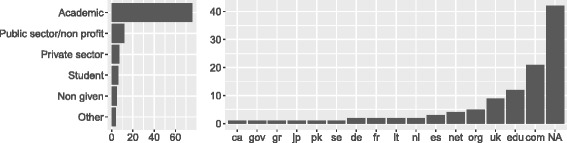
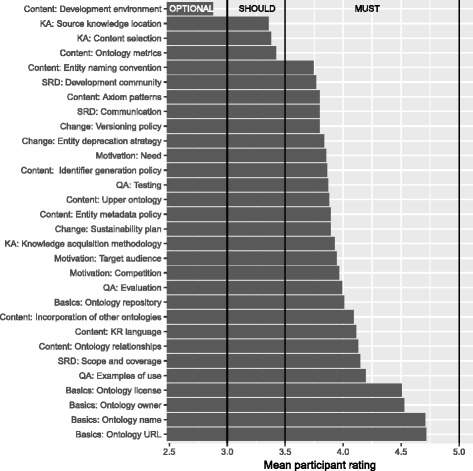
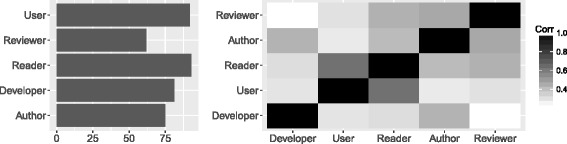
We propose the Minimum Information for Reporting an Ontology (MIRO) guidelines as a means to facilitate a higher degree of completeness and consistency between ontology documentation, including published papers, and ultimately a higher standard of report quality. A draft of the MIRO guidelines was circulated for public comment in the form of a questionnaire, and we subsequently collected 110 responses from ontology authors, developers, users and reviewers. We report on the feedback of this consultation, including comments on each guideline, and present our analysis on the relative importance of each MIRO information item. These results were used to update the MIRO guidelines, mainly by providing more detailed operational definitions of the individual items and assigning degrees of importance. Based on our revised version of MIRO, we conducted a review of 15 recently published ontology description reports from three important journals in the Semantic Web and Biomedical domain and analysed them for compliance with the MIRO guidelines. We found that only 41.38% of the information items were covered by the majority of the papers (and deemed important by the survey respondents) and a large number of important items are not covered at all, like those related to testing and versioning policies.
We believe that the community-reviewed MIRO guidelines can contribute to improving significantly the quality of ontology description reports and other documentation, in particular by increasing consistent reporting of important ontology features that are otherwise often neglected.
本体的创建和使用已成为许多学科中的主流活动,尤其是在生物医学领域。本体开发者通常在同行评审的本体描述报告中传播有关这些本体的信息。然而,这些报告的内容似乎存在很大程度的差异。重要细节常常被遗漏,以至于难以充分理解本体、其内容和创建方法。
我们提出了报告本体的最小信息(MIRO)指南,作为一种促进本体文档(包括已发表论文)之间更高程度的完整性和一致性的手段,并最终提高报告质量标准。MIRO指南草案以问卷形式征求公众意见,随后我们收到了来自本体作者、开发者、用户和评审者的110份回复。我们报告了此次咨询的反馈,包括对每条指南的评论,并对每个MIRO信息项的相对重要性进行了分析。这些结果被用于更新MIRO指南,主要是通过提供各个项目更详细的操作定义并赋予重要程度。基于我们修订后的MIRO版本,我们对语义网和生物医学领域三本重要期刊最近发表的15份本体描述报告进行了审查,并分析它们是否符合MIRO指南。我们发现,大多数论文(且被调查受访者认为重要)仅涵盖了41.38%的信息项,大量重要项目根本未被涵盖,比如与测试和版本控制策略相关的项目。
我们认为,经过社区评审的MIRO指南能够显著提高本体描述报告及其他文档的质量,特别是通过增加对重要本体特征的一致报告,而这些特征在其他情况下常常被忽视。