Shaked Danielle, Williams Megan, Evans Michele K, Zonderman Alan B
Department of Psychology, University of Maryland, Baltimore County, Baltimore, MD.
Laboratory of Epidemiology and Population Sciences, National Institute on Aging, NIH, Intramural Research Program, Baltimore, MD.
SSM Popul Health. 2016 Sep 29;2:700-707. doi: 10.1016/j.ssmph.2016.09.009. eCollection 2016 Dec.
Subjective social status (SSS), or perception of rank on the social hierarchy, is an important indicator of various health outcomes. However, the psychosocial influences on this construct are unclear, and how these influences vary across different sociodemographic groups is poorly understood.
Participants were 2077 African-American and Whites (M age=47.85; 57% female; 58% African American, and 58% above poverty) from the Healthy Aging in Neighborhoods of Diversity across the Life Span (HANDLS) study. Multiple regression analyses examined (1) hypothesized psychosocial indicators of SSS and (2) the moderating effect of race and sex on the variables associated with SSS.
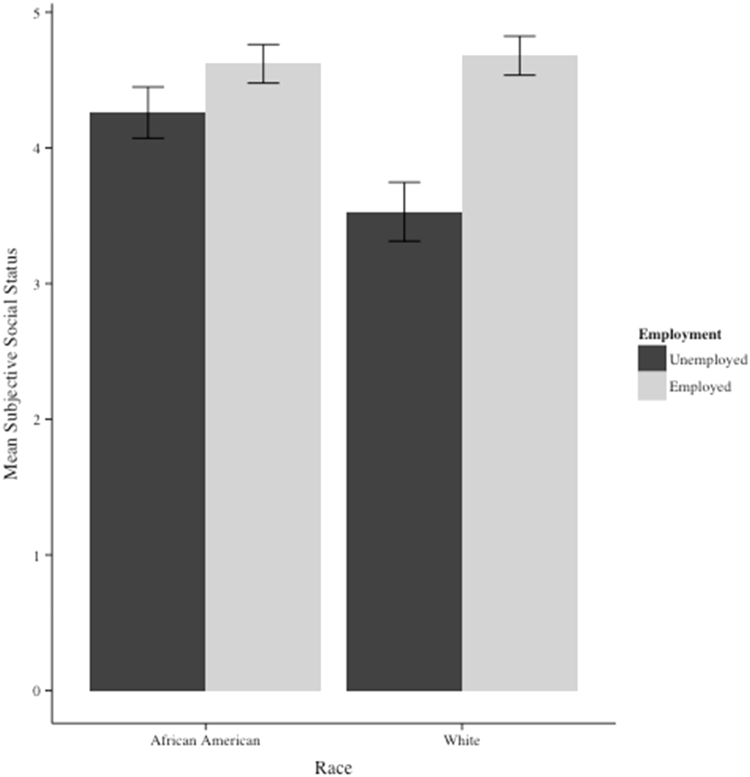
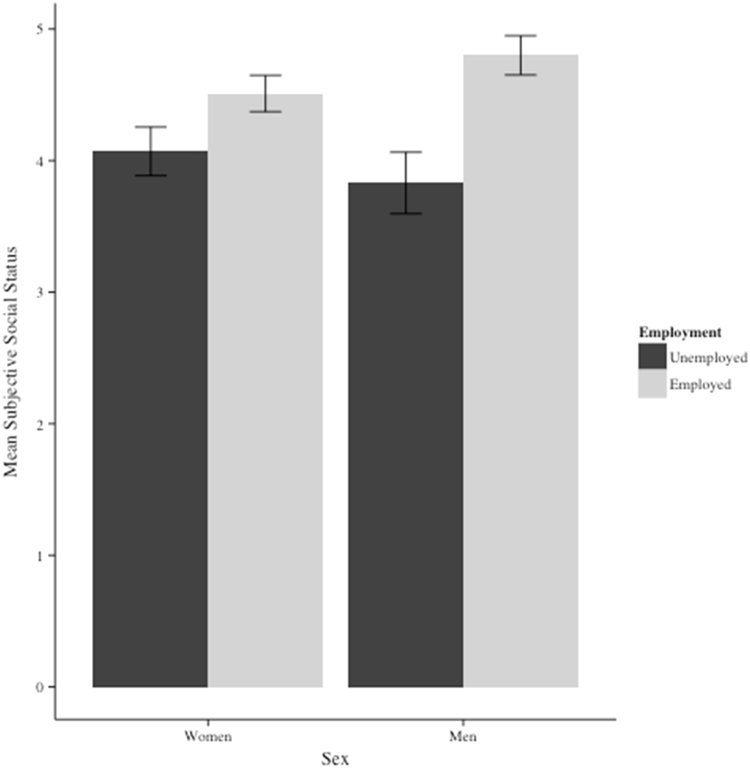
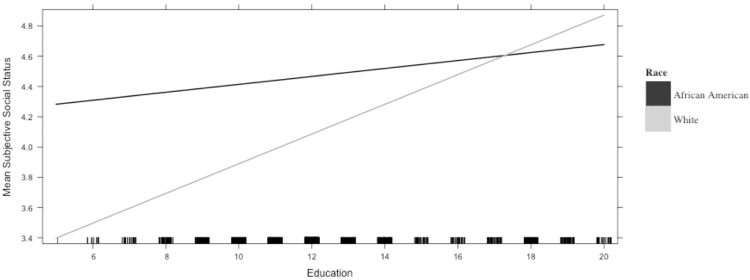
In addition to the traditional measures of SES (i.e. income, employment, and education), psychosocial variables (i.e. depressive symptomatology, neighborhood satisfaction, and self-rated health) were significantly associated with SSS. However, some of these indicators varied with respect to race and sex. Three significant interactions were found: sex by employment, race by employment, and race by education, wherein objective measures of SES were more associated with SSS for Whites and men compared to African Americans and women.
Psychosocial measures may influence individuals' perceptions of themselves on the social hierarchy. Additionally, SSS may vary by demographic group. When considering the impact of SSS on health, it is important to consider the unique interpretations that various demographic groups have when perceiving themselves on the social hierarchy.
主观社会地位(SSS),即对社会等级制度中地位的认知,是各种健康结果的重要指标。然而,心理社会因素对这一概念的影响尚不清楚,且这些影响在不同社会人口群体中如何变化也知之甚少。
参与者来自“终身多社区健康老龄化研究”(HANDLS),共2077名非裔美国人和白人(平均年龄 = 47.85岁;57%为女性;58%为非裔美国人,58%生活在贫困线以上)。多元回归分析检验了(1)假设的SSS心理社会指标,以及(2)种族和性别对与SSS相关变量的调节作用。
除了社会经济地位(SES)的传统衡量指标(即收入、就业和教育)外,心理社会变量(即抑郁症状、邻里满意度和自评健康)也与SSS显著相关。然而,其中一些指标在种族和性别方面存在差异。发现了三个显著的交互作用:性别与就业、种族与就业、种族与教育,其中与白人及男性相比,SES的客观指标与非裔美国人和女性的SSS关联更强。
心理社会指标可能会影响个体对自己在社会等级中的认知。此外,SSS可能因人口群体而异。在考虑SSS对健康的影响时,重要的是要考虑不同人口群体在社会等级中对自身认知的独特解读。