State Key Laboratory of Military Stomatology & National Clinical Research Center for Oral Diseases & Shaanxi Engineering Research Center for Dental Materials and Advanced Manufacture, Department of Periodontology, School of Stomatology, The Fourth Military Medical University, Xi'an, Shaanxi, 710032, China.
State Key Laboratory of Military Stomatology & National Clinical Research Center for Oral Diseases & Shaanxi International Joint Research Center for Oral Diseases, Center for Tissue Engineering, School of Stomatology, The Fourth Military Medical University, Xi'an, Shaanxi, 710032, China.
Cell Death Dis. 2018 Jan 19;9(2):58. doi: 10.1038/s41419-017-0082-8.
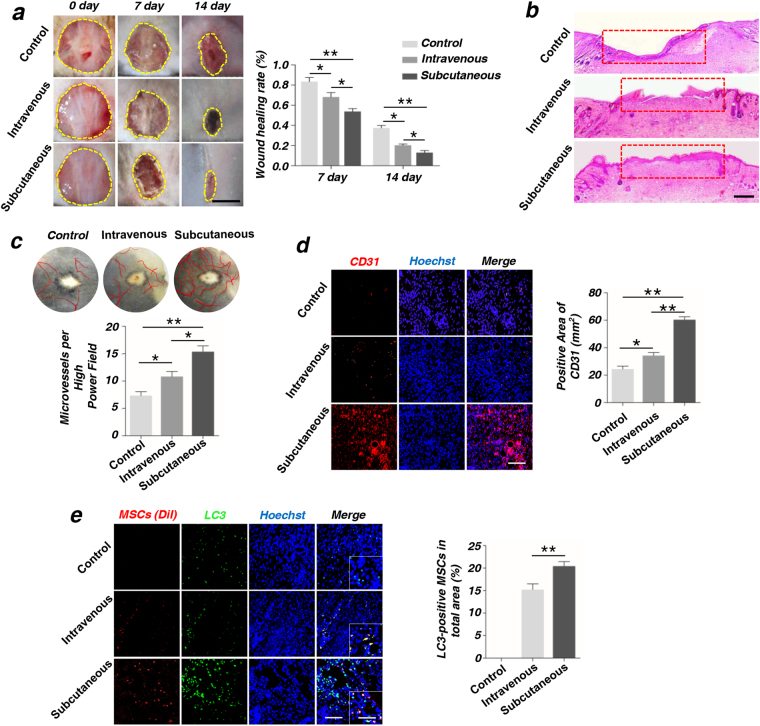
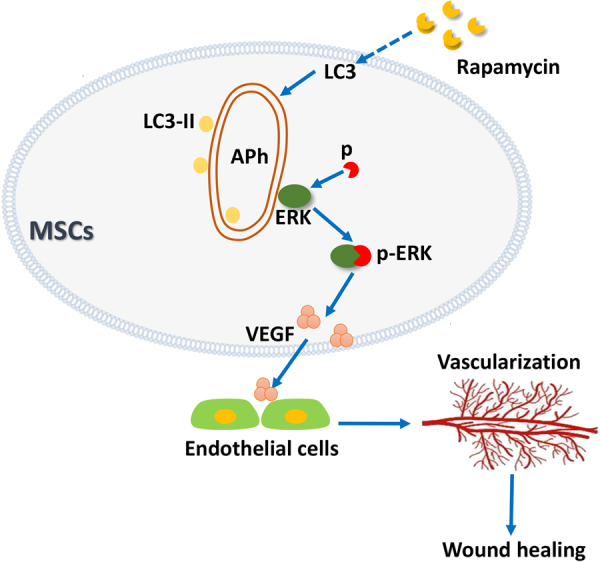
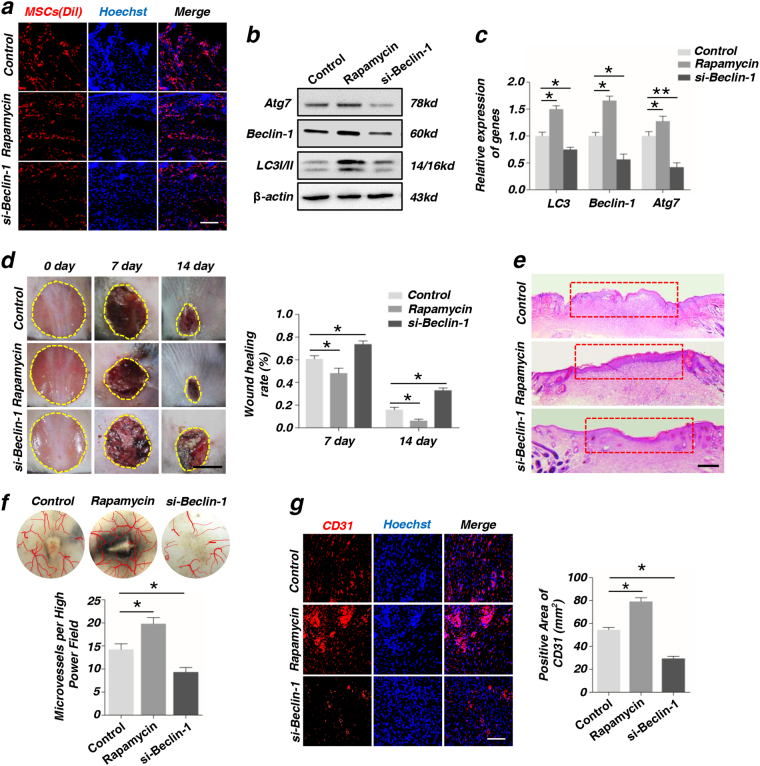
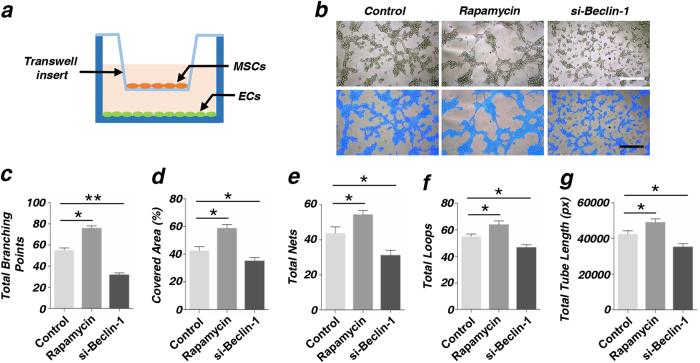
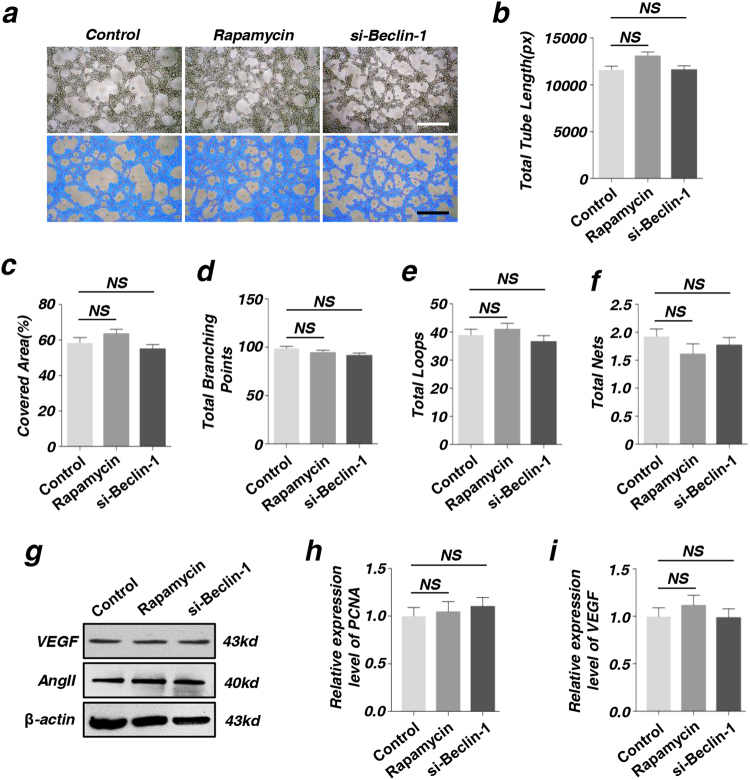
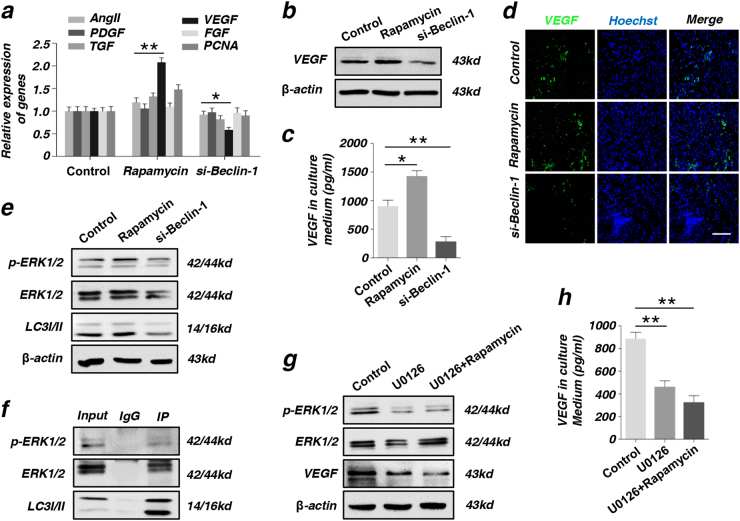
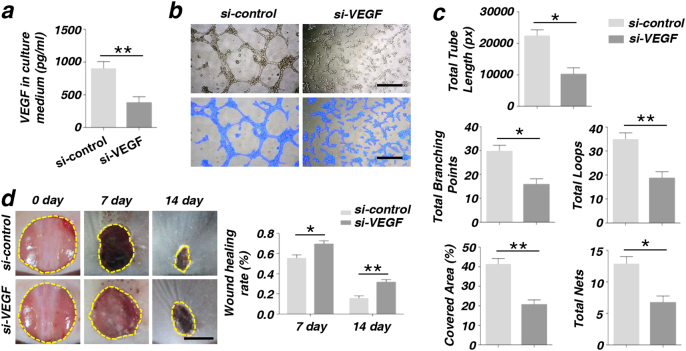
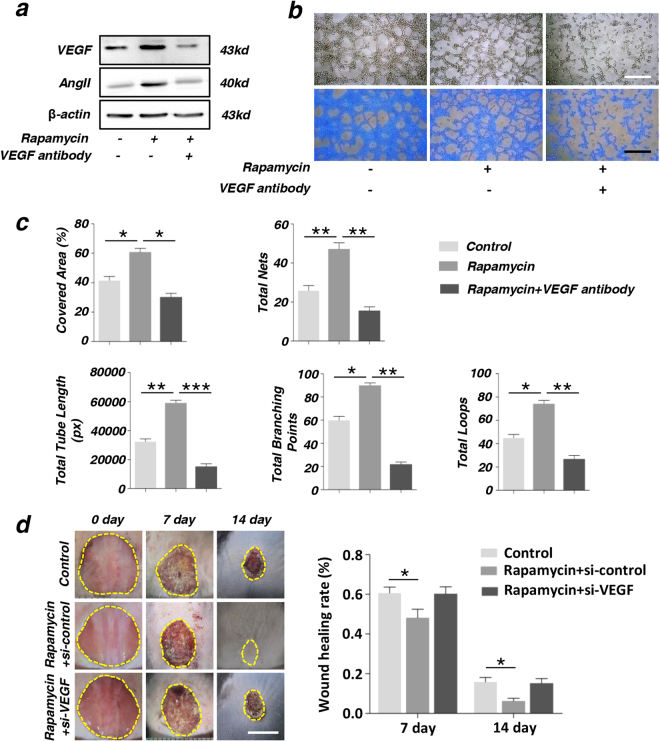
Vascularization deficiency caused a lot of diseases, such as diabetes ulcer and myocardial infarction. Mesenchymal stem cells (MSCs), with the self-renewal and multipotent differentiation capacities, have been used for many diseases treatment through regulation microenvironment. Numerous studies reported that MSCs transplantation could largely improve cutaneous wound healing via paracrine secretion of growth factors. However, whether MSCs take part in the angiogenesis process directly remains elusive. Previous study proved that autophagy inhibited immunosuppressive function of MSCs and prevented the degradation of MSCs function in inflammatory and senescent microenvironment. Here, we proved that autophagy determines the therapeutic effect of MSCs in cutaneous wound healing through promoting endothelial cells angiogenesis and demonstrated that the paracrine of vascular endothelial growth factor (VEGF) in MSCs was required in wound site. We further revealed that autophagy enhanced the VEGF secretion from MSCs through ERK phosphorylation directly. Collectively, we put forward that autophagy mediated paracrine of VEGF plays a central role in MSCs cured cutaneous wound healing and may provide a new therapeutic method for angiogenesis-related diseases.
血管生成不足会导致许多疾病,如糖尿病溃疡和心肌梗死。间充质干细胞(MSCs)具有自我更新和多向分化能力,通过调节微环境,已被用于治疗许多疾病。大量研究报道,MSCs 移植可通过旁分泌生长因子,极大地改善皮肤伤口愈合。然而,MSCs 是否直接参与血管生成过程仍不清楚。先前的研究证明,自噬抑制了 MSCs 的免疫抑制功能,并防止了 MSCs 在炎症和衰老微环境中的功能降解。在这里,我们证明自噬通过促进内皮细胞血管生成来决定 MSCs 在皮肤伤口愈合中的治疗效果,并证明了 MSCs 中血管内皮生长因子(VEGF)的旁分泌在伤口部位是必需的。我们进一步揭示,自噬通过 ERK 磷酸化直接增强了 MSCs 中 VEGF 的分泌。总之,我们提出自噬介导的 VEGF 旁分泌在 MSCs 治疗皮肤伤口愈合中起着核心作用,可能为与血管生成相关的疾病提供一种新的治疗方法。