Fujihara Yoshitaka, Miyata Haruhiko, Ikawa Masahito
Research Institute for Microbial Diseases, Osaka University, 3-1 Yamada-oka, Suita, Osaka 565-0871, Japan.
The Institute of Medical Science, The University of Tokyo, 4-6-1 Shirokanedai, Minato-ku, Tokyo 108-8639, Japan.
Exp Anim. 2018 May 10;67(2):91-104. doi: 10.1538/expanim.17-0153. Epub 2018 Jan 22.
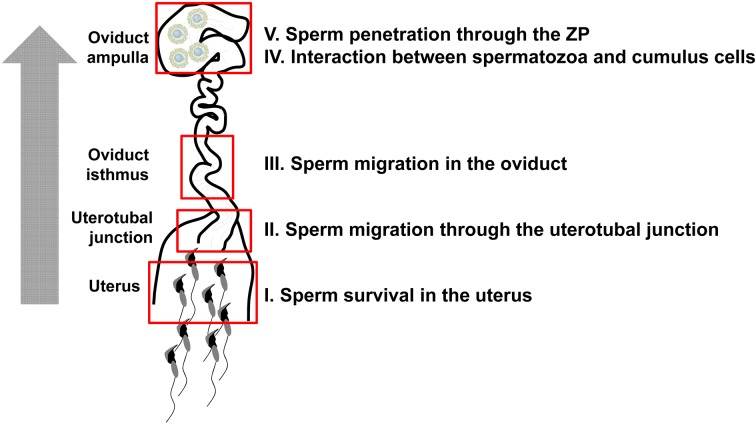
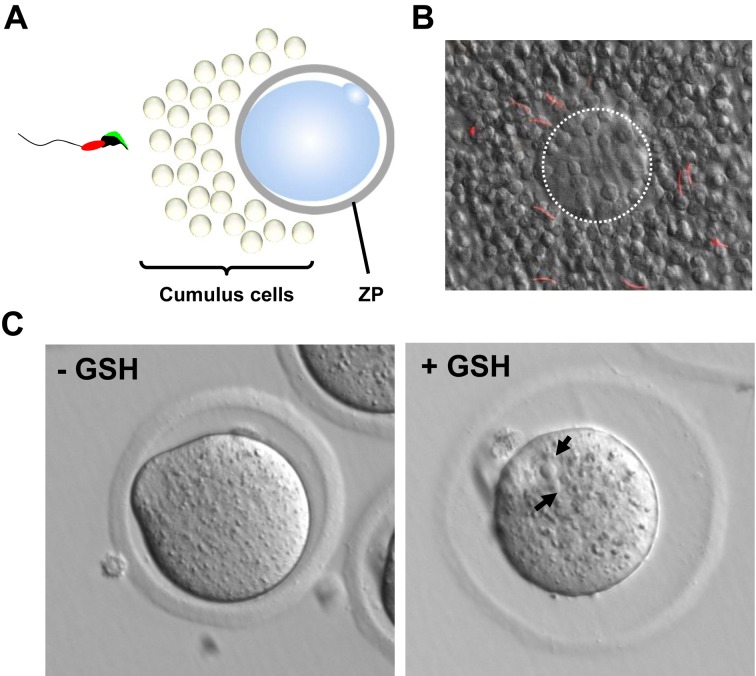
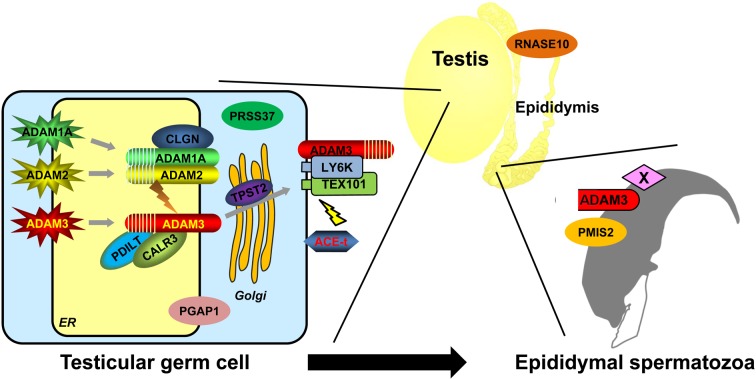
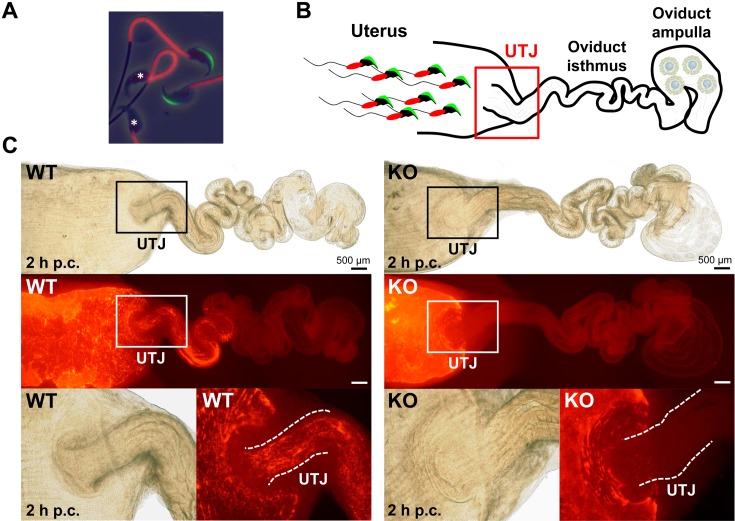
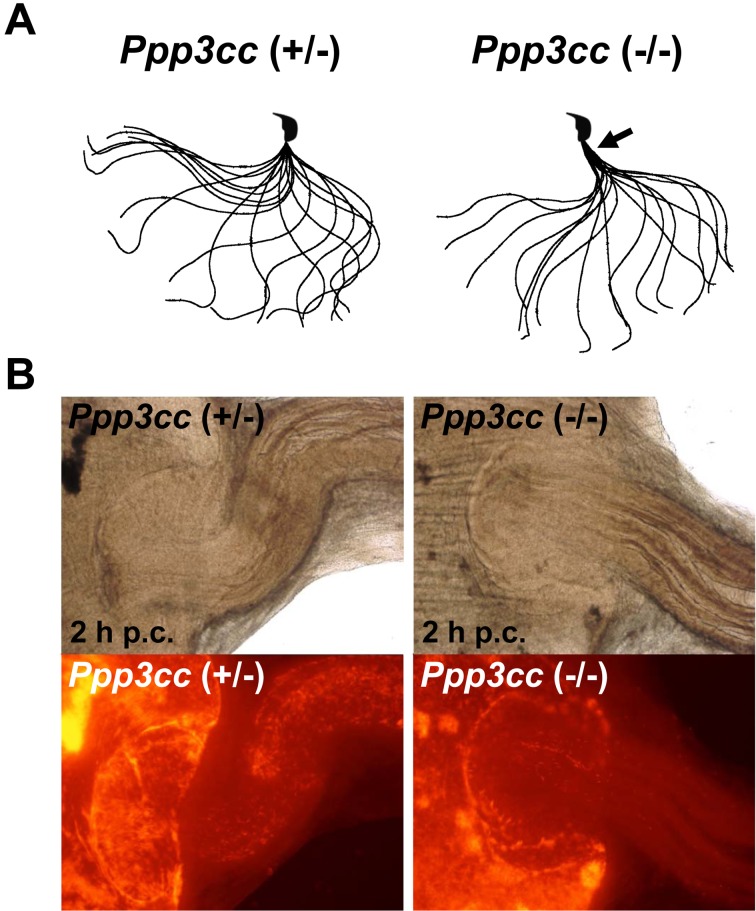
Mammalian fertilization is comprised of many steps including sperm survival in the uterus, sperm migration in the female reproductive tract, physiological and morphological changes to the spermatozoa, and sperm-egg interaction in the oviduct. In vitro studies have revealed essential factors for these fertilization steps for over half a century. However, the molecular mechanism of fertilization has recently been revised by the emergence of genetically modified animals. Here, we focus on essential factors for sperm fertilizing ability and describe recent advances in our knowledge of the mechanisms of mammalian fertilization, especially of sperm migration from the uterus into the oviduct.
哺乳动物受精包括许多步骤,包括精子在子宫中的存活、精子在雌性生殖道中的迁移、精子的生理和形态变化以及输卵管中的精卵相互作用。半个多世纪以来,体外研究已经揭示了这些受精步骤的关键因素。然而,随着转基因动物的出现,受精的分子机制最近得到了修正。在这里,我们重点关注精子受精能力的关键因素,并描述我们对哺乳动物受精机制,特别是精子从子宫迁移到输卵管机制的最新认识进展。