Kolesova Oksana, Kolesovs Aleksandrs, Vetra Janis
Joint Laboratory of Clinical Immunology and Immunogenetics, Riga Stradins University, Riga, Latvia.
Department of Psychology, University of Latvia, Riga, Latvia.
Anat Cell Biol. 2017 Dec;50(4):265-274. doi: 10.5115/acb.2017.50.4.265. Epub 2017 Dec 29.
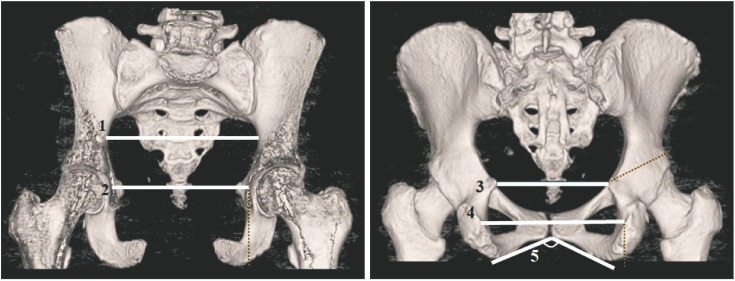
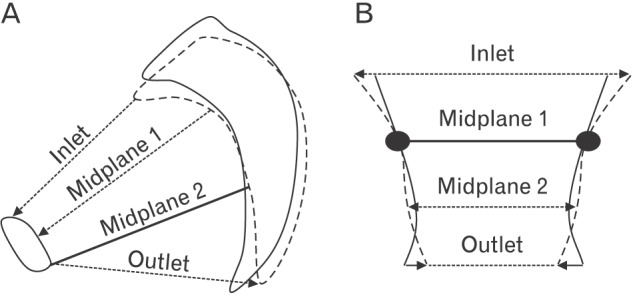
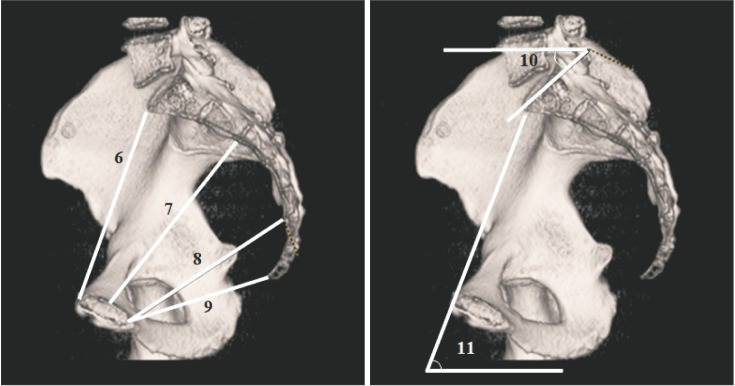
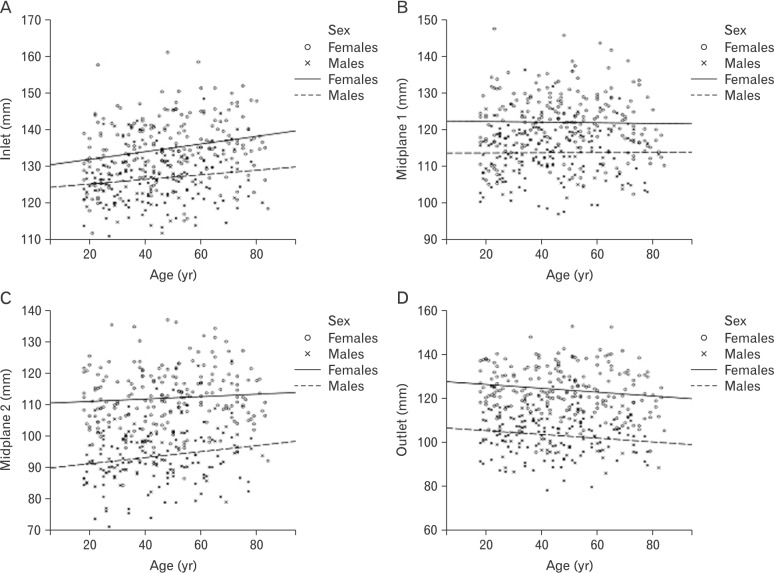
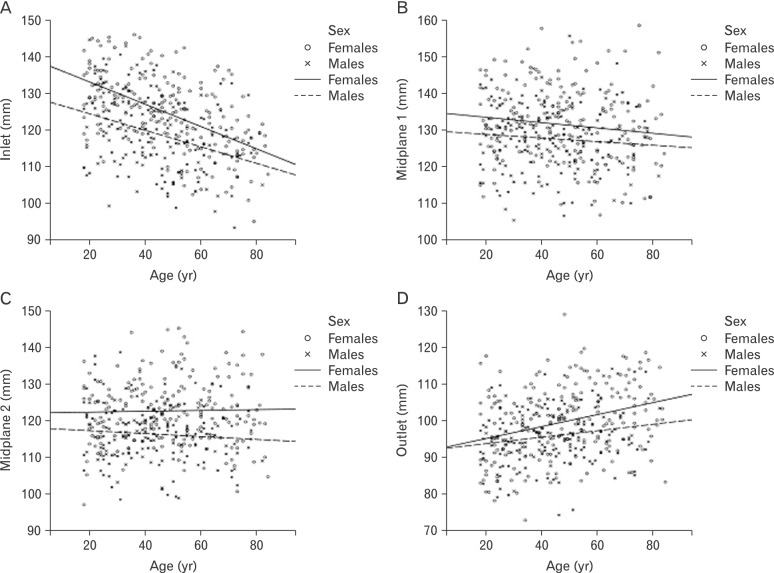
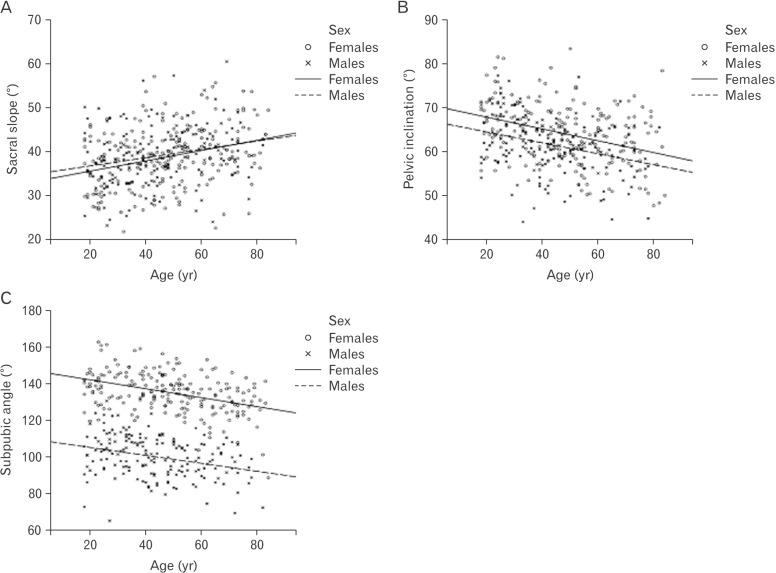
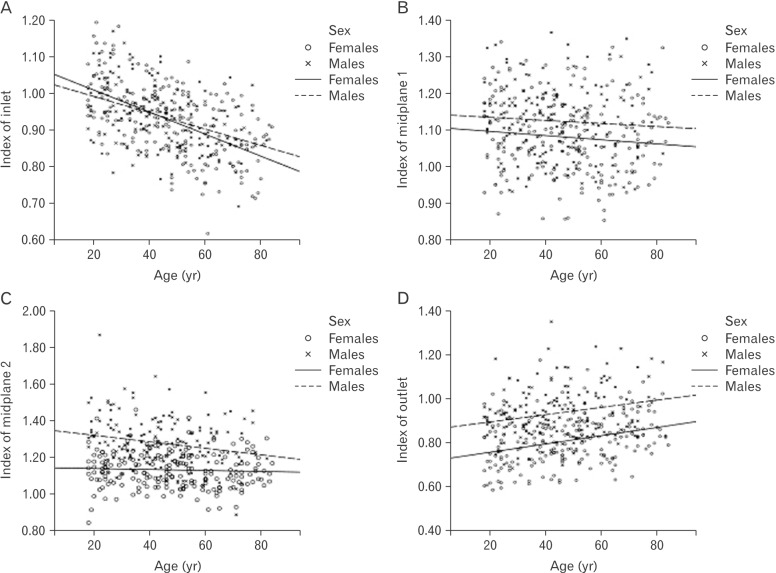
The pelvis and the spine form a system balancing human skeleton. Within this system, the pelvis adapts to age-related changes in the spine. Previous studies were predominantly focused on changes of pelvic parameters in the sagittal plane. The aim of this study was to reveal age-related changes of lesser pelvic dimensions at different levels of the pelvic cavity in the sagittal and coronal planes and to explore sexual dimorphism in age-related tendencies. The computed tomography pelvimetry was performed on the three-dimensional workstation. The research sample included 211 females aged 18 to 84 years and 181 males aged 18 to 82 years, who underwent an examination at the Riga East University Hospital, Clinical Center "Gailezers," Latvia. Three pelvic angles and transverse and sagittal diameters of the lesser pelvis were measured at four levels: the inlet, two axial planes in the mid-cavity, and the outlet. The results demonstrated that more pronounced age-related changes occurred in the inlet and the outlet of the lesser pelvis. The mid-cavity was less changing. The transverse diameter between acetabular centers and the sagittal diameter at the level of ischial spines were independent of age. In general, the common age-related trends were observed for pelvic parameters in females and males. A single exception was the proportion of diameters at the level of ischial spines, which decreased in males only. For parameters associated with pelvic floor diseases, age-related changes occurred in the direction of pathology.
骨盆和脊柱构成了一个平衡人体骨骼的系统。在这个系统中,骨盆会适应脊柱与年龄相关的变化。以往的研究主要集中在矢状面骨盆参数的变化上。本研究的目的是揭示盆腔不同水平在矢状面和冠状面较小骨盆尺寸与年龄相关的变化,并探讨年龄相关趋势中的性别差异。在三维工作站上进行计算机断层骨盆测量。研究样本包括211名年龄在18至84岁的女性和181名年龄在18至82岁的男性,他们在拉脱维亚里加东部大学医院“盖莱泽尔斯”临床中心接受了检查。在四个水平测量了三个骨盆角度以及较小骨盆的横径和矢状径:入口、中腔的两个轴向平面和出口。结果表明,较小骨盆的入口和出口出现了更明显的与年龄相关的变化。中腔变化较小。髋臼中心之间的横径和坐骨棘水平的矢状径与年龄无关。总体而言,女性和男性的骨盆参数呈现出常见的与年龄相关的趋势。唯一的例外是坐骨棘水平的直径比例,仅在男性中下降。对于与盆底疾病相关的参数,与年龄相关的变化朝着病理方向发展。