Teo Ethan, Goh Daniel, Vijayakumar Kamalakannan M, Liu Jean C J
Raffles Institution, Singapore, Singapore.
Division of Social Sciences, Yale-NUS College, Singapore, Singapore.
Front Psychol. 2018 Jan 8;8:2298. doi: 10.3389/fpsyg.2017.02298. eCollection 2017.
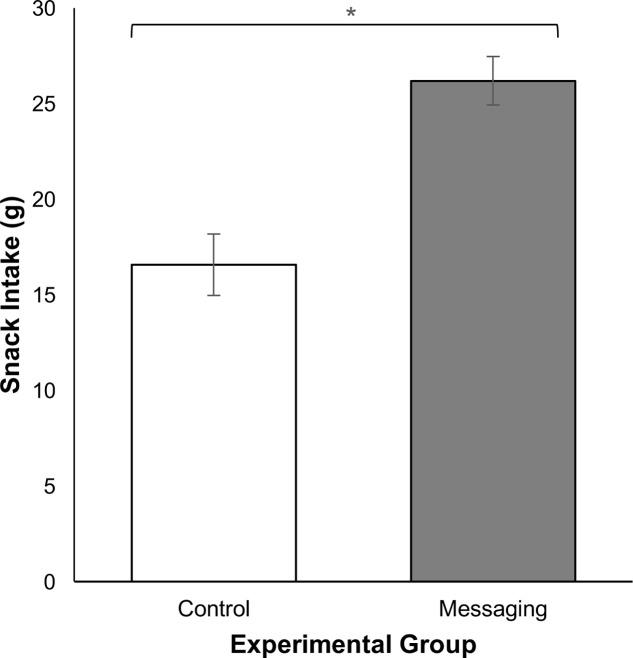
Surveys of mobile phone usage suggest that adolescents habitually use their phones while eating. In this study, we explored whether the manner in which one uses a mobile phone - to engage in a social or non-social activity - can affect appetite regulation. Participants were fifty male adolescents randomly assigned to engage in one of the following phone-based activities: (1) sending and receiving messages (social activity), or (2) reading a neutral article (non-social activity). When given the opportunity to snack, participants in the messaging group consumed more snacks that those who read the article. Our findings correspond to a large literature emphasizing social influences on food intake, and suggest that phone use patterns may predispose an individual to overeating.
手机使用情况调查表明,青少年习惯在吃饭时使用手机。在本研究中,我们探讨了使用手机的方式——进行社交或非社交活动——是否会影响食欲调节。研究参与者为50名男性青少年,他们被随机分配参与以下基于手机的活动之一:(1)收发信息(社交活动),或(2)阅读一篇中性文章(非社交活动)。在有吃零食机会时,收发信息组的参与者比阅读文章的参与者吃了更多零食。我们的研究结果与大量强调社会因素对食物摄入量影响的文献相符,并表明手机使用模式可能使个体易患暴饮暴食。