Department of Biology, CESAM-Centre for Environmental and Marine Studies, University of Aveiro, Campus Universitário de Santiago, 3810-193 Aveiro, Portugal.
Int J Mol Sci. 2018 Jan 23;19(2):29. doi: 10.3390/ijms19020029.
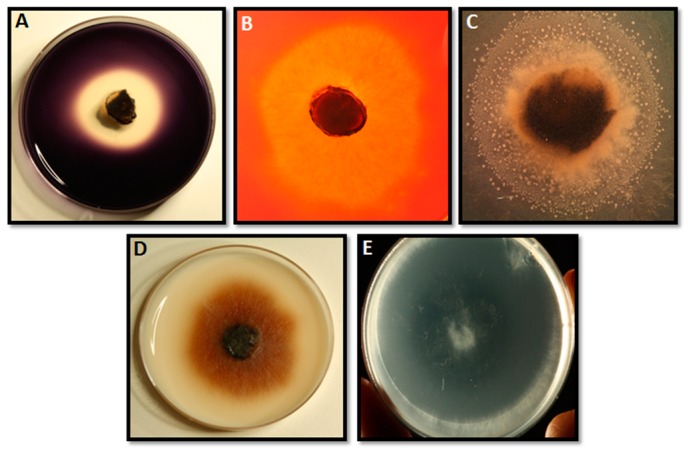
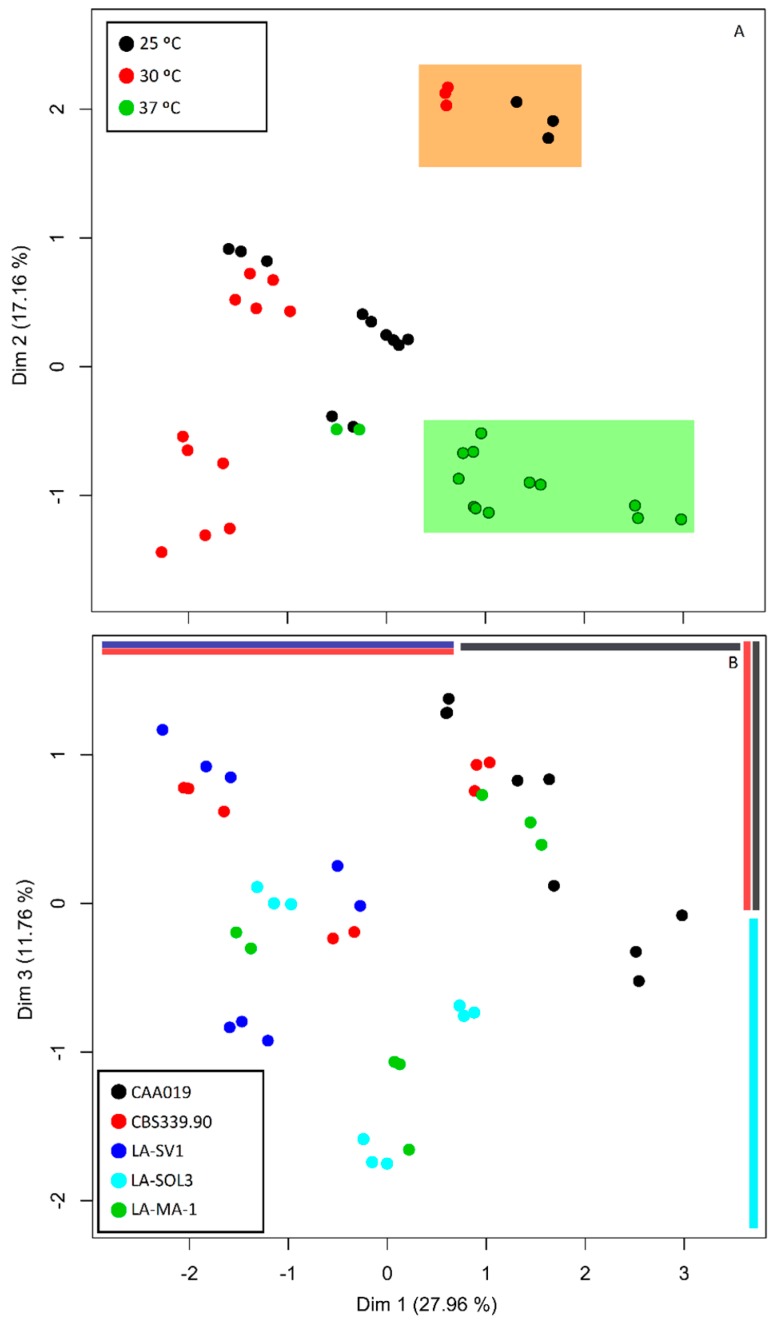
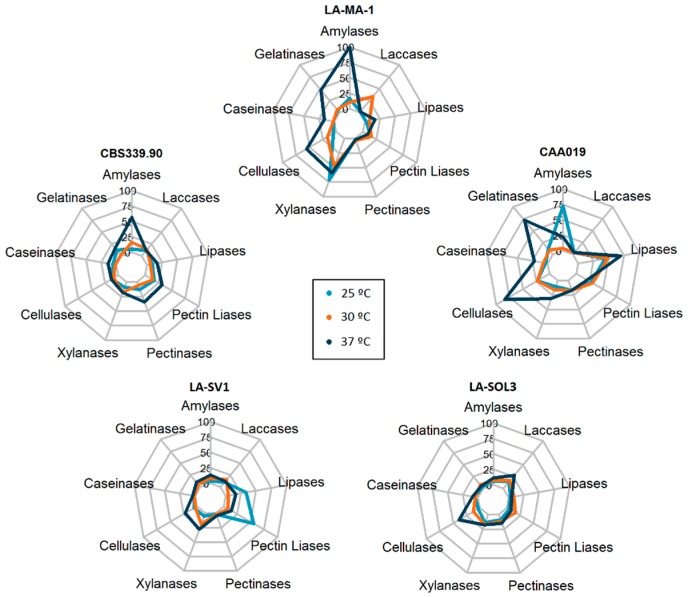
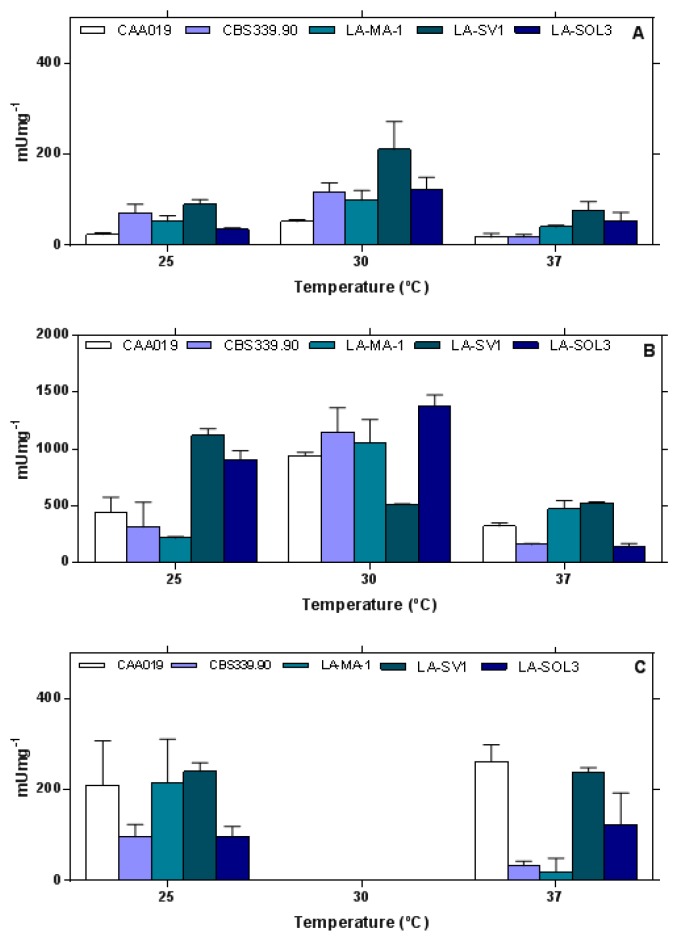
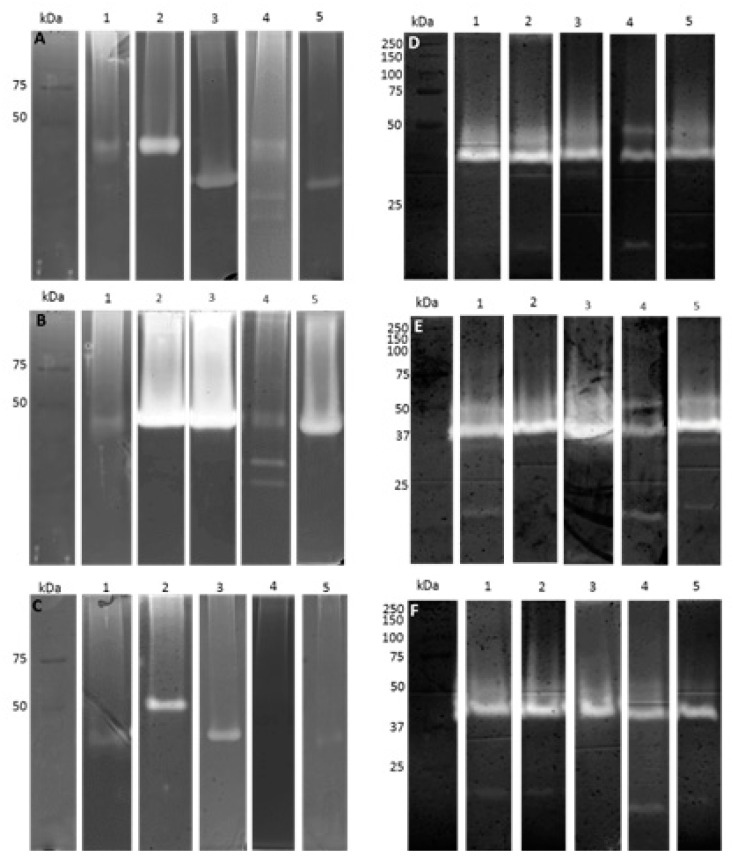
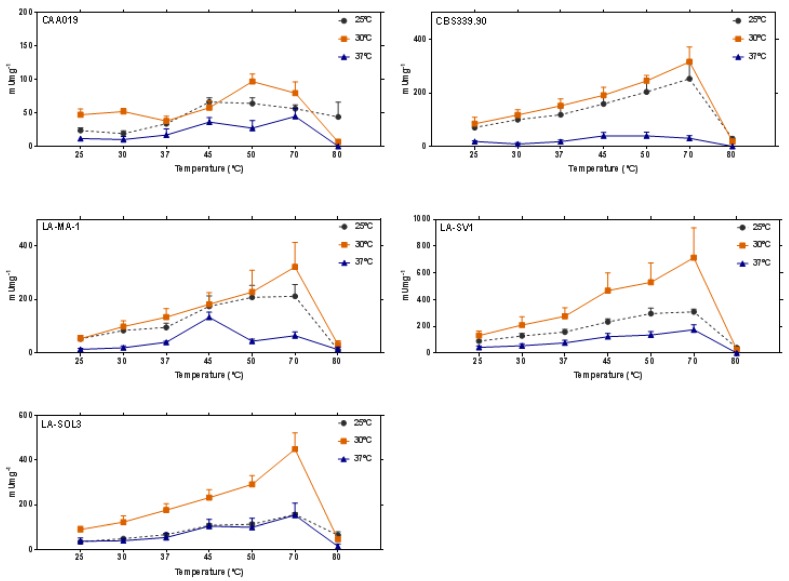
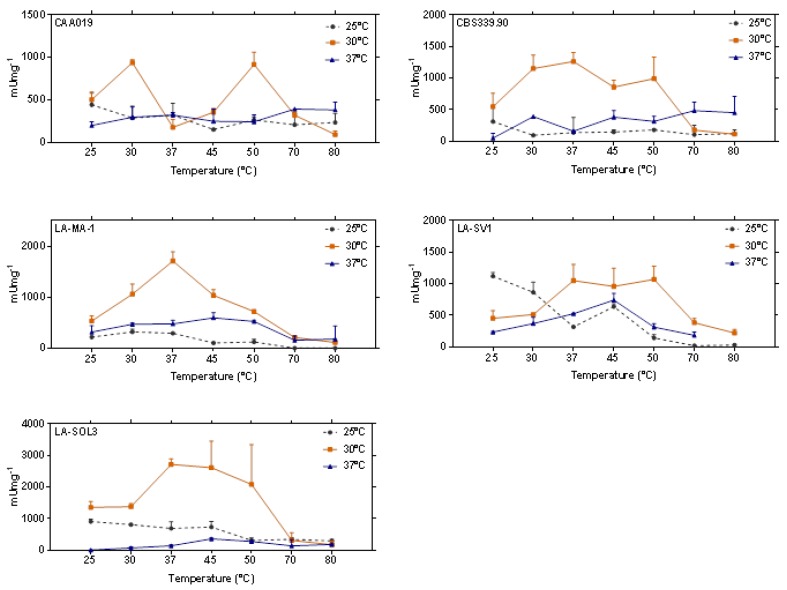
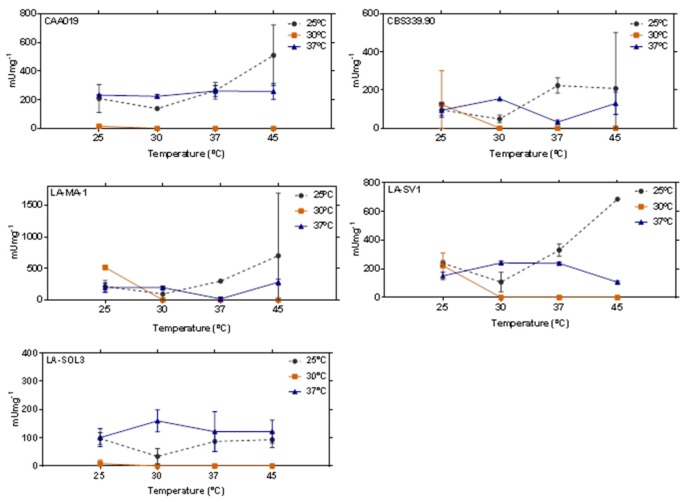
Phytopathogenic fungi are known to produce several types of enzymes usually involved in plant cell wall degradation and pathogenesis. The increasing of global temperature may induce fungi, such as (), to alter its behavior. Nonetheless, there is only limited information regarding the effect of temperature on production of enzymes. The need for new, thermostable enzymes, that are biotechnologically relevant, led us to investigate the effect of temperature on the production of several extracellular enzymatic activities by different strains. Fungi were grown at 25 °C, 30 °C and 37 °C and the enzymatic activities were detected by plate assays, quantified by spectrophotometric methods and characterized by zymography. The thermostability (25-80 °C) of the enzymes produced was also tested. Strains CAA019, CBS339.90, LA-SOL3, LA-SV1 and LA-MA-1 produced amylases, gelatinases, caseinases, cellulases, lipases, laccases, xylanases, pectinases and pectin liases. Temperature modulated the expression of the enzymes, and this effect was more visible when fungi were grown at 37 °C than at lower temperatures. Contrary to proteolytic and endoglucanolytic activities, whose highest activities were detected when fungi were grown at 30 °C, lipolytic activity was not detected at this growth temperature. Profiles of proteases and endoglucanases of fungi grown at different temperatures were characterized by zymography. Enzymes were shown to be more thermostable when fungi were grown at 30 °C. Proteases were active up to 50 °C and endoglucanases up to 70 °C. Lipases were the least stable, with activities detected up to 45 °C. The enzymatic profiles detected for strains tested showed to be temperature and strain-dependent, making this species a good target for biotechnological applications.
植物病原真菌会产生多种类型的酶,这些酶通常参与植物细胞壁的降解和发病过程。全球温度的升高可能会导致真菌(如)改变其行为。尽管如此,关于温度对酶产生的影响的信息仍然有限。对新的、耐热的、具有生物技术相关性的酶的需求促使我们研究不同菌株在不同温度下产生几种细胞外酶活性的情况。在 25°C、30°C 和 37°C 下培养真菌,并通过平板分析检测酶活性,通过分光光度法定量,并通过同工酶电泳进行分析。还测试了所产生的酶的热稳定性(25-80°C)。菌株 CAA019、CBS339.90、LA-SOL3、LA-SV1 和 LA-MA-1 产生了淀粉酶、明胶酶、角蛋白酶、纤维素酶、脂肪酶、漆酶、木聚糖酶、果胶酶和果胶裂解酶。温度调节了酶的表达,当真菌在 37°C 下生长时,这种影响比在较低温度下更为明显。与在 30°C 下生长时检测到最高活性的蛋白酶和内葡聚糖酶活性相反,在该生长温度下未检测到脂肪酶活性。通过同工酶电泳对在不同温度下生长的真菌的蛋白酶和内切葡聚糖酶图谱进行了表征。当真菌在 30°C 下生长时,酶显示出更高的热稳定性。蛋白酶在 50°C 下保持活性,内切葡聚糖酶在 70°C 下保持活性。脂肪酶最不稳定,在 45°C 下检测到活性。所检测的菌株的酶谱显示出对温度和菌株的依赖性,这使得该物种成为生物技术应用的良好目标。