Liu Zhengxiang, Zhu Jianfeng, Yang Xiuyan, Wu Haiwen, Wei Qi, Wei Hairong, Zhang Huaxin
Research Center of Saline and Alkali Land of State Forestry Administration, Chinese Academy of Forestry, Beijing, P. R. China.
General Forestry Station of Beijing Municipality, Beijing, P. R. China.
PLoS One. 2018 Jan 23;13(1):e0191552. doi: 10.1371/journal.pone.0191552. eCollection 2018.
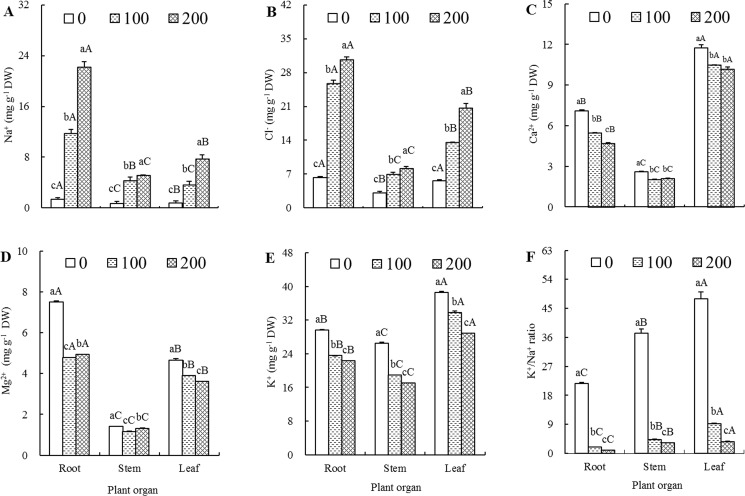
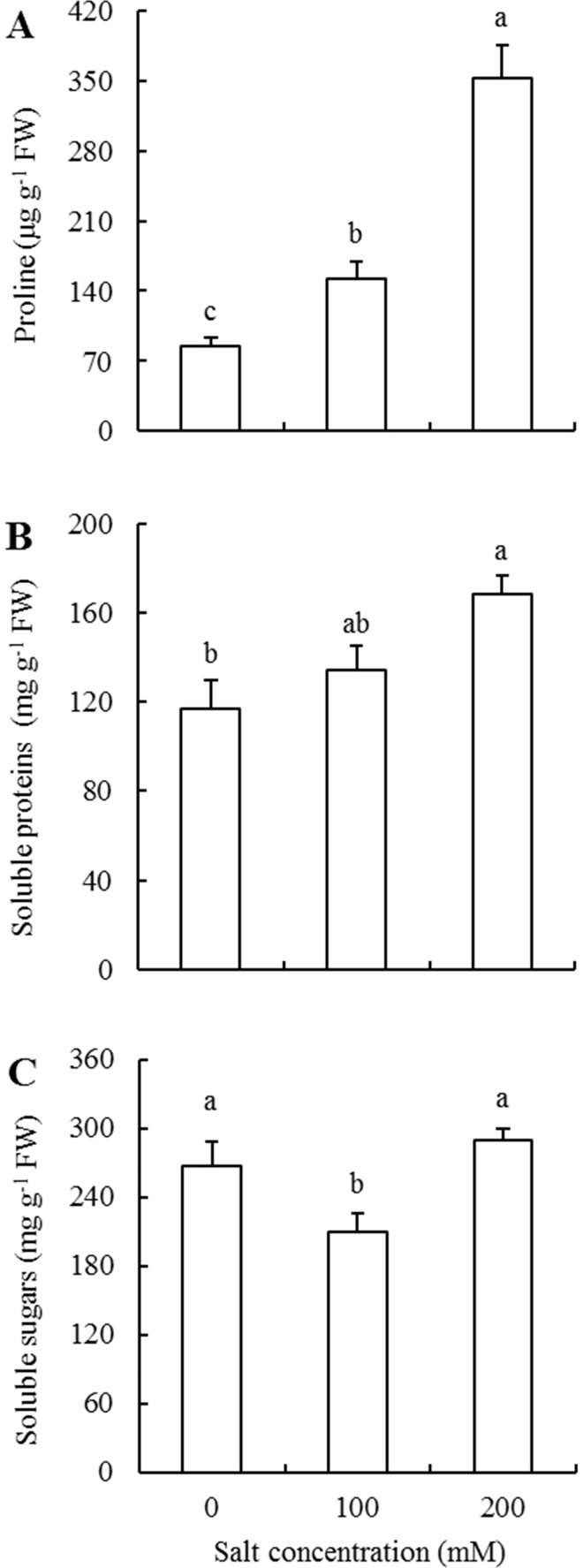
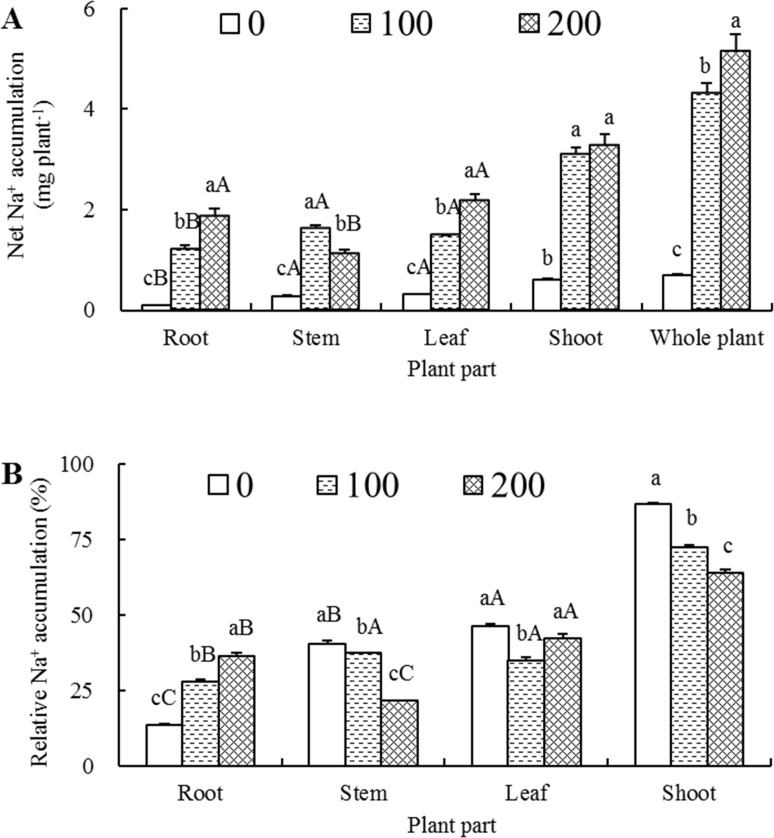
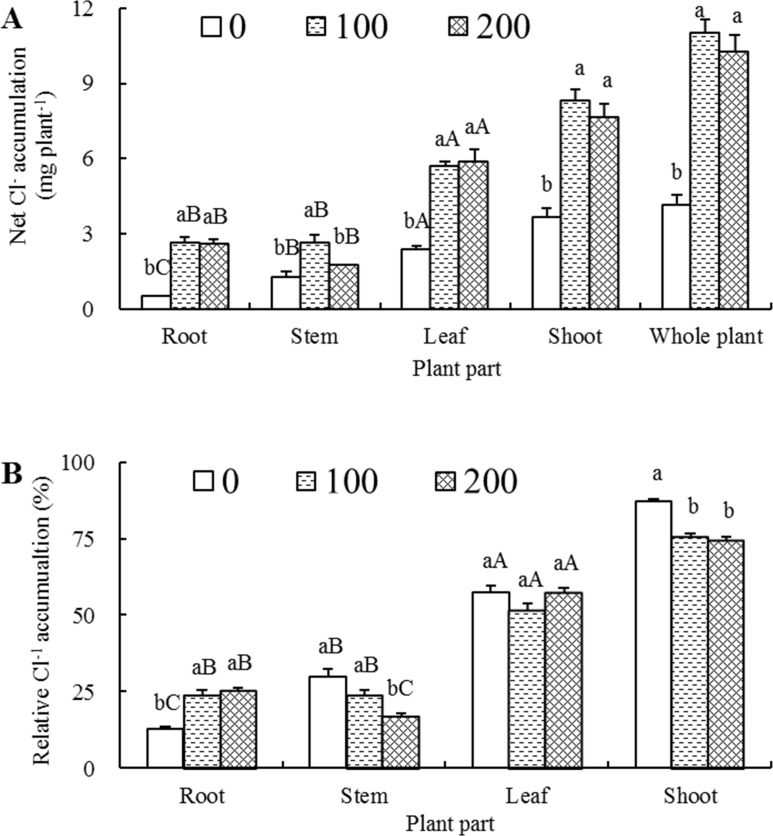
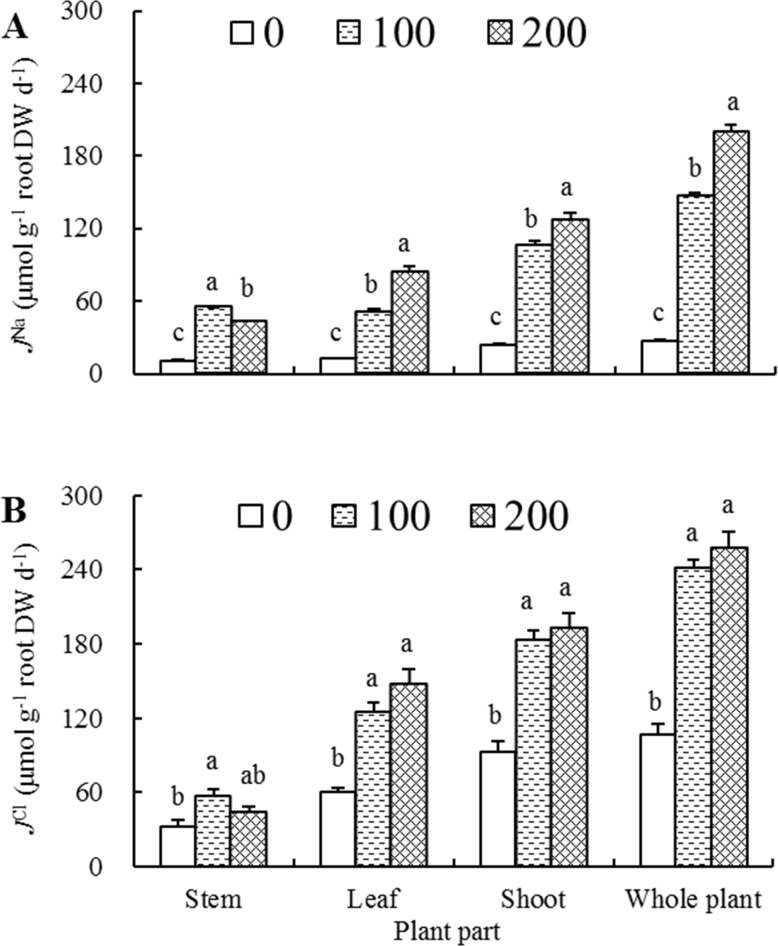
Elaeagnus angustifolia is one of the most extensively afforested tree species in environment-harsh regions of northern China. Despite its exceptional tolerance to saline soil, the intrinsic adaptive physiology has not been revealed. In this study, we investigated the growth, organ-level ionic relations and organic osmoregulation of the seedlings hydroponically treated with 0, 100 and 200 mM NaCl for 30 days. We found that the growth characteristics and the whole-plant dry weight were not obviously stunted, but instead, were even slightly stimulated by the treatment of 100 mM NaCl. In contrast, these traits were significantly inhibited by 200 mM NaCl treatment. Interestingly, as compared with the control (0 mM NaCl), both 100 and 200 mM NaCl treatments had a promotional effect on root growth as evidenced by 26.3% and 2.4% increases in root dry weight, respectively. Roots had the highest Na+ and Cl- concentrations and obviously served as the sink for the net increased Na+ and Cl-, while, stems might maintain the capacity of effective Na+ constraint, resulting in reduced Na+ transport to the leaves. K+, Ca2+ and Mg2+ concentrations in three plant organs of NaCl-treated seedlings presented a substantial decline, eventually leading to an enormously drop of K+/Na+ ratio. As the salt concentration increased, proline and soluble protein contents continuously exhibited a prominent and a relatively tardy accumulation, respectively, whereas soluble sugar firstly fell to a significant level and then regained to a level that is close to that of the control. Taken together, our results provided quantitative measures that revealed some robust adaptive physiological mechanisms underpinning E. angustifolia's moderately high salt tolerance, and those mechanisms comprise scalable capacity for root Na+ and Cl- storage, effectively constrained transportation of Na+ from stems to leaves, root compensatory growth, as well as an immediate and prominent leaf proline accumulation.
沙枣是中国北方环境恶劣地区种植最为广泛的树种之一。尽管其对盐渍土具有极强的耐受性,但其内在的适应生理机制尚未明确。本研究通过水培法,对沙枣幼苗分别施加0、100和200 mM NaCl处理30天,研究其生长、器官水平的离子关系和有机渗透调节。我们发现,生长特性和整株干重并未受到明显抑制,相反,100 mM NaCl处理对其有轻微的促进作用。相比之下,200 mM NaCl处理则显著抑制了这些性状。有趣的是,与对照(0 mM NaCl)相比,100和200 mM NaCl处理均对根系生长有促进作用,根干重分别增加了26.3%和2.4%。根中Na+和Cl-浓度最高,显然是净增加的Na+和Cl-的储存库,而茎可能具有有效的Na+限制能力,从而减少了Na+向叶片的运输。NaCl处理的幼苗三个器官中的K+、Ca2+和Mg2+浓度大幅下降,最终导致K+/Na+比值大幅降低。随着盐浓度的增加,脯氨酸和可溶性蛋白含量分别持续显著积累和相对缓慢积累,而可溶性糖含量则先降至显著水平,然后恢复到接近对照的水平。综上所述,我们的研究结果提供了定量指标,揭示了沙枣中度耐高盐能力背后的一些强大的适应性生理机制,这些机制包括根系对Na+和Cl-的可扩展储存能力、茎对Na+向叶片的有效限制运输、根系补偿性生长以及叶片脯氨酸的即时显著积累。