Centre for Cancer Research, Hudson Institute for Medical Research, Clayton, VIC, Australia.
Department of Molecular and Translational Science, Faculty of Medicine, Nursing and Health Sciences, Monash University, Clayton, VIC, Australia.
Oncogene. 2018 Apr;37(14):1939-1948. doi: 10.1038/s41388-017-0022-1. Epub 2018 Jan 25.
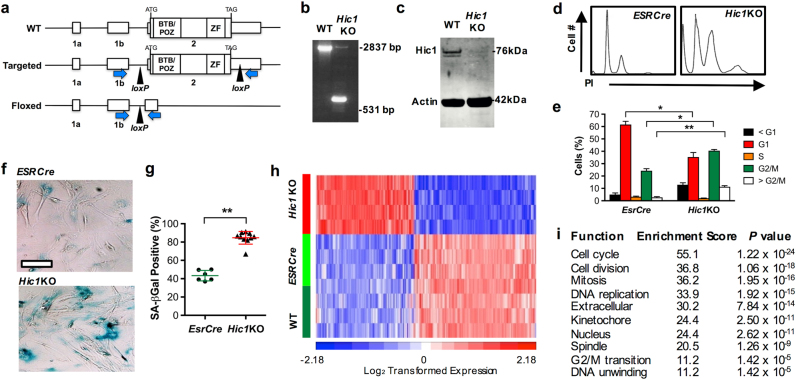
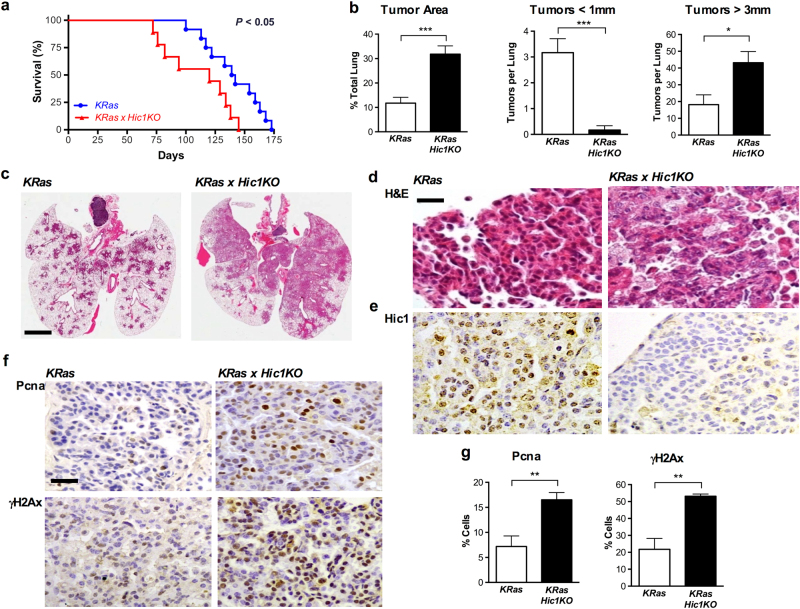
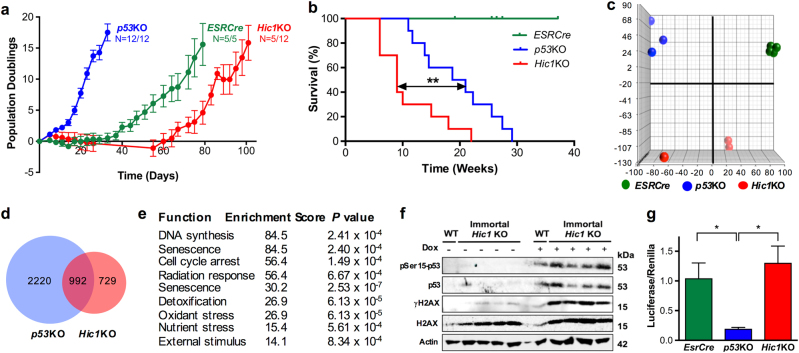
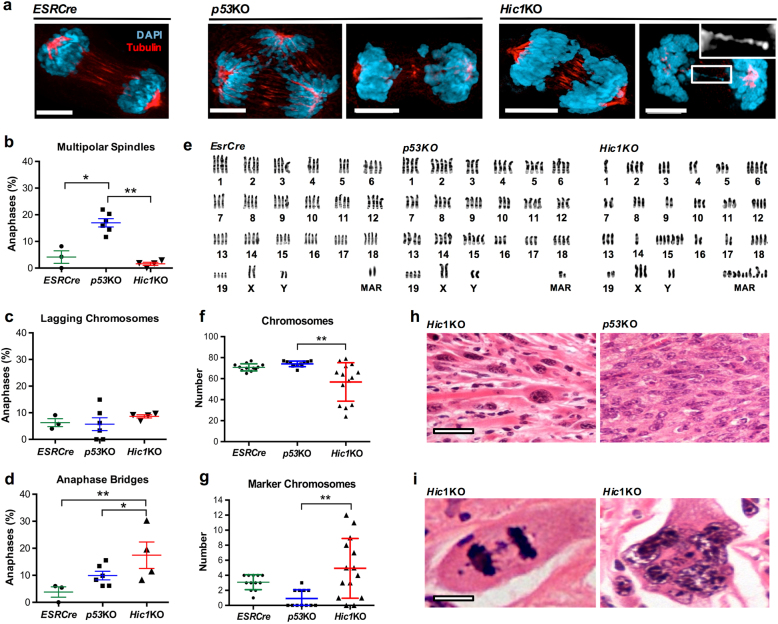
Hypermethylated-in-Cancer 1 (Hic1) is a tumor suppressor gene frequently inactivated by epigenetic silencing and loss-of-heterozygosity in a broad range of cancers. Loss of HIC1, a sequence-specific zinc finger transcriptional repressor, results in deregulation of genes that promote a malignant phenotype in a lineage-specific manner. In particular, upregulation of the HIC1 target gene SIRT1, a histone deacetylase, can promote tumor growth by inactivating TP53. An alternate line of evidence suggests that HIC1 can promote the repair of DNA double strand breaks through an interaction with MTA1, a component of the nucleosome remodeling and deacetylase (NuRD) complex. Using a conditional knockout mouse model of tumor initiation, we now show that inactivation of Hic1 results in cell cycle arrest, premature senescence, chromosomal instability and spontaneous transformation in vitro. This phenocopies the effects of deleting Brca1, a component of the homologous recombination DNA repair pathway, in mouse embryonic fibroblasts. These effects did not appear to be mediated by deregulation of Hic1 target gene expression or loss of Tp53 function, and rather support a role for Hic1 in maintaining genome integrity during sustained replicative stress. Loss of Hic1 function also cooperated with activation of oncogenic KRas in the adult airway epithelium of mice, resulting in the formation of highly pleomorphic adenocarcinomas with a micropapillary phenotype in vivo. These results suggest that loss of Hic1 expression in the early stages of tumor formation may contribute to malignant transformation through the acquisition of chromosomal instability.
抑癌基因 HIC1 常因表观遗传沉默和杂合性缺失而失活,在多种癌症中广泛失活。HIC1 是一种序列特异性锌指转录抑制因子,其缺失导致以谱系特异性方式调节促进恶性表型的基因。特别是,HIC1 靶基因 SIRT1 的上调,作为一种组蛋白去乙酰化酶,可以通过失活 TP53 促进肿瘤生长。另一种证据表明,HIC1 可以通过与核小体重塑和去乙酰化酶(NuRD)复合物的组成部分 MTA1 相互作用促进 DNA 双链断裂的修复。使用肿瘤起始的条件性敲除小鼠模型,我们现在表明,Hic1 的失活导致细胞周期停滞、过早衰老、染色体不稳定和体外自发转化。这模拟了同源重组 DNA 修复途径的组成部分 Brca1 在小鼠胚胎成纤维细胞中的缺失的影响。这些影响似乎不是通过 Hic1 靶基因表达的失调或 Tp53 功能的丧失来介导的,而是支持 Hic1 在维持持续复制应激过程中的基因组完整性的作用。Hic1 功能的丧失也与小鼠成年气道上皮中致癌性 KRas 的激活协同作用,导致体内形成高度多形性腺癌和微乳头状表型。这些结果表明,在肿瘤形成的早期阶段 Hic1 表达的丧失可能通过获得染色体不稳定性而促进恶性转化。