Physiology, Exercise and Nutrition Research Group, Faculty of Health Sciences and Sport, University of Stirling, Stirling, Scotland.
Sports Med. 2018 Mar;48(Suppl 1):53-64. doi: 10.1007/s40279-017-0845-5.
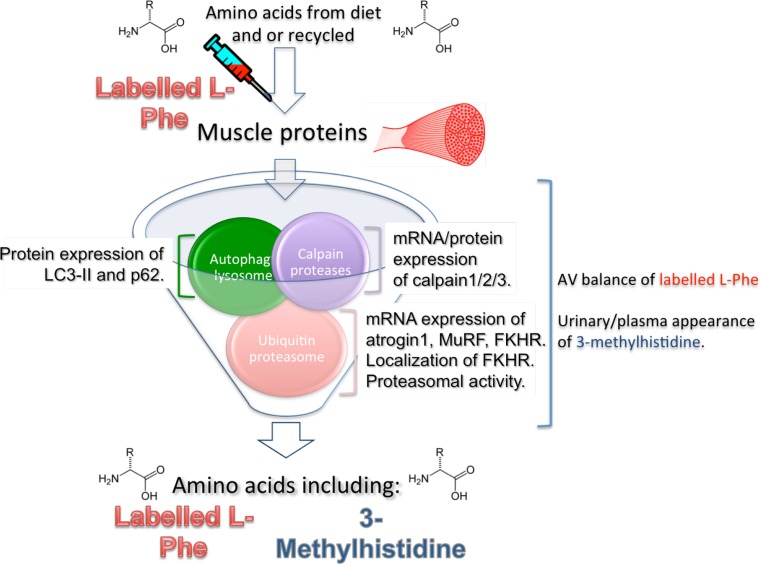
Muscle protein breakdown (MPB) is an important metabolic component of muscle remodeling, adaptation to training, and increasing muscle mass. Degradation of muscle proteins occurs via the integration of three main systems-autophagy and the calpain and ubiquitin-proteasome systems. These systems do not operate independently, and the regulation is complex. Complete degradation of a protein requires some combination of the systems. Determination of MPB in humans is technically challenging, leading to a relative dearth of information. Available information on the dynamic response of MPB primarily comes from stable isotopic methods with expression and activity measures providing complementary information. It seems clear that resistance exercise increases MPB, but not as much as the increase in muscle protein synthesis. Both hyperaminoacidemia and hyperinsulinemia inhibit the post-exercise response of MPB. Available data do not allow a comprehensive examination of the mechanisms behind these responses. Practical nutrition recommendations for interventions to suppress MPB following exercise are often made. However, it is likely that some degree of increased MPB following exercise is an important component for optimal remodeling. At this time, it is not possible to determine the impact of nutrition on any individual muscle protein. Thus, until we can develop and employ better methods to elucidate the role of MPB following exercise and the response to nutrition, recommendations to optimize post exercise nutrition should focus on the response of muscle protein synthesis. The aim of this review is to provide a comprehensive examination of the state of knowledge, including methodological considerations, of the response of MPB to exercise and nutrition in humans.
肌肉蛋白质分解(MPB)是肌肉重塑、适应训练和增加肌肉质量的重要代谢组成部分。肌肉蛋白的降解通过三个主要系统——自噬和钙蛋白酶和泛素蛋白酶体系统的整合来实现。这些系统不是独立运作的,其调节也很复杂。蛋白质的完全降解需要这些系统的某种组合。人类 MPB 的测定技术具有挑战性,因此相关信息相对较少。关于 MPB 的动态反应的可用信息主要来自稳定同位素方法,表达和活性测量提供了补充信息。很明显,抗阻运动增加了 MPB,但不如肌肉蛋白质合成的增加那么多。高氨基酸血症和高胰岛素血症都会抑制运动后 MPB 的反应。现有数据无法全面检查这些反应背后的机制。经常针对运动后抑制 MPB 提出实用的营养干预建议。然而,运动后 MPB 的适度增加可能是最佳重塑的重要组成部分。目前,无法确定营养对任何单个肌肉蛋白的影响。因此,在我们能够开发和采用更好的方法来阐明运动后 MPB 的作用及其对营养的反应之前,优化运动后营养的建议应侧重于肌肉蛋白质合成的反应。本综述的目的是全面检查关于人类运动和营养对 MPB 反应的知识状态,包括方法学考虑。