Lee Minchul, Soya Hideaki
J Exerc Nutrition Biochem. 2017 Dec 31;21(4):52-57. doi: 10.20463/jenb.2017.0034.
Voluntary loaded wheel running involves the use of a load during a voluntary running activity. A muscle-strength or power-type activity performed at a relatively high intensity and a short duration may cause fewer apparent metabolic adaptations but may still elicit muscle fiber hypertrophy. This study aimed to determine the effects of acute voluntary wheel running with an additional load on brain-derived neurotrophic factor (BDNF) expression in the rat hippocampus.
Ten-week old male Wistar rats were assigned randomly to a (1) sedentary (Control) group; (2) voluntary exercise with no load (No-load) group; or (3) voluntary exercise with an additional load (Load) group for 1-week (acute period). The expression of BDNF genes was quantified by real-time PCR.
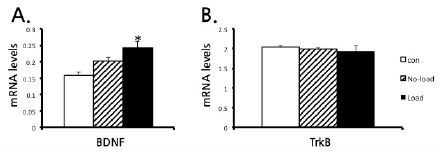
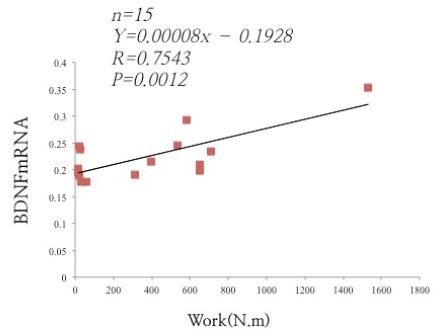
The average distance levels were not significantly different in the No-load and Load groups. However, the average work levels significantly increased in the Load group. The relative soleus weights were greater in the No-load group. Furthermore, loaded wheel running up-regulated the BDNF mRNA level compared with that in the Control group. The BDNF mRNA levels showed a positive correlation with workload levels (r=0.75), suggesting that the availability of multiple workload levels contributes to the BDNF-related benefits of loaded wheel running noted in this study.
This novel approach yielded the first set of findings showing that acute voluntary loaded wheel running, which causes muscular adaptation, enhanced BDNF expression, suggesting a possible role of high-intensity short-term exercise in hippocampal BDNF activity.
自愿负重轮跑是指在自愿跑步活动中使用负荷。在相对高强度和短持续时间内进行的肌肉力量或功率型活动可能引起较少明显的代谢适应,但仍可能引发肌纤维肥大。本研究旨在确定急性自愿负重轮跑对大鼠海马体中脑源性神经营养因子(BDNF)表达的影响。
将10周龄雄性Wistar大鼠随机分为三组:(1)久坐不动(对照组);(2)无负荷自愿运动(无负荷组);或(3)额外负重自愿运动(负荷组),为期1周(急性期)。通过实时PCR定量BDNF基因的表达。
无负荷组和负荷组的平均距离水平无显著差异。然而,负荷组的平均工作量显著增加。无负荷组比目鱼肌的相对重量更大。此外,与对照组相比,负重轮跑上调了BDNF mRNA水平。BDNF mRNA水平与工作量水平呈正相关(r = 0.75),表明多种工作量水平有助于本研究中所指出的负重轮跑对BDNF的有益作用。
这种新方法得出了第一组研究结果,表明引起肌肉适应的急性自愿负重轮跑增强了BDNF表达,提示高强度短期运动在海马体BDNF活性中可能发挥作用。