Department of Biology, University of Padova, Padova, Italy.
The New Zealand Institute for Plant & Food Research Ltd, Auckland, New Zealand.
BMC Genomics. 2018 Jan 26;19(1):94. doi: 10.1186/s12864-018-4451-1.
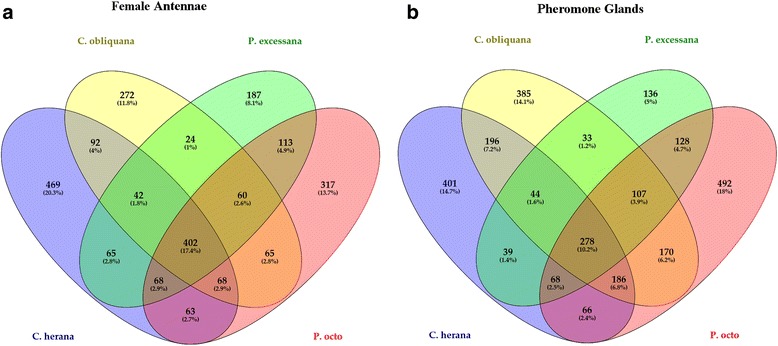
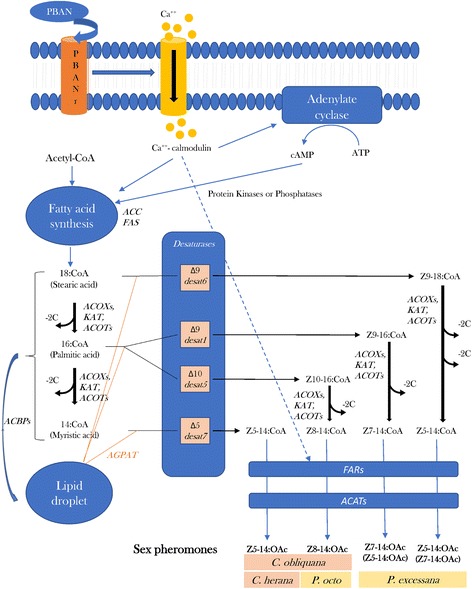
Sex pheromone communication in moths has attracted the attention of evolutionary biologists due to the vast array of pheromone compounds used, addressing questions of how this diversity arose and how male reception has evolved in step with the female signal. Here we examine the role of changing gene expression in the evolution of mate recognition systems in leafroller moths, particularly focusing on genes involved in the biosynthetic pathways of sex pheromones in female pheromone glands and the peripheral reception repertoire in the antennae of males. From tissue-specific transcriptomes we mined and compared a database of genes expressed in the pheromone glands and antennae of males and females of four closely related species of leafroller moths endemic to New Zealand, Ctenopseutis herana and C. obliquana, and Planotortrix excessana and P. octo. The peculiarity of this group, compared to other Lepidoptera, is the use of (Z)-5-tetradecenyl acetate, (Z)-7-tetradecenyl acetate, and (Z)-8-tetradecenyl acetate as sex pheromone components.
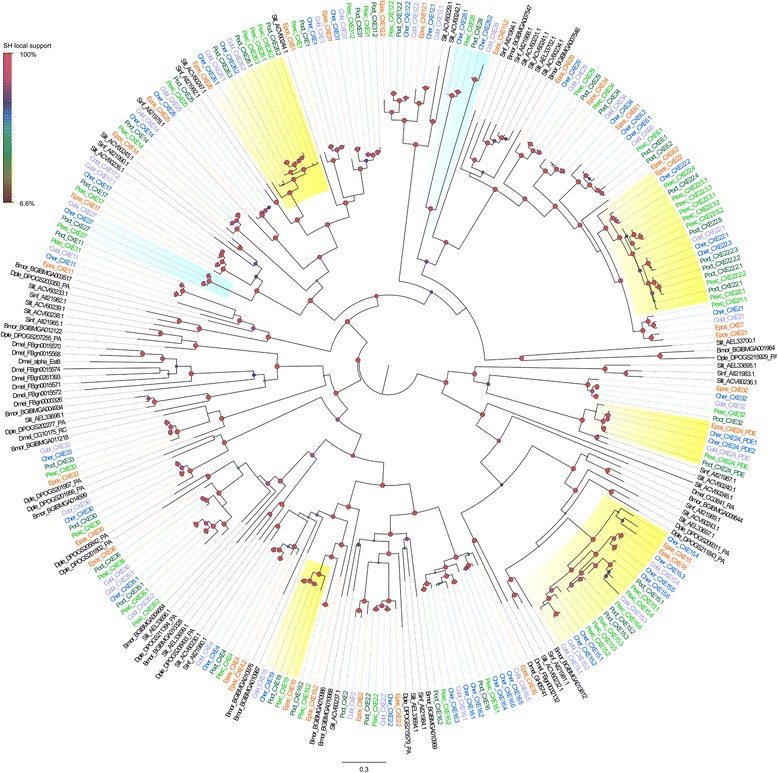
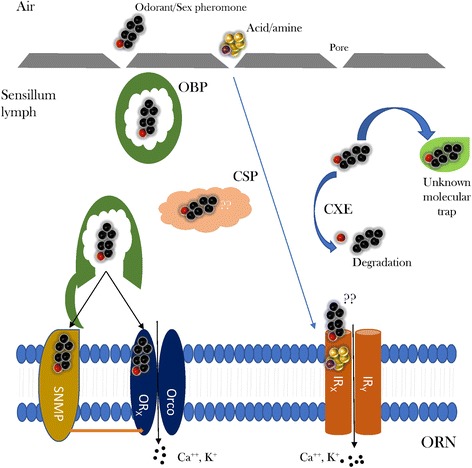
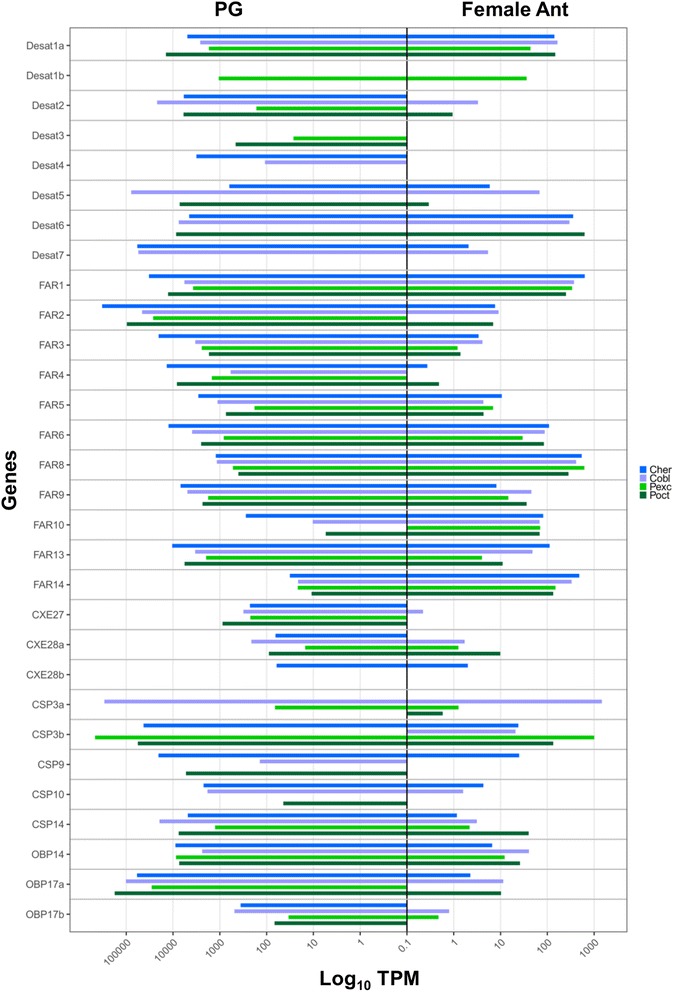
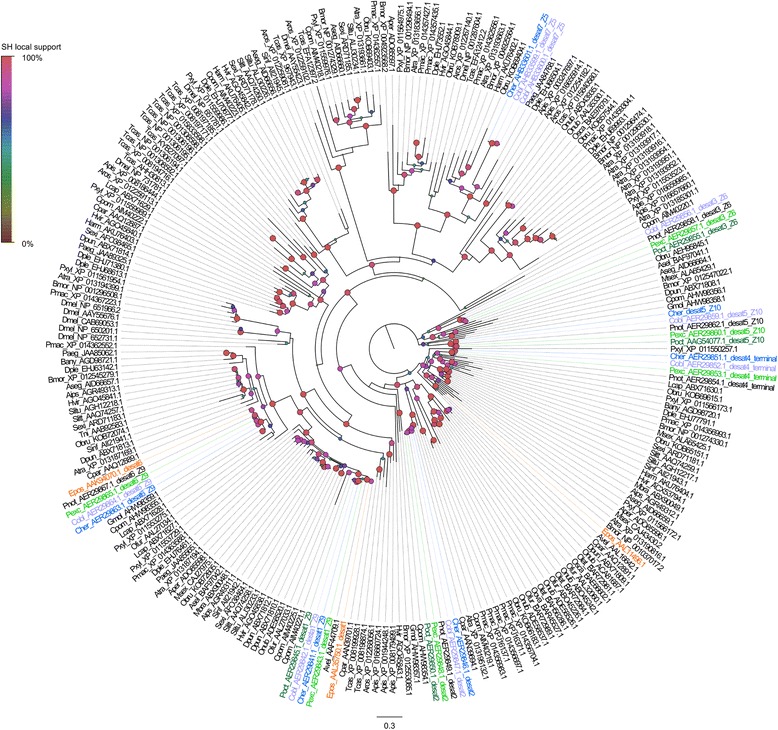
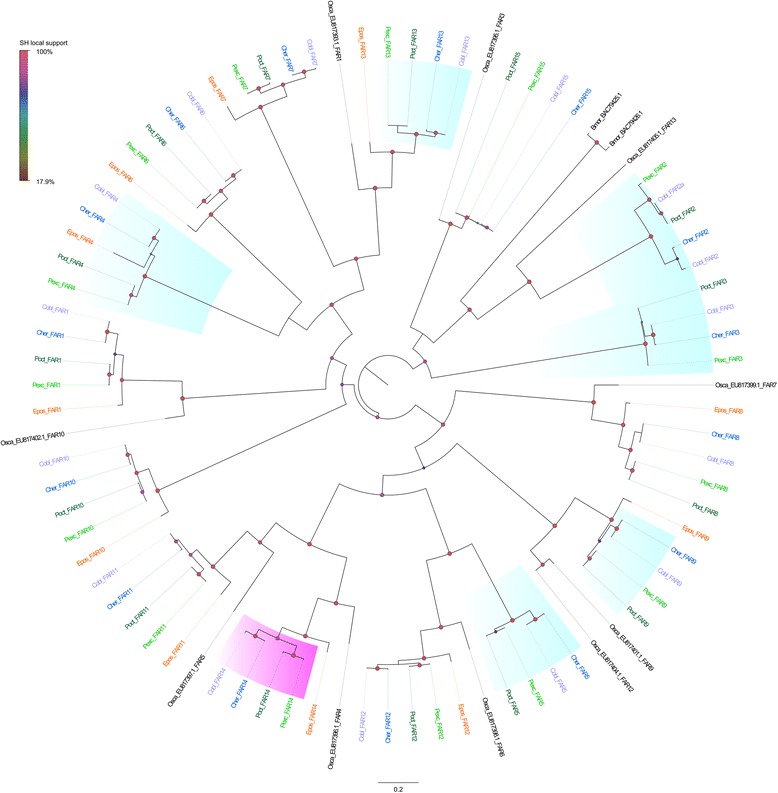
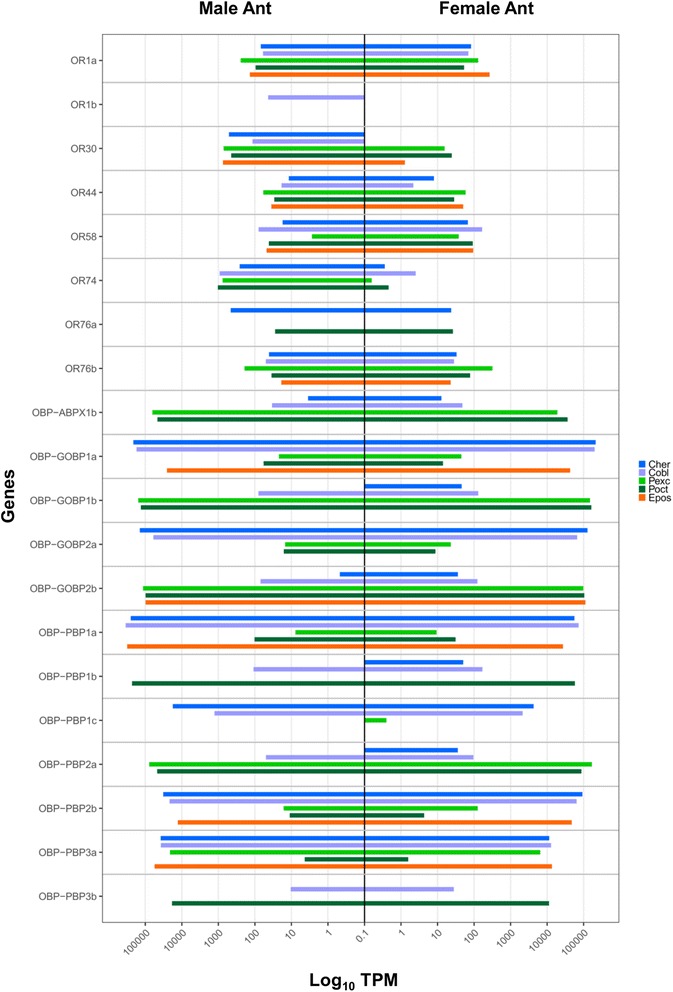
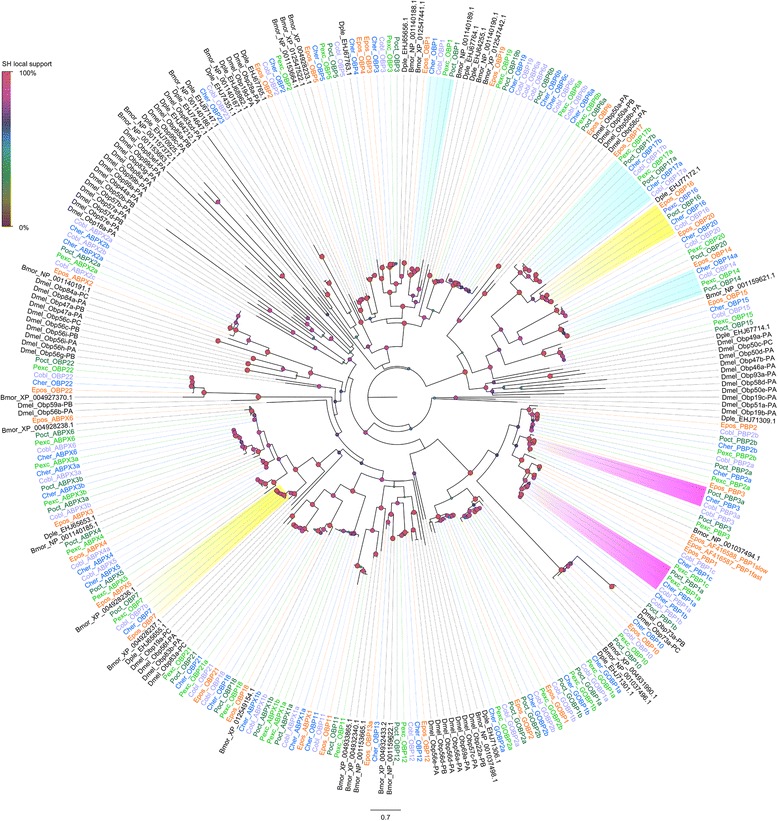
We identify orthologues of candidate genes from the pheromone biosynthesis pathway, degradation and transport, as well as genes of the periphery olfactory repertoire, including large families of binding proteins, receptors and odorant degrading enzymes. The production of distinct pheromone blends in the sibling species is associated with the differential expression of two desaturase genes, deast5 and desat7, in the pheromone glands. In male antennae, three odorant receptors, OR74, OR76a and OR30 are over-expressed, but their expression could not be clearly associated with the detection of species-specific pheromones components. In addition these species contain duplications of all three pheromone binding proteins (PBPs) that are also differentially expressed among species.
While in females differences in the expression of desaturases may be sufficient to explain pheromone blend differences among these New Zealand leafroller species, in males differential expression of several genes, including pheromone binding proteins, may underpin differences in the response by males to changing pheromone components among the species.
蛾类的性信息素通讯吸引了进化生物学家的注意,因为它们使用了大量的信息素化合物,这就提出了一个问题,即这种多样性是如何产生的,以及雄性的接受能力是如何与雌性信号同步进化的。在这里,我们研究了在卷叶蛾中,改变基因表达在配偶识别系统进化中的作用,特别是集中研究了参与雌性信息素腺体生物合成途径和雄性触角外周接受谱的基因。从组织特异性转录组中,我们挖掘并比较了新西兰特有 4 种卷叶蛾(Ctenopseutis herana 和 C. obliquana,以及 Planotortrix excessana 和 P. octo)雌雄两性信息素腺体和触角中表达的基因数据库。与其他鳞翅目昆虫相比,该类群的特殊性在于使用(Z)-5-十四碳烯基乙酸酯、(Z)-7-十四碳烯基乙酸酯和(Z)-8-十四碳烯基乙酸酯作为性信息素成分。
我们从信息素生物合成途径、降解和运输以及外周嗅觉受体谱中识别候选基因的直系同源物,包括结合蛋白、受体和气味降解酶的大家族。在姐妹种中产生不同的信息素混合物与两种去饱和酶基因(deast5 和 desat7)在信息素腺体中的差异表达有关。在雄性触角中,三个气味受体 OR74、OR76a 和 OR30 过度表达,但它们的表达不能明确与特定物种信息素成分的检测相关。此外,这些物种还包含三种信息素结合蛋白(PBPs)的重复,这些重复在物种间也有差异表达。
虽然在雌性中,去饱和酶表达的差异可能足以解释这些新西兰卷叶蛾物种之间的信息素混合物差异,但在雄性中,包括信息素结合蛋白在内的几个基因的差异表达可能是雄性对物种间信息素成分变化的反应差异的基础。