Joo Seongjoon, Cho In Jin, Seo Hogyun, Son Hyeoncheol Francis, Sagong Hye-Young, Shin Tae Joo, Choi So Young, Lee Sang Yup, Kim Kyung-Jin
School of Life Sciences (KNU Creative BioResearch Group), KNU Institute for Microorganisms, Kyungpook National University, Daehak-ro 80, Buk-gu, Daegu, 41566, Republic of Korea.
Metabolic and Biomolecular Engineering National Research Laboratory, Department of Chemical and Biomolecular Engineering (BK21 Plus Program), BioProcess Engineering Research Center, and KAIST Institute (KI) for the BioCentury, Korea Advanced Institute of Science and Technology (KAIST), 291 Daehak-ro, Yuseong-gu, Daejeon, 34141, Republic of Korea.
Nat Commun. 2018 Jan 26;9(1):382. doi: 10.1038/s41467-018-02881-1.
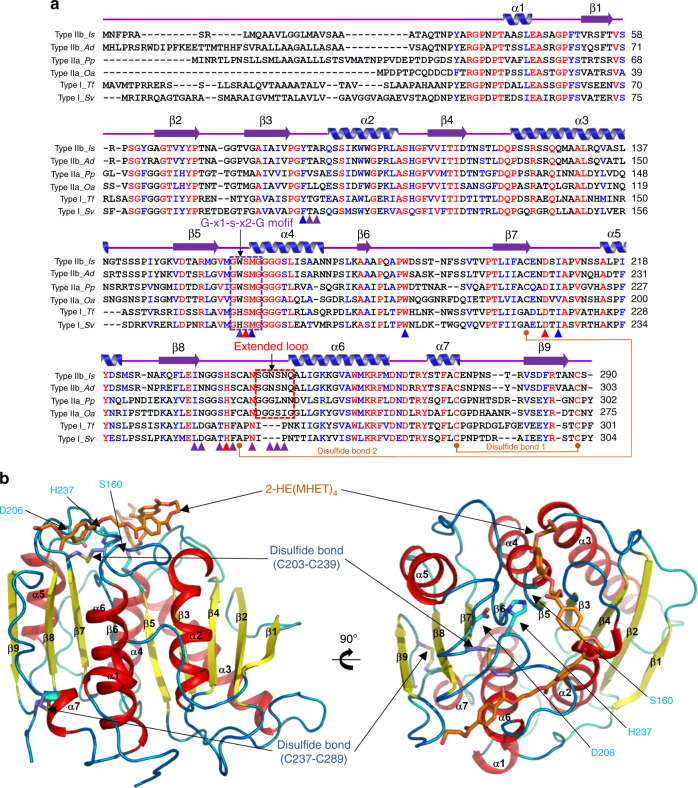
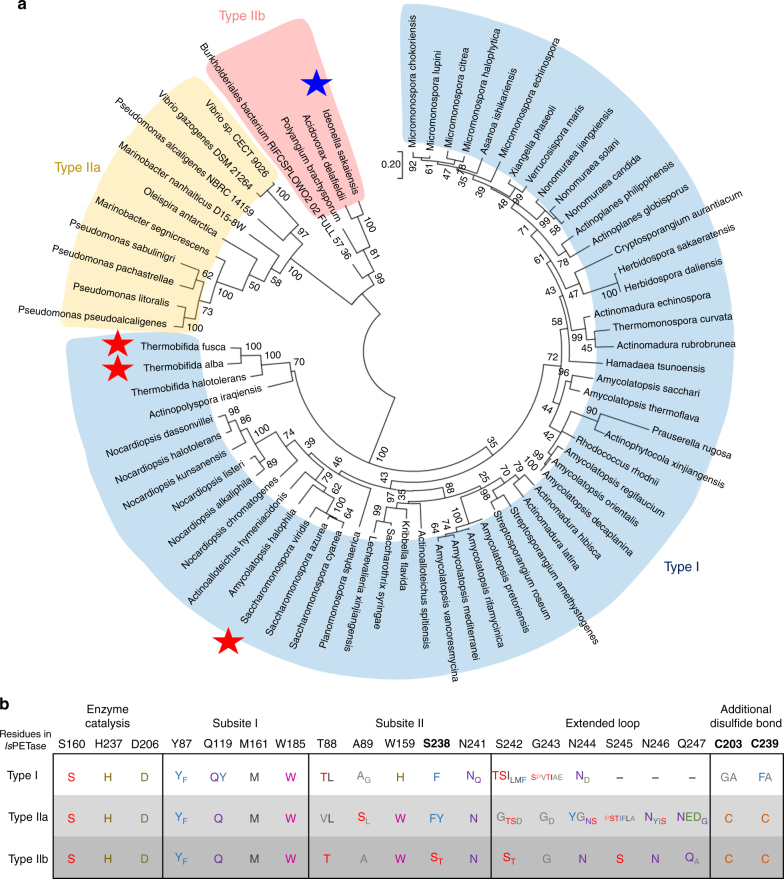
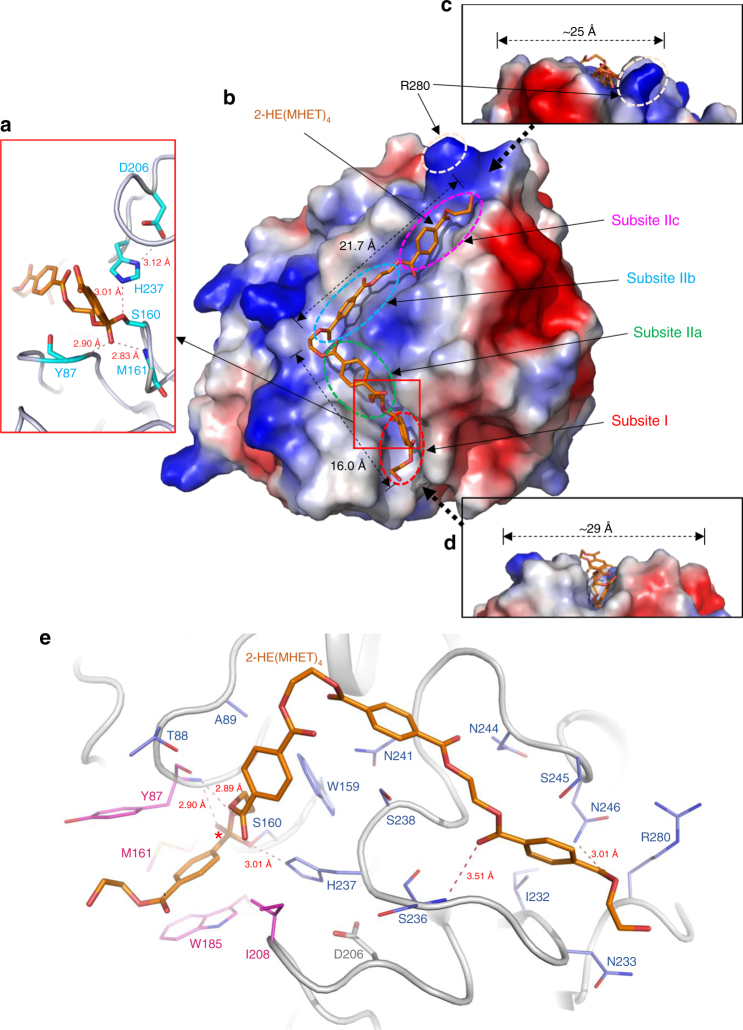
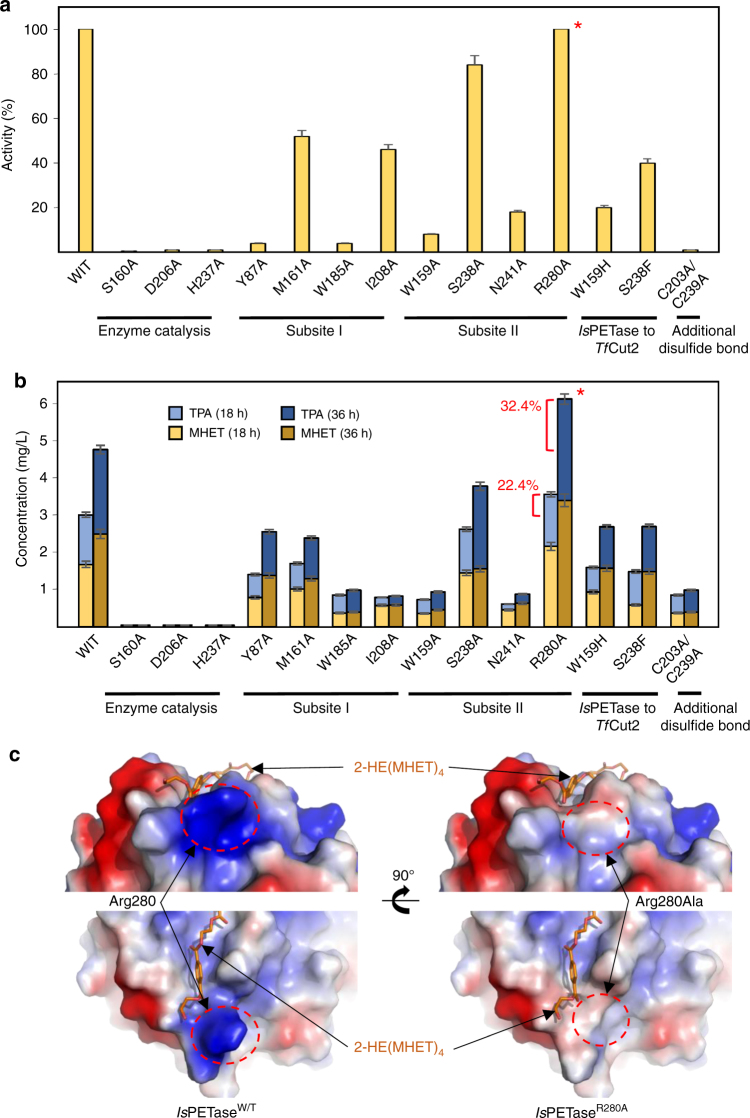
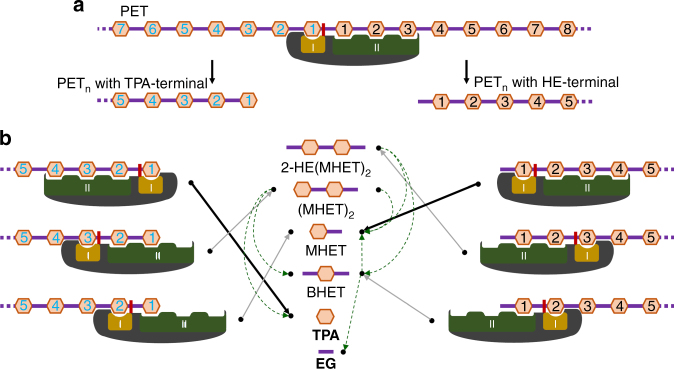
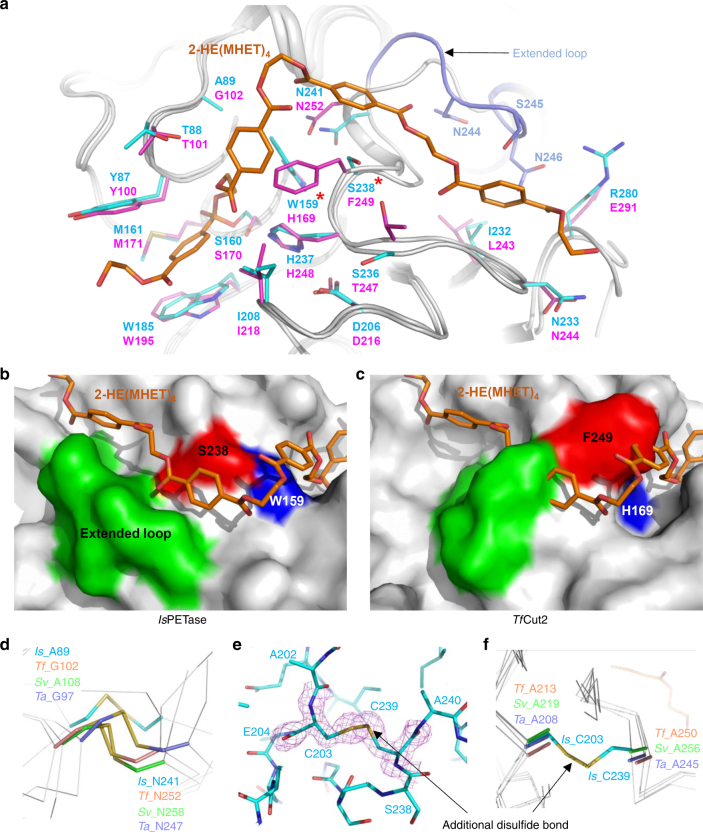
Plastics, including poly(ethylene terephthalate) (PET), possess many desirable characteristics and thus are widely used in daily life. However, non-biodegradability, once thought to be an advantage offered by plastics, is causing major environmental problem. Recently, a PET-degrading bacterium, Ideonella sakaiensis, was identified and suggested for possible use in degradation and/or recycling of PET. However, the molecular mechanism of PET degradation is not known. Here we report the crystal structure of I. sakaiensis PETase (IsPETase) at 1.5 Å resolution. IsPETase has a Ser-His-Asp catalytic triad at its active site and contains an optimal substrate binding site to accommodate four monohydroxyethyl terephthalate (MHET) moieties of PET. Based on structural and site-directed mutagenesis experiments, the detailed process of PET degradation into MHET, terephthalic acid, and ethylene glycol is suggested. Moreover, other PETase candidates potentially having high PET-degrading activities are suggested based on phylogenetic tree analysis of 69 PETase-like proteins.
包括聚对苯二甲酸乙二酯(PET)在内的塑料具有许多理想特性,因此在日常生活中被广泛使用。然而,不可生物降解性,曾被认为是塑料的一项优势,如今却引发了重大环境问题。最近,一种能降解PET的细菌——坂井荣螺菌(Ideonella sakaiensis)被鉴定出来,并被认为可能用于PET的降解和/或回收。然而,PET降解的分子机制尚不清楚。在此,我们报告了坂井荣螺菌PET酶(IsPETase)在1.5埃分辨率下的晶体结构。IsPETase在其活性位点具有丝氨酸-组氨酸-天冬氨酸催化三联体,并且包含一个最佳底物结合位点,可容纳PET的四个单羟乙基对苯二甲酸酯(MHET)部分。基于结构和定点诱变实验,提出了PET降解为MHET、对苯二甲酸和乙二醇的详细过程。此外,基于对69种类PET酶蛋白的系统发育树分析,还提出了其他可能具有高PET降解活性的PET酶候选物。