Wang Yu, Chen Pei-Min, Liu Rong-Bin
School of Public Health, Guangzhou Medical University, Guangzhou 510180, Guangdong Province, China.
Department of Ultrasound, Sun Yat-sen Memorial Hospital, Sun Yat-sen University, Guangzhou 510120, Guangdong Province, China.
World J Gastrointest Oncol. 2018 Jan 15;10(1):15-22. doi: 10.4251/wjgo.v10.i1.15.
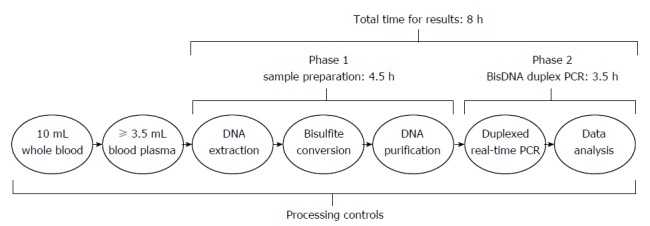
This review article summarizes the research advances of the plasma-based gene methylation assay for the clinical detection of colorectal cancer and its limitations. Colorectal cancer is a common malignancy with a poor prognosis and a high mortality, for which early detection and diagnosis are particularly crucial for the high-risk groups. Increasing evidence supported that gene methylation is associated with the pathogenesis of colorectal cancer and that detecting the level of methylation of in the peripheral blood can be used for screening of colorectal cancer in susceptible populations. In recent years, the data obtained in clinical studies demonstrated that the gene methylation assay has a good diagnostic performance with regard to both sensitivity and specificity with the advantage of better acceptability, convenience and compliance with serological testing compared with fecal occult blood tests and carcinoembryonic antigen for colorectal cancer (CRC). Furthermore, the combination of multiple methods or markers has become a growing trend for CRC detection and screening. Nevertheless, the clinical availability of the methylated SEPT9 assay is still limited because of the large degree of sample heterogeneity caused by demographic characteristics, pathological features, comorbidities and/or technique selection. Another factor is the cost-effectiveness of colorectal cancer screening strategies that hinders its large-scale application. In addition, improvements in its accuracy in detecting adenomas and premalignant polyps are required.
这篇综述文章总结了基于血浆的基因甲基化检测法在结直肠癌临床检测方面的研究进展及其局限性。结直肠癌是一种常见的恶性肿瘤,预后较差且死亡率高,对于高危人群而言,早期检测和诊断尤为关键。越来越多的证据表明,基因甲基化与结直肠癌的发病机制相关,检测外周血中特定基因的甲基化水平可用于易感人群的结直肠癌筛查。近年来,临床研究获得的数据表明,与结直肠癌(CRC)的粪便潜血试验和癌胚抗原相比,特定基因甲基化检测法在敏感性和特异性方面均具有良好的诊断性能,且具有更好的可接受性、便利性以及与血清学检测的依从性等优势。此外,多种方法或标志物的联合已成为结直肠癌检测和筛查的发展趋势。然而,由于人口统计学特征、病理特征、合并症和/或技术选择导致样本异质性程度较大,甲基化SEPT9检测法的临床实用性仍然有限。另一个因素是结直肠癌筛查策略的成本效益,这阻碍了其大规模应用。此外,还需要提高其在检测腺瘤和癌前息肉方面的准确性。