Translational Medicine Research Center, Key Laboratory of Clinical Cancer Pharmacology and Toxicology Research of Zhejiang Province, Affiliated Hangzhou First People's Hospital, School of Medicine, Westlake University, Hangzhou, 310006, Zhejiang, China.
Department of Medical Oncology, The First Affiliated Hospital, Zhejiang University School of Medicine, Hangzhou, 310006, Zhejiang, China.
BMC Cancer. 2024 Sep 5;24(1):1105. doi: 10.1186/s12885-024-12877-4.
SEPT9 is a pivotal cytoskeletal GTPase that regulates diverse biological processes encompassing mitosis and cytokinesis. While previous studies have implicated SEPT9 in tumorigenesis and development; comprehensive pan-cancer analyses have not been performed. This study aims to systematically explore its role in cancer screening, prognosis, and treatment, addressing this critical gap.
Gene and protein expression data containing clinical information were obtained from public databases for pan-cancer analyses. Additionally, clinical samples from 90 patients with lung squamous cell carcinoma (LUSC) were used to further experimentally validate the clinical significance of SEPT9. In addition, the molecular docking tool was used to analyze the affinities between SEPT9 protein and drugs.
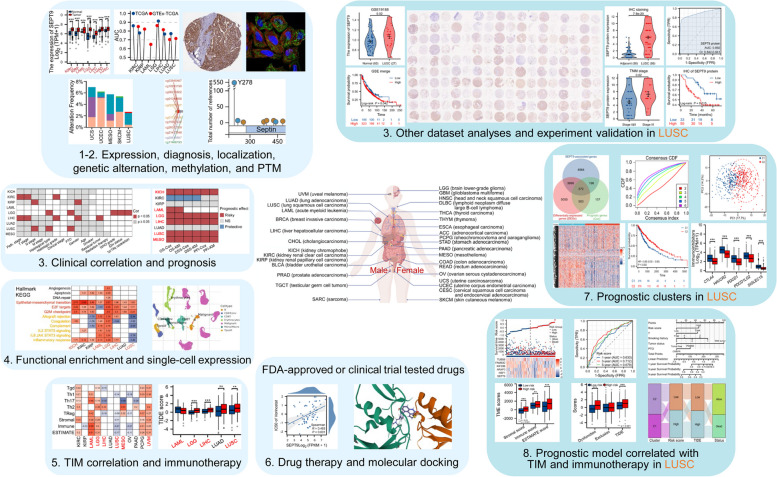
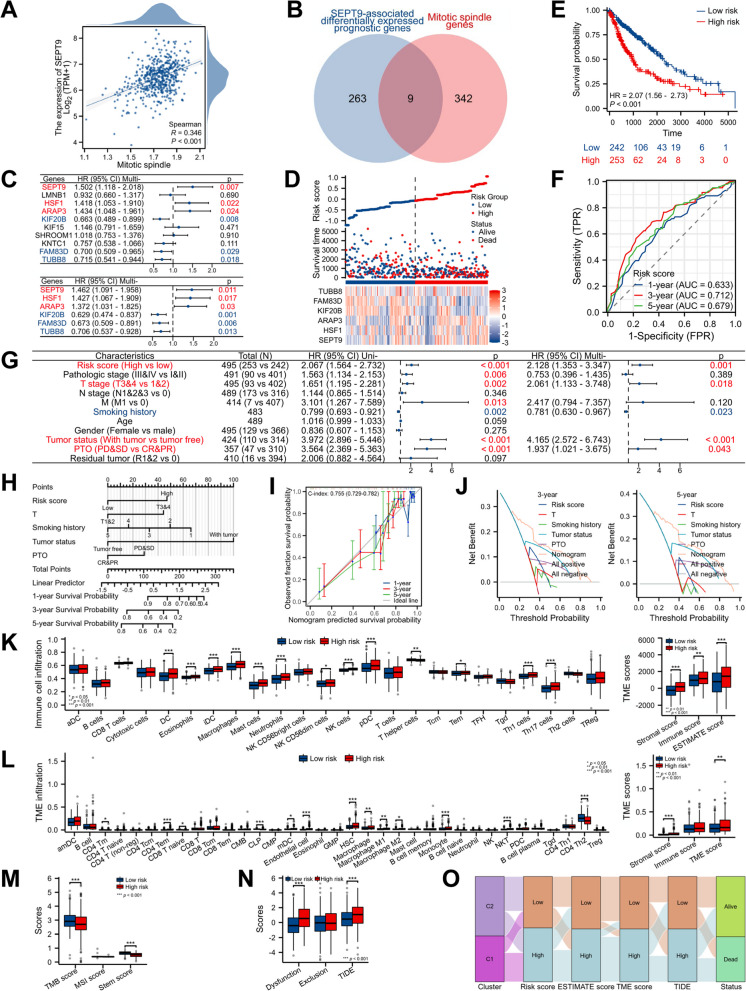
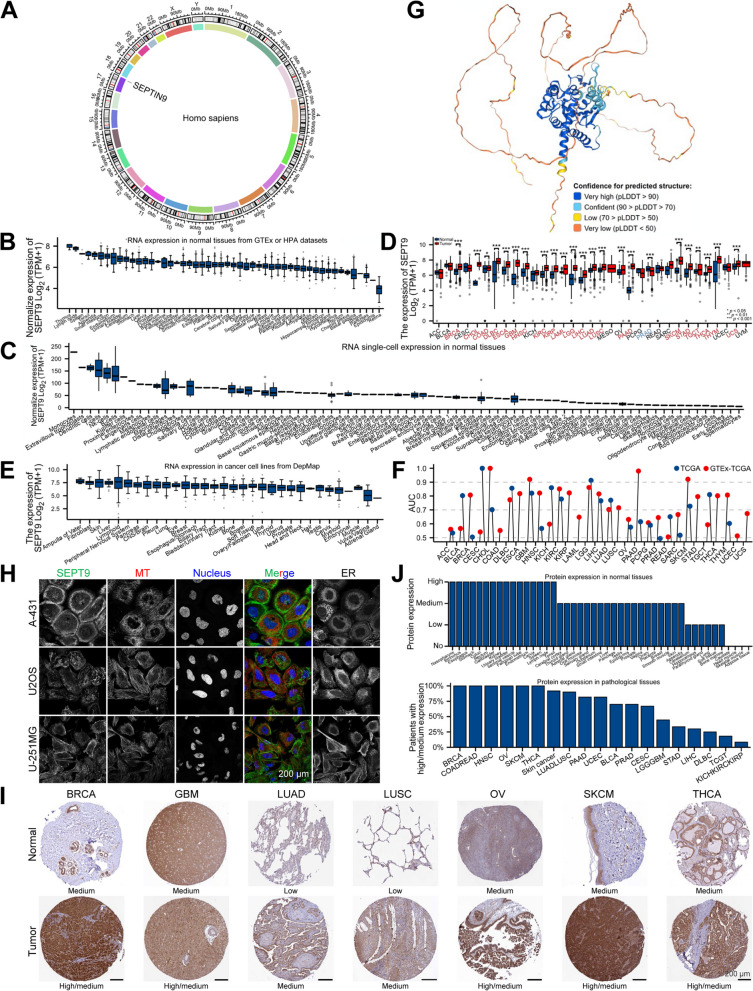
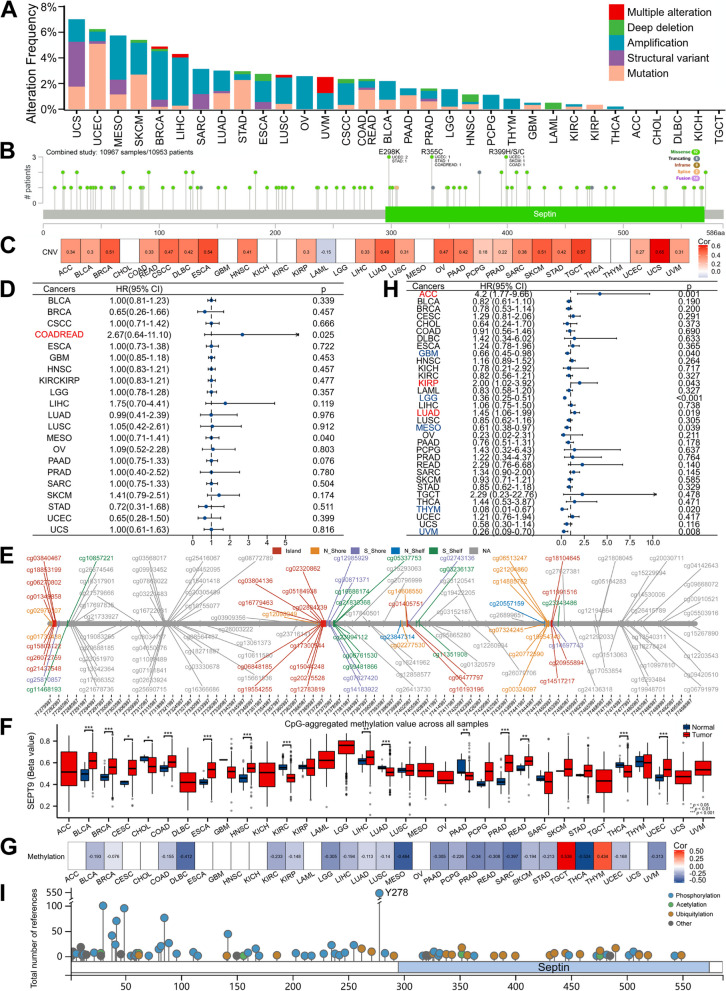
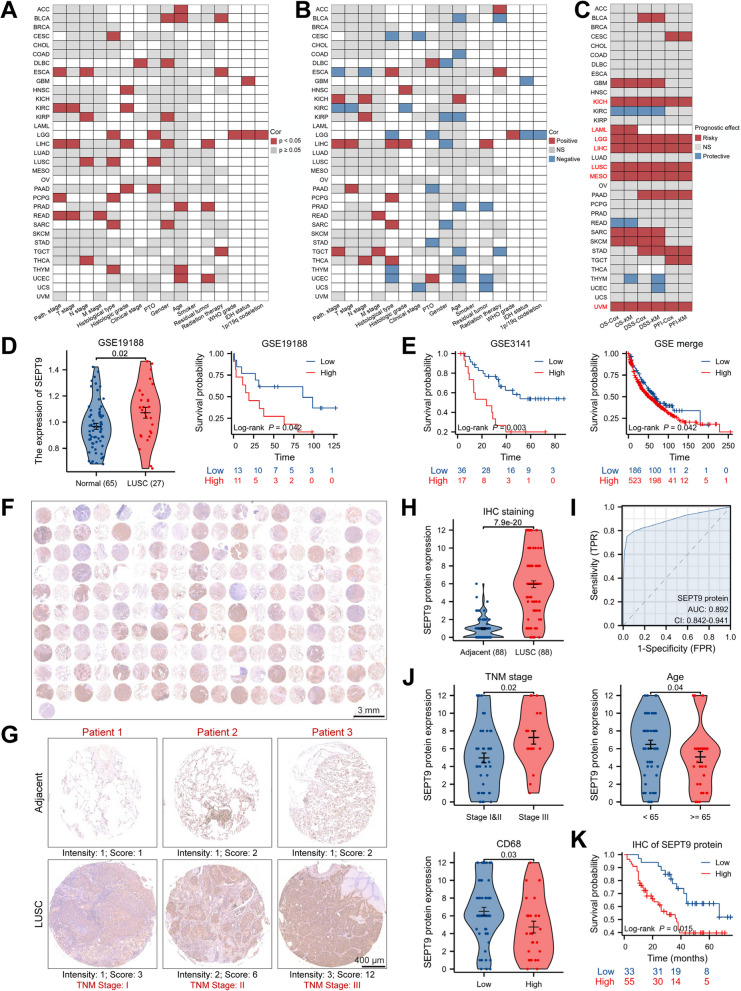
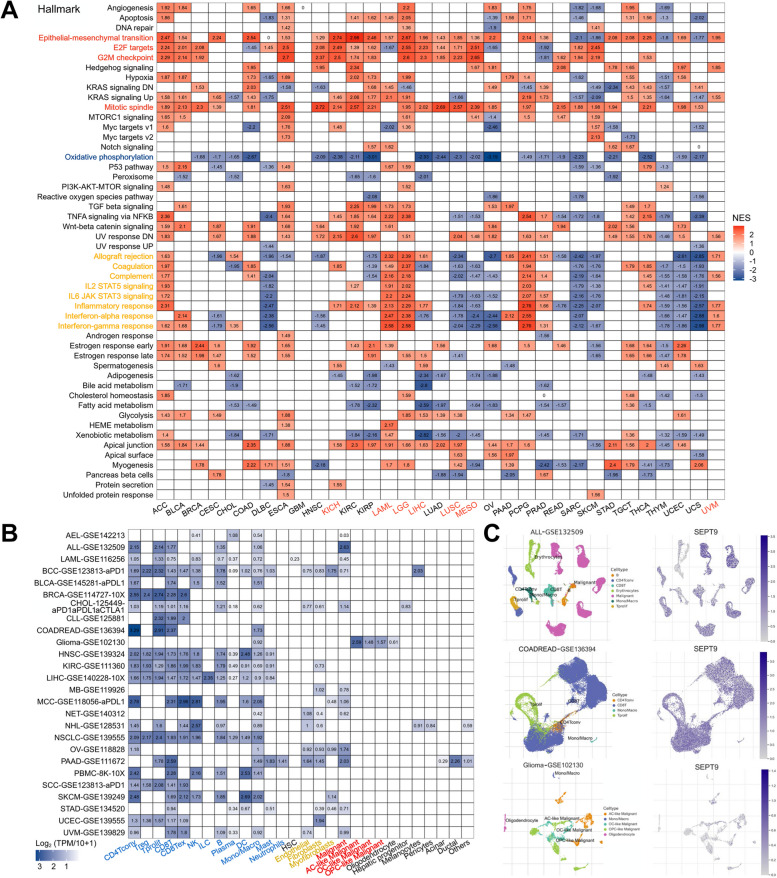
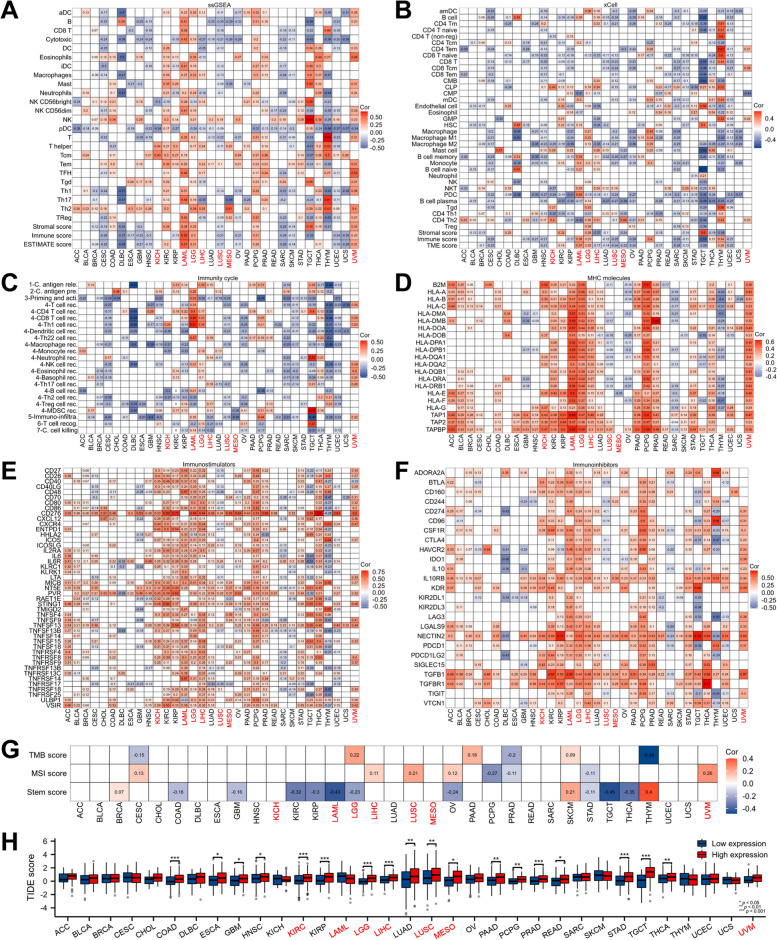
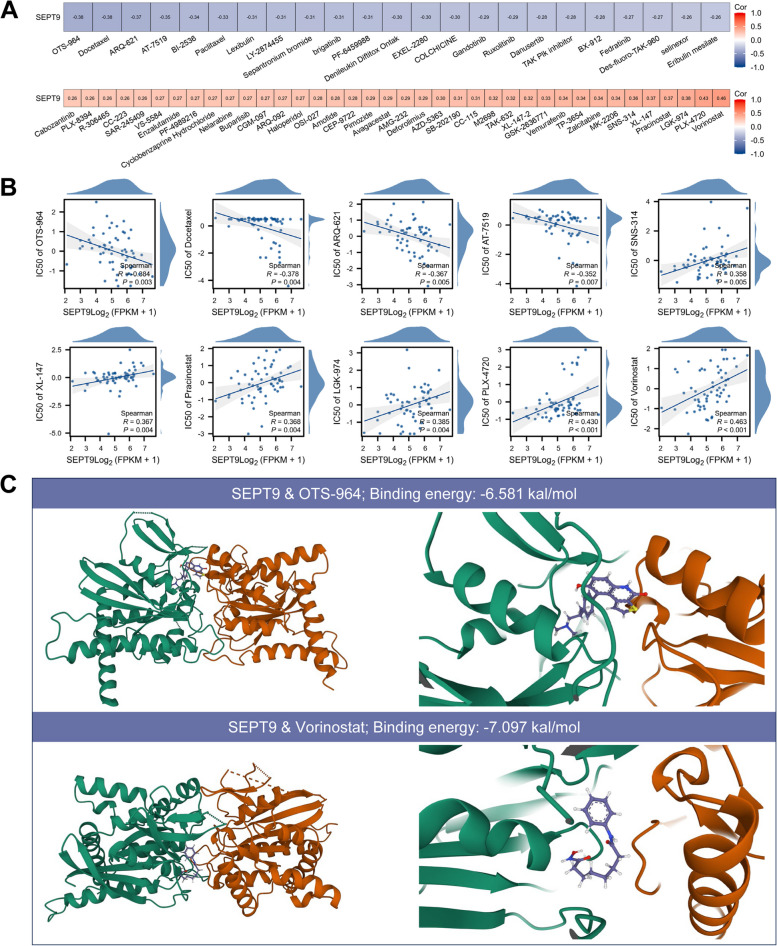
SEPT9 is highly expressed in various cancers, and its aberrant expression correlates with genetic alternations and epigenetic modifications, leading to adverse clinical outcomes. Take LUSC as an example, additional dataset analyses and immunohistochemical experiments further confirm the diagnostic and prognostic values as well as the clinical relevance of the SEPT9 gene and protein. Functional enrichment, single-cell expression, and immune infiltration analyses revealed that SEPT9 promotes malignant tumor progression and modulates the immune microenvironments, enabling patients to benefit from immunotherapy. Moreover, drug sensitivity and molecular docking analyses showed that SEPT9 is associated with the sensitivity and resistance of multiple drugs and has stable binding activity with them, including Vorinostat and OTS-964. To harness its prognostic and therapeutic potential in LUSC, a mitotic spindle-associated prognostic model including SEPT9, HSF1, ARAP3, KIF20B, FAM83D, TUBB8, and several clinical characteristics, was developed. This model not only improves clinical outcome predictions but also reshapes the immune microenvironment, making immunotherapy more effective for LUSC patients.
This is the first study to systematically analyze the role of SEPT9 in cancers and innovatively apply the mitotic spindle-associated model to LUSC, fully demonstrating its potential as a valuable biomarker for cancer screening and prognosis, and highlighting its application value in promoting immunotherapy and chemotherapy, particularly for LUSC.
SEPT9 是一种关键的细胞骨架 GTPase,调节包括有丝分裂和胞质分裂在内的多种生物学过程。虽然之前的研究表明 SEPT9 与肿瘤发生和发展有关,但尚未进行全面的泛癌症分析。本研究旨在系统地探讨 SEPT9 在癌症筛查、预后和治疗中的作用,以填补这一关键空白。
从公共数据库中获取包含临床信息的基因和蛋白质表达数据,进行泛癌症分析。此外,使用 90 例肺鳞状细胞癌(LUSC)患者的临床样本进一步实验验证 SEPT9 的临床意义。此外,还使用分子对接工具分析 SEPT9 蛋白与药物的亲和力。
SEPT9 在各种癌症中高度表达,其异常表达与遗传改变和表观遗传修饰相关,导致不良的临床结局。以 LUSC 为例,额外的数据集分析和免疫组织化学实验进一步证实了 SEPT9 基因和蛋白的诊断和预后价值以及临床相关性。功能富集、单细胞表达和免疫浸润分析表明,SEPT9 促进恶性肿瘤的进展,并调节免疫微环境,使患者受益于免疫治疗。此外,药物敏感性和分子对接分析表明,SEPT9 与多种药物的敏感性和耐药性相关,并且与它们具有稳定的结合活性,包括 Vorinostat 和 OTS-964。为了利用 SEPT9 在 LUSC 中的预后和治疗潜力,构建了一个包括 SEPT9、HSF1、ARAP3、KIF20B、FAM83D、TUBB8 和几个临床特征的有丝分裂纺锤体相关预后模型。该模型不仅提高了临床结局预测的准确性,还重塑了免疫微环境,使免疫治疗对 LUSC 患者更有效。
这是第一项系统分析 SEPT9 在癌症中的作用并创新性地将有丝分裂纺锤体相关模型应用于 LUSC 的研究,充分证明了 SEPT9 作为癌症筛查和预后的有价值的生物标志物的潜力,并强调了其在促进免疫治疗和化疗方面的应用价值,特别是对于 LUSC。