Jamnongkan Wassana, Thanee Malinee, Yongvanit Puangrat, Loilome Watcharin, Thanan Raynoo, Kimawaha Phongsaran, Boonmars Tidarat, Silakit Runglawan, Namwat Nisana, Techasen Anchalee
Department of Biochemistry, Faculty of Medicine, Khon Kaen University, Khon Kaen, Thailand.
Cholangiocarcinoma Research Institute, Khon Kaen University, Khon Kaen, Thailand.
PeerJ. 2018 Jan 22;6:e4281. doi: 10.7717/peerj.4281. eCollection 2018.
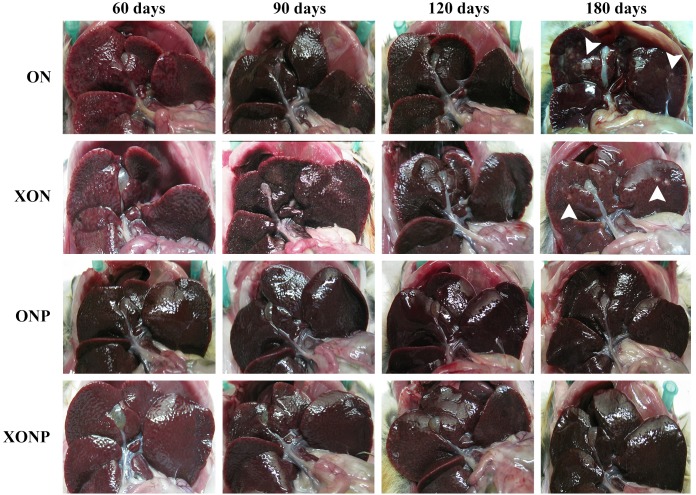
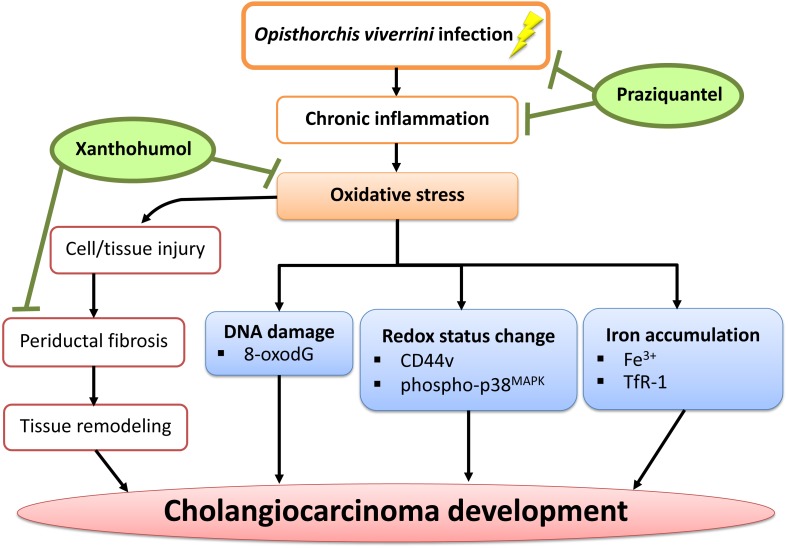
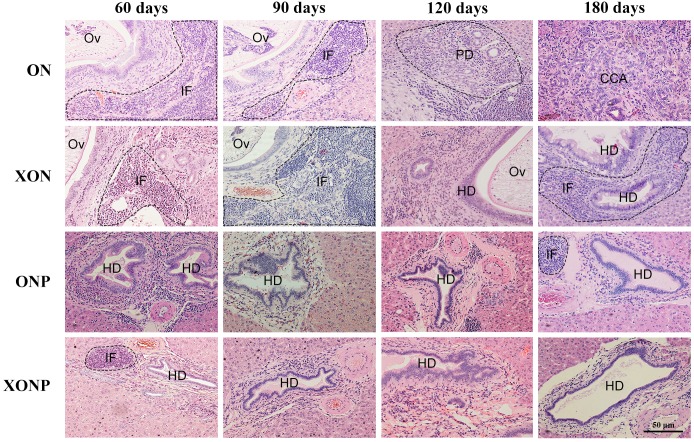
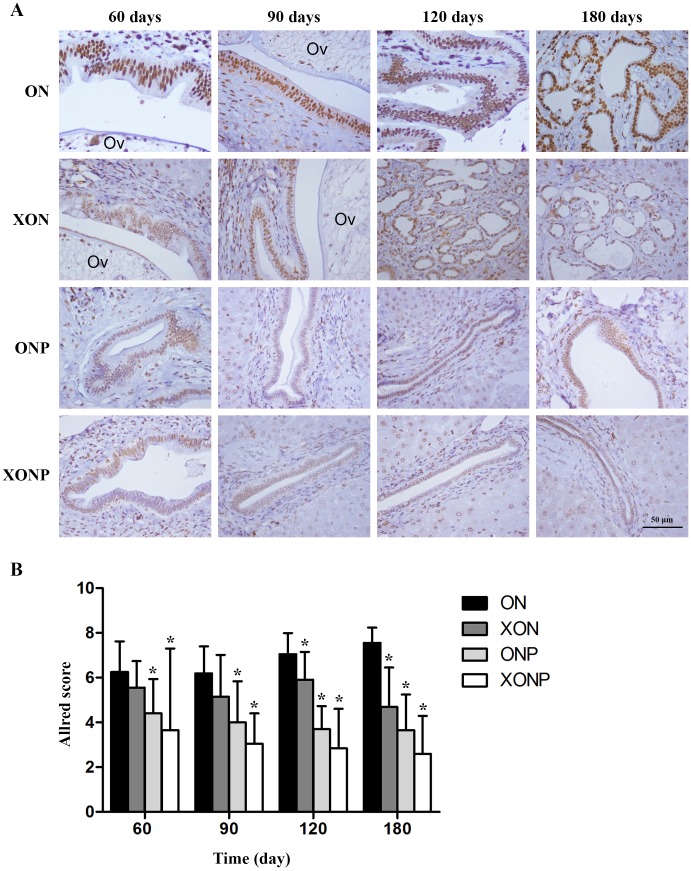
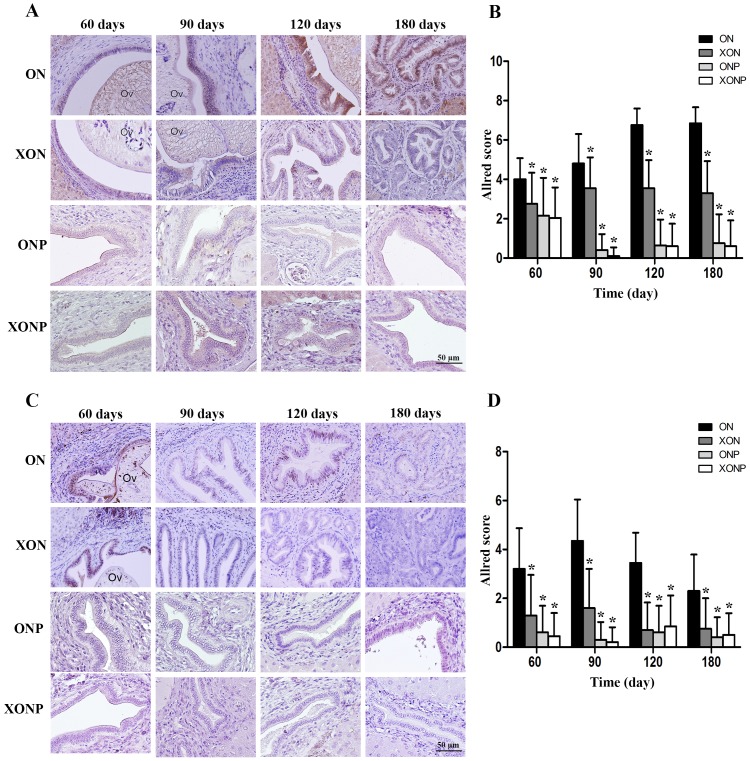
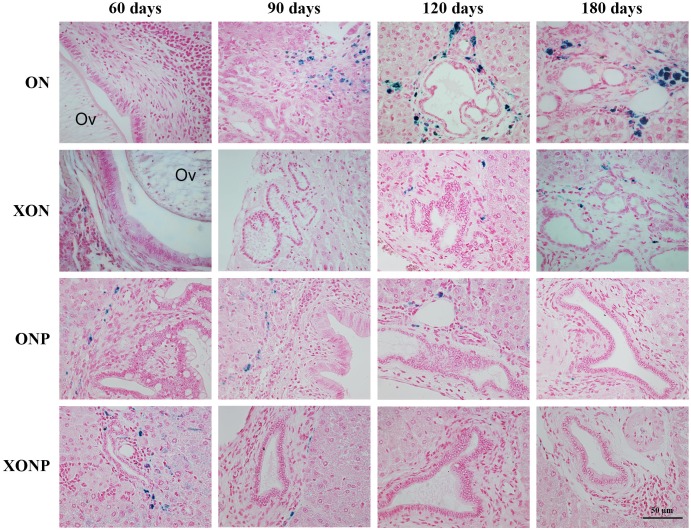
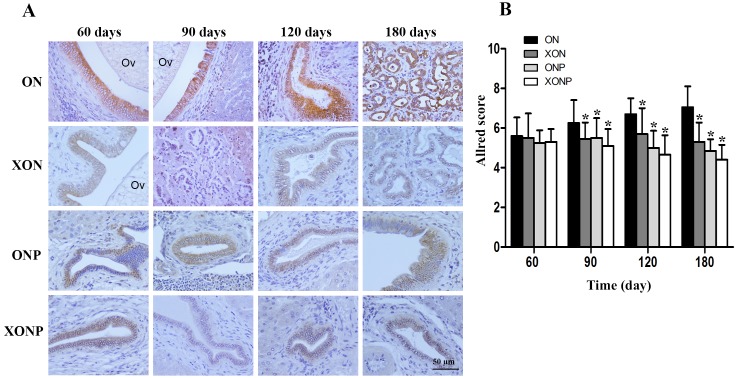
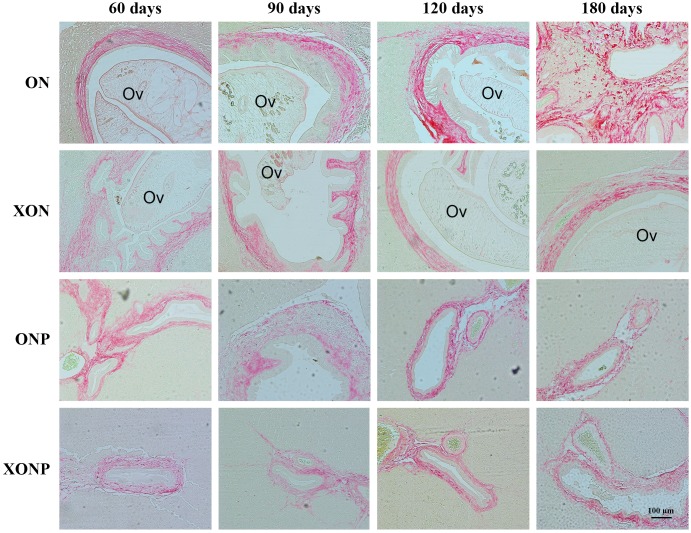
Cholangiocarcinoma (CCA) caused by infection of the liver fluke , (Ov) is the major public health problem in northeast Thailand. Following Ov infection the subsequent molecular changes can be associated by reactive oxygen species (ROS) induced chronic inflammation, advanced periductal fibrosis, and cholangiocarcinogenesis. Notably, resistance to an activation of cell death in prolonged oxidative stress conditions can occur but some damaged/mutated cells could survive and enable clonal expansion. Our study used a natural product, xanthohumol (XN), which is an anti-oxidant and anti-inflammatory compound, to examine whether it could prevent Ov-associated CCA carcinogenesis. We measured the effect of XN with or without praziquantel (PZ), an anti-helminthic treatment, on DNA damage, redox status change including iron accumulation and periductal fibrosis during CCA genesis induced by administration of Ov and -dinitrosomethylamine (NDMA) in hamsters. Animals were randomly divided into four groups: group I, Ov infection and NDMA administration (ON); group II, Ov infection and NDMA administration and PZ treatment (ONP); the latter 2 groups were similar to group I and II, but group III received additional XN (XON) and group IV received XN plus PZ (XONP). The results showed that high 8-oxodG (a marker of DNA damage) was observed throughout cholangiocarcinogenesis. Moreover, increased expression of CD44v8-10 (a cell surface in regulation of the ROS defense system), whereas decreased expression of phospho-p38 (a major ROS target), was found during the progression of the bile duct cell transformation. In addition, high accumulation of iron and expression of transferrin receptor-1 (TfR-1) in both malignant bile ducts and inflammatory cells were detected. Furthermore, fibrosis also increased with the highest level being on day 180. On the other hand, the groups of XN with or without PZ supplementations showed an effective reduction in all the markers examined, including fibrosis when compared with the ON group. In particular, the XONP group, in which a significant reduction DNA damage occurred, was also found to have iron accumulation and fibrosis compared to the other groups. Our results show that XN administered in combination with PZ could efficiently prevent CCA development and hence provide potential chemopreventive benefits in Ov-induced cholangiocarcinogenesis.
由肝吸虫(华支睾吸虫,Ov)感染引起的胆管癌(CCA)是泰国东北部主要的公共卫生问题。在感染Ov后,随后的分子变化可能与活性氧(ROS)诱导的慢性炎症、进行性胆管周围纤维化和胆管癌发生有关。值得注意的是,在长期氧化应激条件下可能会出现对细胞死亡激活的抗性,但一些受损/突变的细胞能够存活并实现克隆扩增。我们的研究使用了一种天然产物——黄腐酚(XN),它是一种抗氧化和抗炎化合物,来研究其是否可以预防与Ov相关的CCA致癌作用。我们测量了XN在有或没有抗蠕虫药物吡喹酮(PZ)的情况下,对仓鼠经Ov和二甲基亚硝胺(NDMA)诱导的CCA发生过程中的DNA损伤、氧化还原状态变化(包括铁积累)和胆管周围纤维化的影响。动物被随机分为四组:第一组,感染Ov并给予NDMA(ON);第二组,感染Ov并给予NDMA及PZ治疗(ONP);后两组与第一组和第二组相似,但第三组额外给予XN(XON),第四组给予XN加PZ(XONP)。结果表明,在整个胆管癌发生过程中均观察到高浓度的8-氧代脱氧鸟苷(DNA损伤的标志物)。此外,在胆管细胞转化过程中发现CD44v8-10(ROS防御系统调节中的一种细胞表面分子)表达增加,而磷酸化p38(主要的ROS靶点)表达降低。此外,在恶性胆管和炎性细胞中均检测到铁的高积累和转铁蛋白受体-1(TfR-1)的表达。此外,纤维化也增加,在第180天时达到最高水平。另一方面,补充或未补充PZ的XN组在所有检测的标志物方面均显示出有效降低,包括与ON组相比的纤维化。特别是,XONP组不仅DNA损伤显著减少,与其他组相比,铁积累和纤维化也较低。我们的结果表明,XN与PZ联合给药可以有效预防CCA的发展,因此在Ov诱导的胆管癌发生中具有潜在的化学预防益处。