Sip Kamila E, Gonzalez Richard, Taylor Stephan F, Stern Emily R
Department of Psychiatry, Icahn School of Medicine at Mount Sinai, New York, NY, United States.
Fishberg Department of Neuroscience, Icahn School of Medicine at Mount Sinai, Friedman Brain Institute, New York, NY, United States.
Front Psychiatry. 2018 Jan 15;8:309. doi: 10.3389/fpsyt.2017.00309. eCollection 2017.
Obsessive-compulsive disorder (OCD) patients show abnormalities in decision-making and, clinically, appear to show heightened sensitivity to potential negative outcomes. Despite the importance of these cognitive processes in OCD, few studies have examined the disorder within an economic decision-making framework. Here, we investigated loss aversion, a key construct in the prospect theory that describes the tendency for individuals to be more sensitive to potential losses than gains when making decisions.
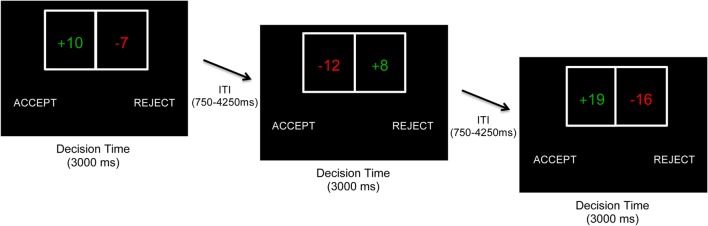
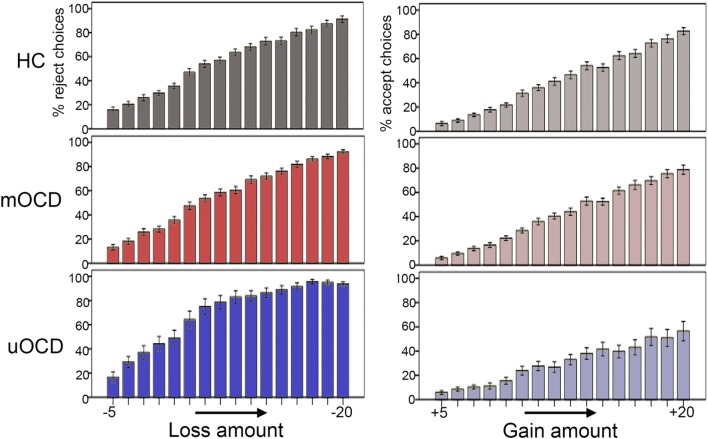
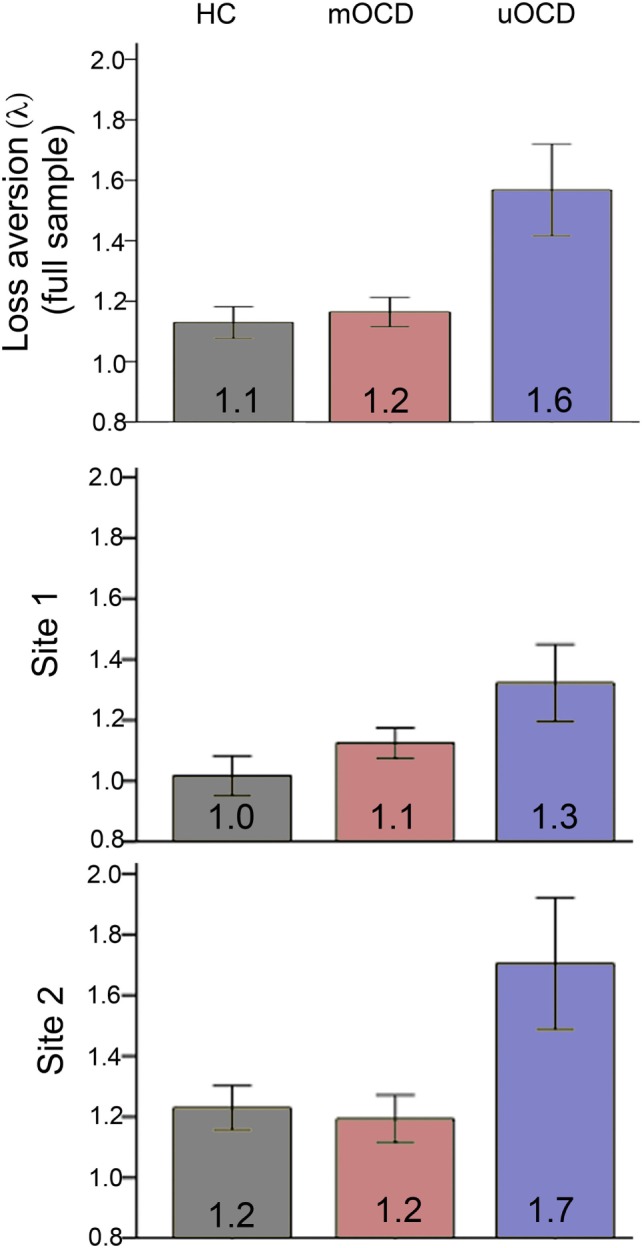
Across two study sites, groups of unmedicated OCD patients ( = 14), medicated OCD patients ( = 29), and healthy controls ( = 34) accepted or rejected a series of 50/50 gambles containing varying loss/gain values. Loss aversion was calculated as the ratio of the likelihood of rejecting a gamble with increasing potential losses to the likelihood of accepting a gamble with increasing potential gains. Decision times to accept or reject were also examined and correlated with loss aversion.
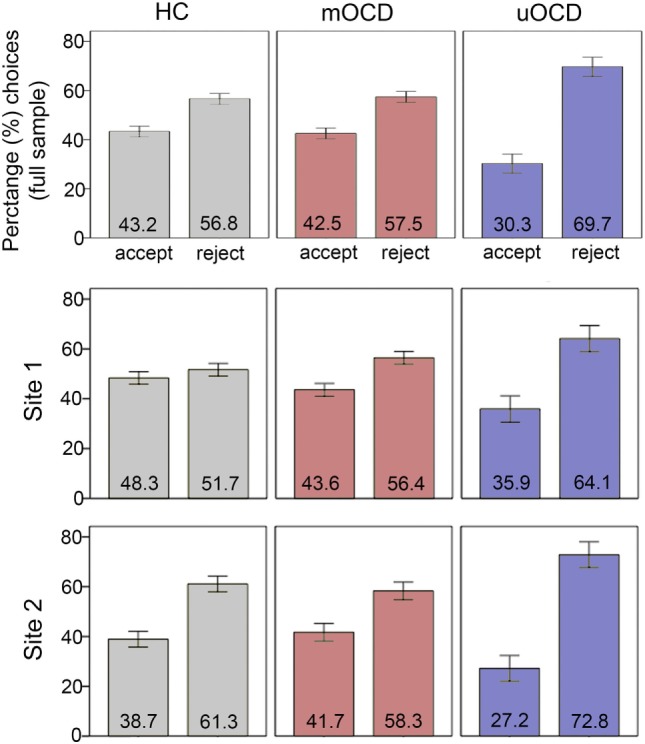
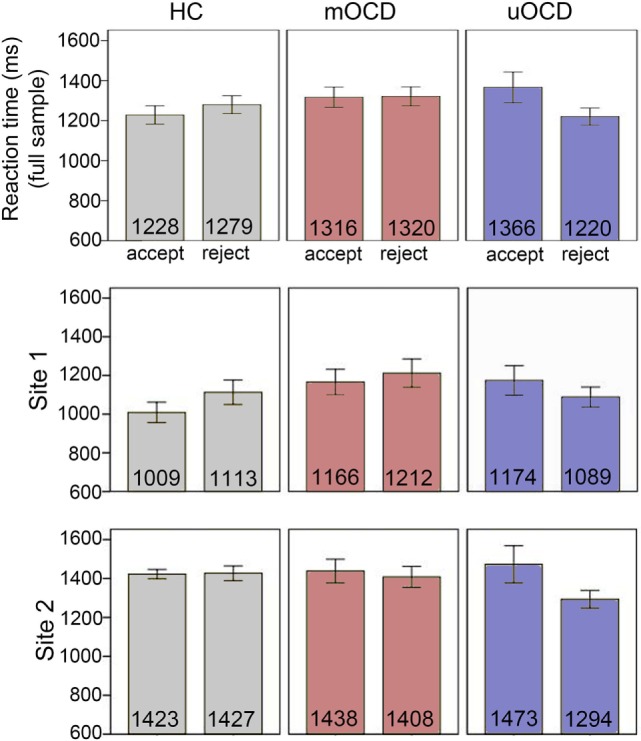
Unmedicated OCD patients exhibited significantly more loss aversion compared to medicated OCD or controls, an effect that was replicated across both sites and remained significant even after controlling for OCD symptom severity, trait anxiety, and sex. analyses further indicated that unmedicated patients' increased likelihood to reject a gamble as its loss value increased could not be explained solely by greater risk aversion among patients. Unmedicated patients were also slower to accept than reject gambles, effects that were not found in the other two groups. Loss aversion was correlated with decision times in unmedicated patients but not in the other two groups.
These data identify abnormalities of decision-making in a subgroup of OCD patients not taking psychotropic medication. The findings help elucidate the cognitive mechanisms of the disorder and suggest that future treatments could aim to target abnormalities of loss/gain processing during decision-making in this population.
强迫症(OCD)患者在决策方面表现出异常,并且在临床上似乎对潜在的负面结果表现出更高的敏感性。尽管这些认知过程在强迫症中很重要,但很少有研究在经济决策框架内对该疾病进行研究。在此,我们研究了损失厌恶,这是前景理论中的一个关键概念,描述了个体在做决策时对潜在损失比收益更敏感的倾向。
在两个研究地点,未服药的强迫症患者组(n = 14)、服药的强迫症患者组(n = 29)和健康对照组(n = 34)接受或拒绝了一系列包含不同损失/收益值的50/50赌博。损失厌恶被计算为随着潜在损失增加而拒绝赌博的可能性与随着潜在收益增加而接受赌博的可能性之比。还检查了接受或拒绝的决策时间,并将其与损失厌恶相关联。
与服药的强迫症患者或对照组相比,未服药的强迫症患者表现出明显更多的损失厌恶,这种效应在两个地点都得到了重复,并且即使在控制了强迫症症状严重程度、特质焦虑和性别后仍然显著。进一步的分析表明,未服药患者随着损失值增加而拒绝赌博的可能性增加不能仅仅用患者中更大的风险厌恶来解释。未服药患者接受赌博也比拒绝赌博慢,而在其他两组中未发现这种效应。损失厌恶与未服药患者的决策时间相关,但在其他两组中不相关。
这些数据确定了未服用精神药物的一组强迫症患者的决策异常。这些发现有助于阐明该疾病的认知机制,并表明未来的治疗可以旨在针对该人群决策过程中损失/收益处理的异常。