Walle Thomas, Martinez Monge Rafael, Cerwenka Adelheid, Ajona Daniel, Melero Ignacio, Lecanda Fernando
Innate Immunity Group, German Cancer Research Center (DKFZ), Heidelberg, Germany.
Department of Oncology Clínica Universidad de Navarra, Pamplona, Spain.
Ther Adv Med Oncol. 2018 Jan 18;10:1758834017742575. doi: 10.1177/1758834017742575. eCollection 2018.
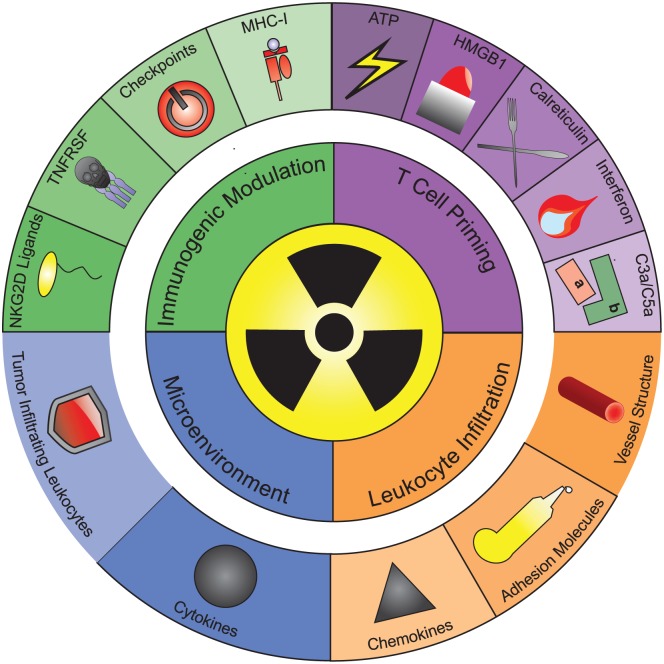
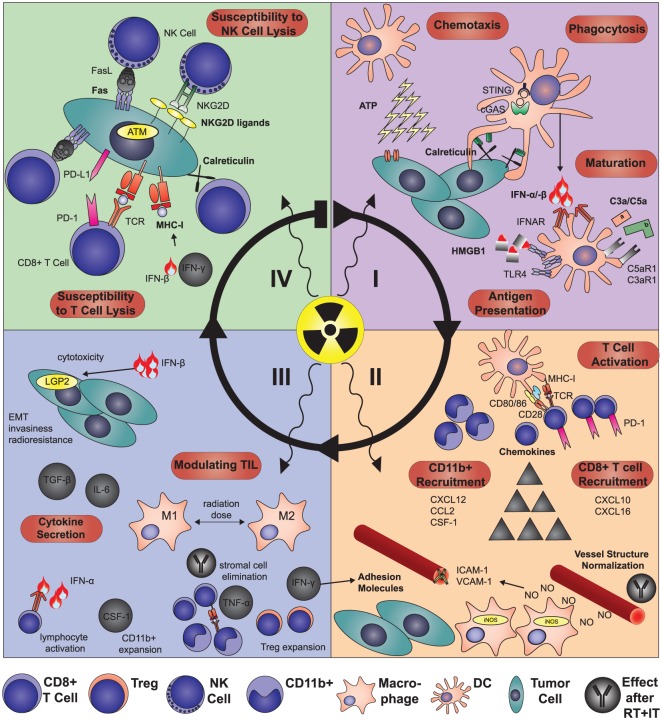
Radiotherapy (RT) is currently used in more than 50% of cancer patients during the course of their disease in the curative, adjuvant or palliative setting. RT achieves good local control of tumor growth, conferring DNA damage and impacting tumor vasculature and the immune system. Formerly regarded as a merely immunosuppressive treatment, pre- and clinical observations indicate that the therapeutic effect of RT is partially immune mediated. In some instances, RT synergizes with immunotherapy (IT), through different mechanisms promoting an effective antitumor immune response. Cell death induced by RT is thought to be immunogenic and results in modulation of lymphocyte effector function in the tumor microenvironment promoting local control. Moreover, a systemic immune response can be elicited or modulated to exert effects outside the irradiation field (so called abscopal effects). In this review, we discuss the body of evidence related to RT and its immunogenic potential for the future design of novel combination therapies.
放射治疗(RT)目前在超过50%的癌症患者病程中用于治愈性、辅助性或姑息性治疗。RT能有效局部控制肿瘤生长,造成DNA损伤并影响肿瘤血管系统和免疫系统。RT以前被认为只是一种免疫抑制治疗,但临床前和临床观察表明,RT的治疗效果部分是由免疫介导的。在某些情况下,RT通过不同机制与免疫疗法(IT)协同作用,促进有效的抗肿瘤免疫反应。RT诱导的细胞死亡被认为具有免疫原性,并导致肿瘤微环境中淋巴细胞效应功能的调节,从而促进局部控制。此外,还可引发或调节全身免疫反应,以在照射野之外发挥作用(即所谓的远隔效应)。在本综述中,我们讨论了与RT及其免疫原性潜力相关的证据,以便为未来新型联合疗法的设计提供参考。