Chi Mau-Shin, Mehta Minesh P, Yang Kai-Lin, Lai Hung-Chih, Lin Ying-Chu, Ko Hui-Ling, Wang Yu-Shan, Liao Kuang-Wen, Chi Kwan-Hwa
Department of Radiation Therapy and Oncology, Shin Kong Wu Ho-Su Memorial Hospital, Taipei, Taiwan.
Ph.D. Degree Program of Biomedical Science and Engineering, National Chiao-Tung University, Hsinchu, Taiwan.
Front Oncol. 2020 Mar 10;10:254. doi: 10.3389/fonc.2020.00254. eCollection 2020.
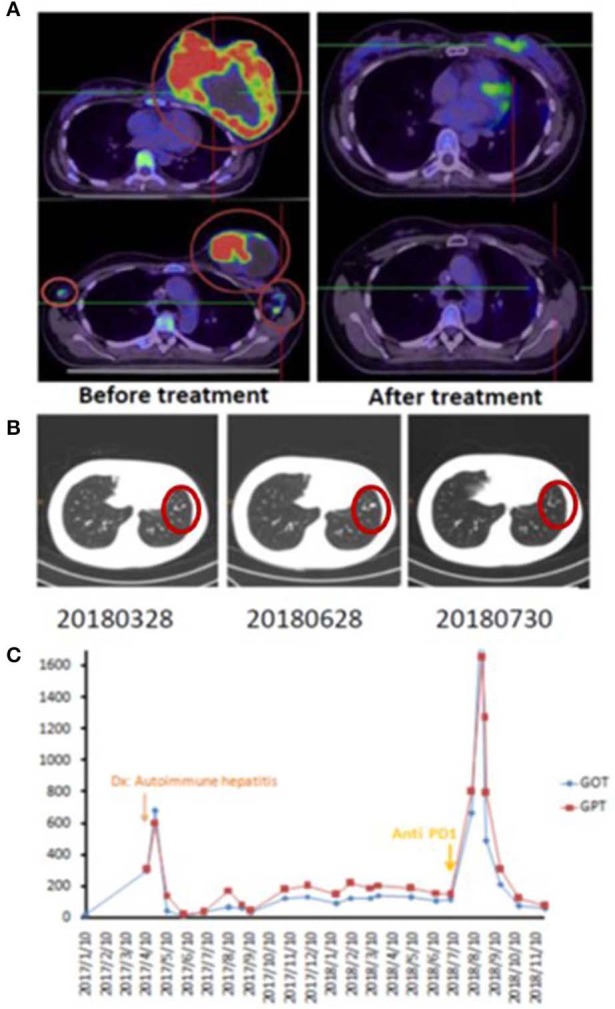
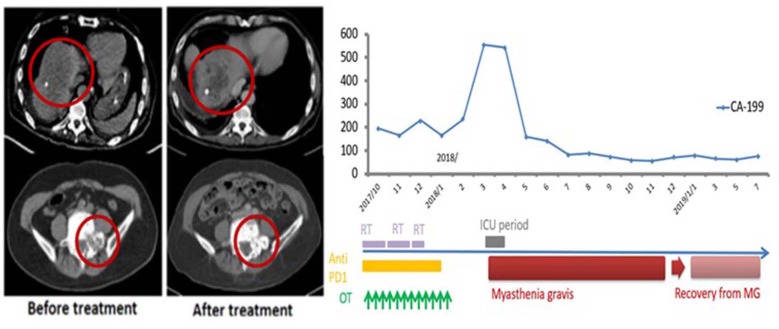
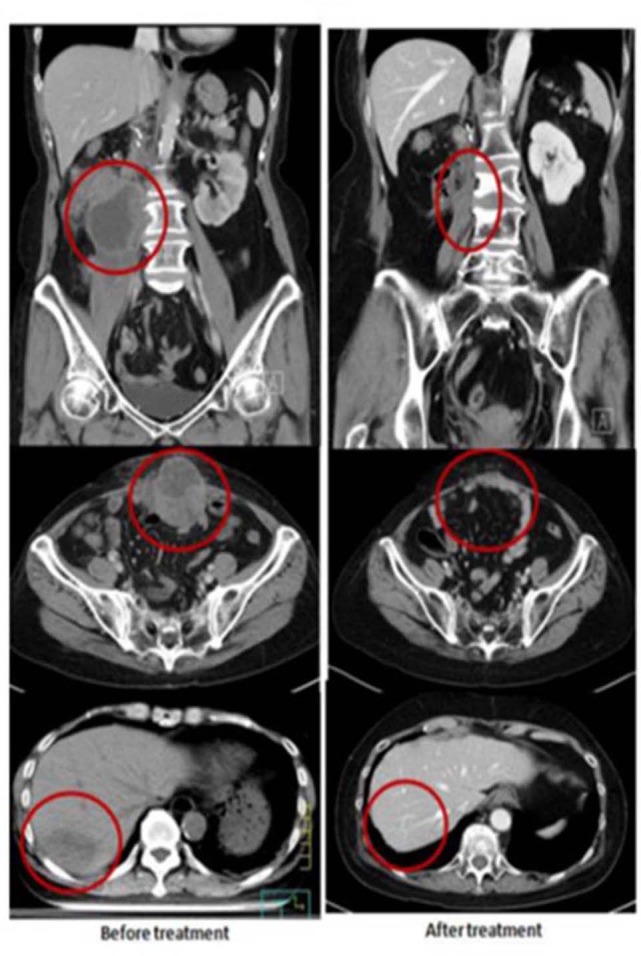
True abscopal responses from radiation therapy are extremely rare; the combination of immune checkpoint inhibitors with radiation therapy has led to more reports of the abscopal effect, but even in this setting, the genuine magnitude remains unknown and is still considered generally uncommon. We report the occurrence of what appears to be putative, durable abscopal tumor responses with associated auto-immune systemic reactions resulting from the combination of local radiotherapy (RT) and modulated electrohyperthermia (mEHT). Data from advanced cancer patients treated palliatively with RT and mEHT between January and December 2017 were collected as part of a post-marketing safety monitoring program of mEHT therapy. We specified a minimum RT dose of 30 Gy and at least four mEHT treatments for reporting toxicities, which was the primary aim of the larger study. Thirty-three patients treated with RT and mEHT, both applied to the same lesion, were included. The median RT dose was 45.5 Gy in 20 fractions (fxs) and the median number of mEHT treatments was 12 (range, 4-20). Most patients had subsequent systemic therapy after one course of RT and mEHT. Three patients (9.1%) developed autoimmune toxicities. Case number 1 received RT and mEHT only; case number 2 had two cycles of concurrent low dose chemotherapy during RT; and case number 3 received concurrent immune checkpoint inhibitors. None of the three patients received any further systemic treatment due to obvious treatment-related autoimmune reactions which occurred rapidly after RT; one had autoimmune hepatitis, one had dermatitis herpetiformis and the third developed severe myasthenia gravis. Interestingly, what we surmise to be long-lasting abscopal responses outside the irradiated area, were noted in all three patients. RT combined with mEHT could putatively result in enhancing immune responsiveness. These preliminary observational findings lead to the generation of a hypothesis that this combination induces both an , tumor-specific immune reaction and an anti-self-autoimmune reaction, in at least a small proportion of patients, and of those who experience the auto-immune response, tumor response is a concomitant finding. Mechanisms underlying this phenomenon need to be investigated further.
放射治疗产生的真正远隔效应极为罕见;免疫检查点抑制剂与放射治疗联合应用后,关于远隔效应的报道有所增多,但即便如此,其实际发生率仍不明确,普遍认为较为罕见。我们报告了局部放疗(RT)与调制式电热疗法(mEHT)联合应用后出现的疑似持久远隔肿瘤反应及相关自身免疫性全身反应。作为mEHT疗法上市后安全监测项目的一部分,我们收集了2017年1月至12月间接受姑息性RT和mEHT治疗的晚期癌症患者的数据。为报告毒性反应,我们规定RT的最小剂量为30 Gy,且mEHT治疗至少进行4次,这是一项更大规模研究的主要目标。纳入了33例同一病灶同时接受RT和mEHT治疗的患者。RT的中位剂量为45.5 Gy,分20次照射(fx),mEHT治疗的中位次数为12次(范围4 - 20次)。大多数患者在接受一个疗程的RT和mEHT后接受了后续的全身治疗。3例患者(9.1%)出现了自身免疫毒性反应。病例1仅接受了RT和mEHT;病例2在RT期间接受了两个周期的同步低剂量化疗;病例3接受了同步免疫检查点抑制剂治疗。由于RT后迅速出现明显的与治疗相关的自身免疫反应,这3例患者均未接受任何进一步的全身治疗;1例出现自身免疫性肝炎,1例出现疱疹样皮炎,第3例发生严重重症肌无力。有趣的是,在所有3例患者中均观察到了我们推测为照射区域外持久的远隔反应。RT联合mEHT可能会增强免疫反应性。这些初步观察结果引发了一个假设,即这种联合治疗至少在一小部分患者中会引发肿瘤特异性免疫反应和抗自身免疫反应,而在出现自身免疫反应的患者中,肿瘤反应是一个伴随发现。这一现象背后的机制需要进一步研究。