Lin Huapeng, Zhang Qian, Li Xiaocheng, Wu Yushen, Liu Ye, Hu Yingchun
Department of Hepatobiliary Surgery, The Second Affiliated Hospital of Chongqing Medical University, Chongqing, Chongqing Department of Infectious Disease, The Affiliated Hospital of Southwest Medical University, Luzhou, Sichuan Department of Oncology, The First Affiliated Hospital of Chongqing Medical University, Chongqing, Chongqing Department of Paediatrics, Chidren's Hospital Chongqing Medical University, Chongqing, Chongqing Department of Emergency, The Affiliated Hospital of Southwest Medical University, Luzhou, Sichuan, China.
Medicine (Baltimore). 2018 Feb;97(5):e9687. doi: 10.1097/MD.0000000000009687.
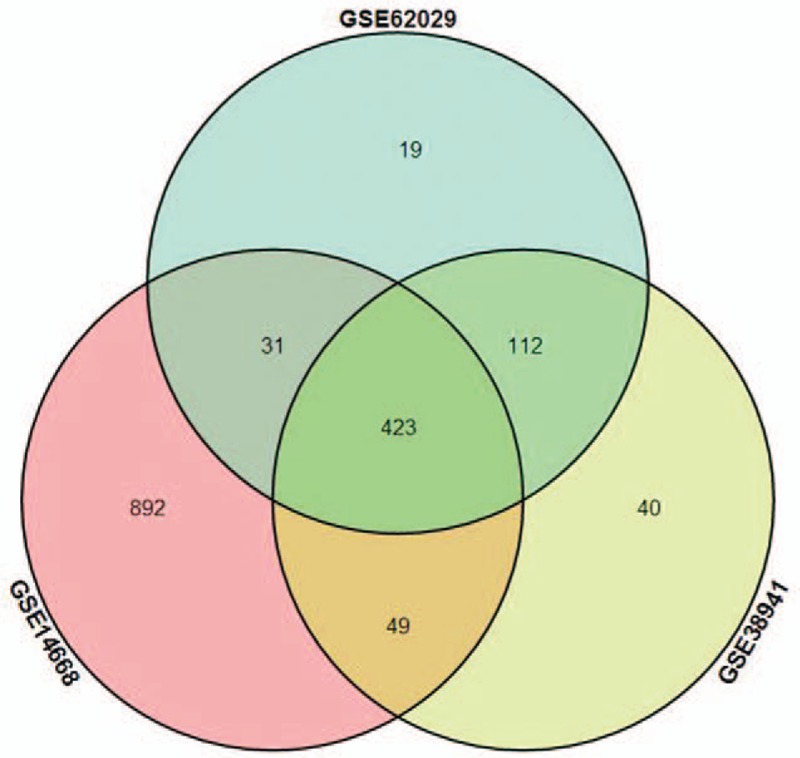
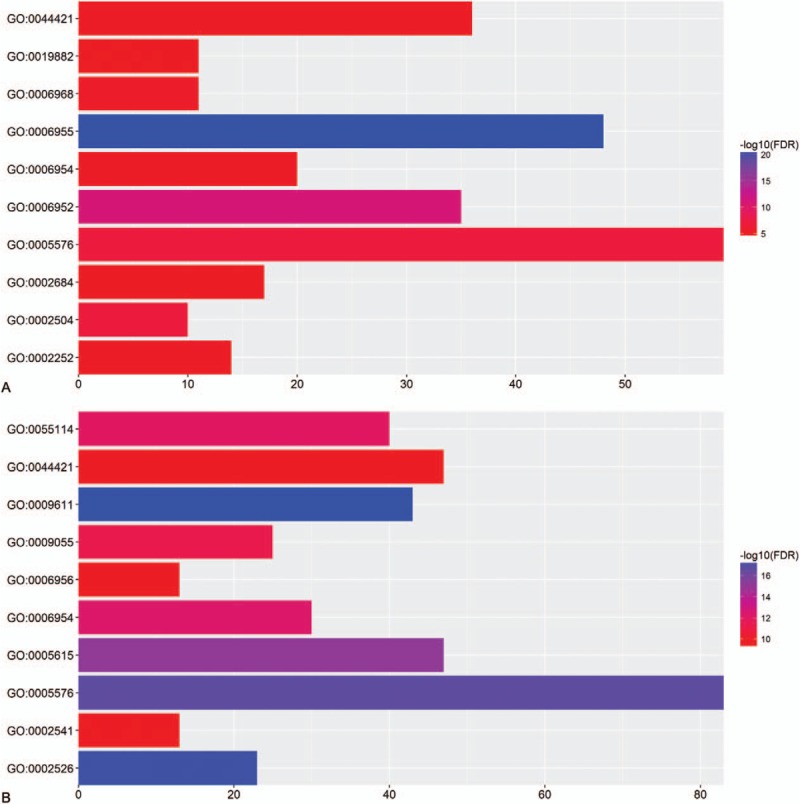
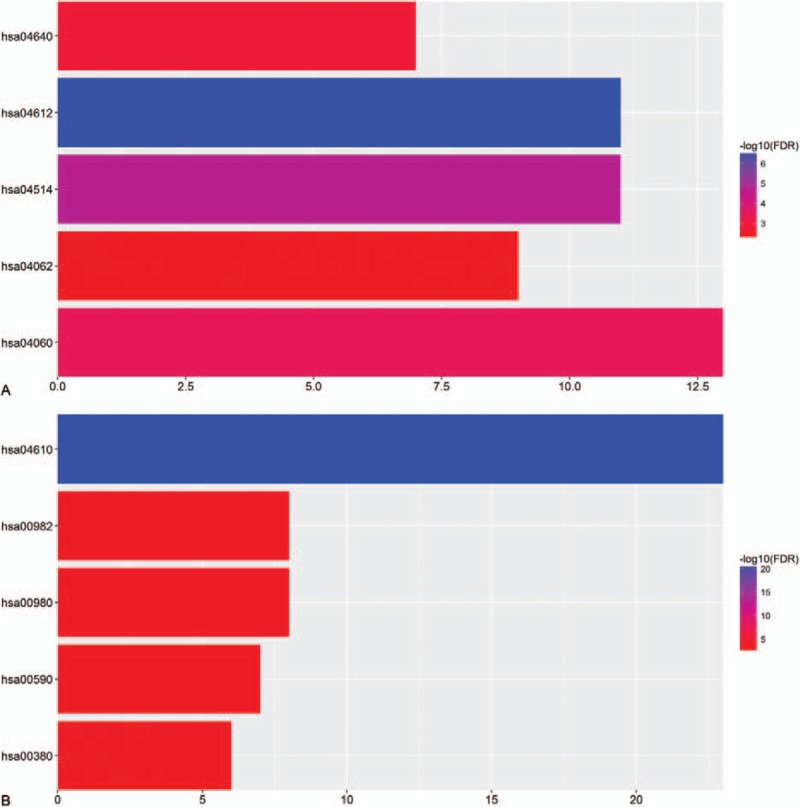
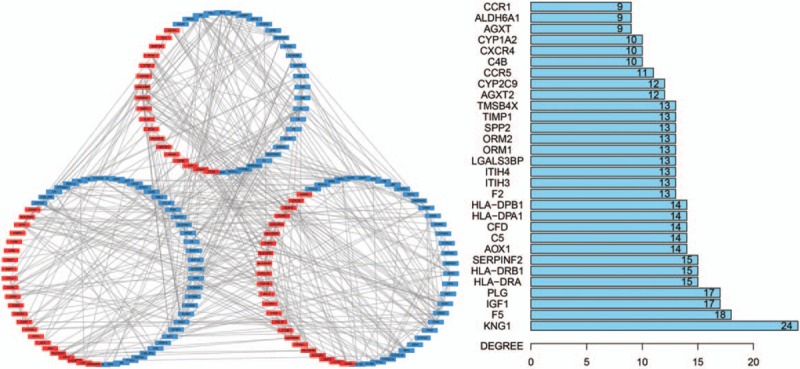
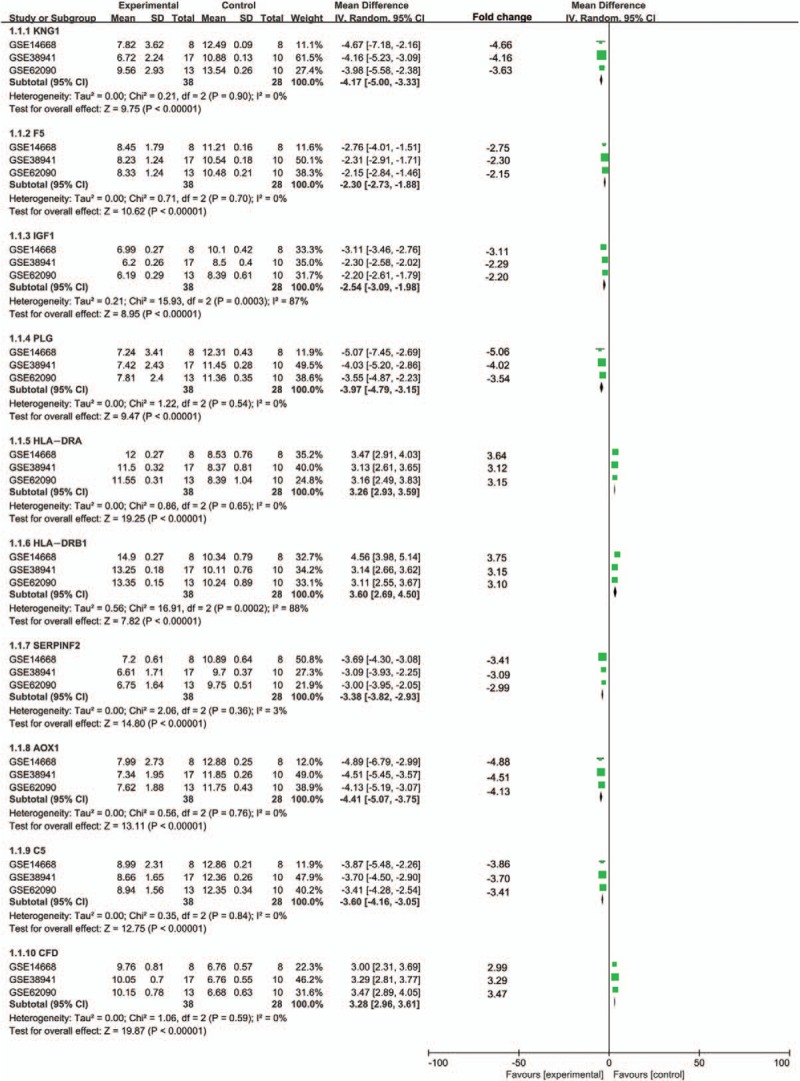
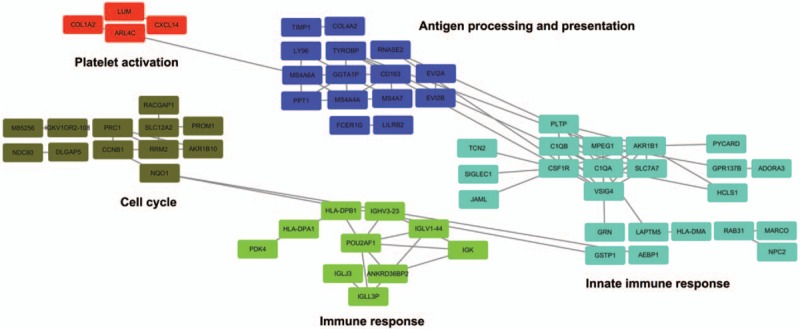
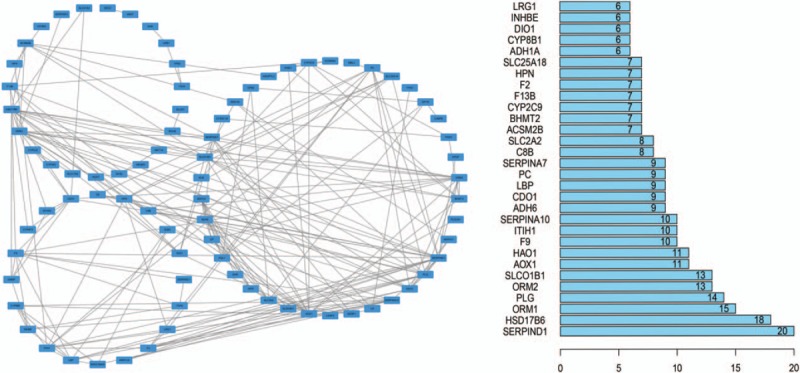
Hepatitis B virus-associated acute liver failure (HBV-ALF) is a rare but life-threatening syndrome that carried a high morbidity and mortality. Our study aimed to explore the possible molecular mechanisms of HBV-ALF by means of bioinformatics analysis. In this study, genes expression microarray datasets of HBV-ALF from Gene Expression Omnibus were collected, and then we identified differentially expressed genes (DEGs) by the limma package in R. After functional enrichment analysis, we constructed the protein-protein interaction (PPI) network by the Search Tool for the Retrieval of Interacting Genes online database and weighted genes coexpression network by the WGCNA package in R. Subsequently, we picked out the hub genes among the DEGs. A total of 423 DEGs with 198 upregulated genes and 225 downregulated genes were identified between HBV-ALF and normal samples. The upregulated genes were mainly enriched in immune response, and the downregulated genes were mainly enriched in complement and coagulation cascades. Orosomucoid 1 (ORM1), orosomucoid 2 (ORM2), plasminogen (PLG), and aldehyde oxidase 1 (AOX1) were picked out as the hub genes that with a high degree in both PPI network and weighted genes coexpression network. The weighted genes coexpression network analysis found out 3 of the 5 modules that upregulated genes enriched in were closely related to immune system. The downregulated genes enriched in only one module, and the genes in this module majorly enriched in the complement and coagulation cascades pathway. In conclusion, 4 genes (ORM1, ORM2, PLG, and AOX1) with immune response and the complement and coagulation cascades pathway may take part in the pathogenesis of HBV-ALF, and these candidate genes and pathways could be therapeutic targets for HBV-ALF.
乙型肝炎病毒相关急性肝衰竭(HBV-ALF)是一种罕见但危及生命的综合征,其发病率和死亡率都很高。我们的研究旨在通过生物信息学分析探索HBV-ALF可能的分子机制。在本研究中,我们从基因表达综合数据库收集了HBV-ALF的基因表达微阵列数据集,然后使用R语言中的limma软件包鉴定差异表达基因(DEG)。经过功能富集分析后,我们通过在线数据库Search Tool for the Retrieval of Interacting Genes构建蛋白质-蛋白质相互作用(PPI)网络,并使用R语言中的WGCNA软件包构建加权基因共表达网络。随后,我们从DEG中挑选出枢纽基因。在HBV-ALF与正常样本之间共鉴定出423个DEG,其中198个基因上调,225个基因下调。上调基因主要富集于免疫反应,下调基因主要富集于补体和凝血级联反应。血清类黏蛋白1(ORM1)、血清类黏蛋白2(ORM2)、纤溶酶原(PLG)和醛氧化酶1(AOX1)被挑选为在PPI网络和加权基因共表达网络中均具有高度连接度的枢纽基因。加权基因共表达网络分析发现上调基因富集的5个模块中有3个与免疫系统密切相关。下调基因仅富集于1个模块,该模块中的基因主要富集于补体和凝血级联反应途径。总之,4个与免疫反应以及补体和凝血级联反应途径相关的基因(ORM1、ORM2、PLG和AOX1)可能参与了HBV-ALF的发病机制,这些候选基因和途径可能成为HBV-ALF的治疗靶点。