Hubscher Charles H, Herrity April N, Williams Carolyn S, Montgomery Lynnette R, Willhite Andrea M, Angeli Claudia A, Harkema Susan J
Department of Anatomical Sciences and Neurobiology, University of Louisville, Louisville, Kentucky, United States of America.
Kentucky Spinal Cord Injury Research Center, University of Louisville, Louisville, Kentucky, United States of America.
PLoS One. 2018 Jan 31;13(1):e0190998. doi: 10.1371/journal.pone.0190998. eCollection 2018.
Locomotor training (LT) as a therapeutic intervention following spinal cord injury (SCI) is an effective rehabilitation strategy for improving motor outcomes, but its impact on non-locomotor functions is unknown. Given recent results of our labs' pre-clinical animal SCI LT studies and existing overlap of lumbosacral spinal circuitries controlling pelvic-visceral and locomotor functions, we addressed whether LT can improve bladder, bowel and sexual function in humans at chronic SCI time-points (> two years post-injury).
Prospective cohort study; pilot trial with small sample size.
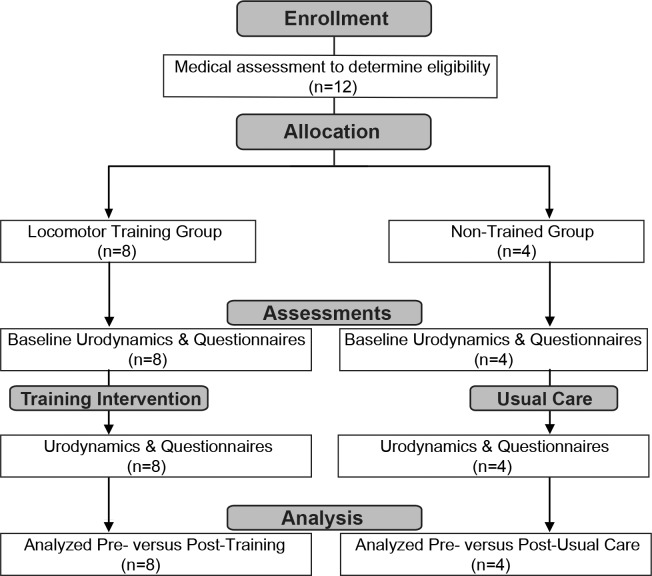
Eight SCI research participants who were undergoing 80 daily one-hour sessions of LT on a treadmill using body-weight support, or one-hour of LT and stand training on alternate days, as part of another research study conducted at the Kentucky Spinal Cord Injury Research Center, University of Louisville, were enrolled in this pilot trial. Urodynamic assessments were performed and International Data Set questionnaire forms completed for bladder, bowel and sexual functions at pre-and post-training time points. Four usual care (non-trained; regular at-home routine) research participants were also enrolled in this study and had the same assessments collected twice, at least 3 months apart.
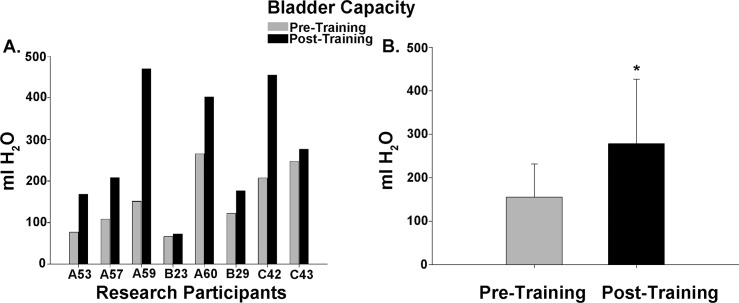
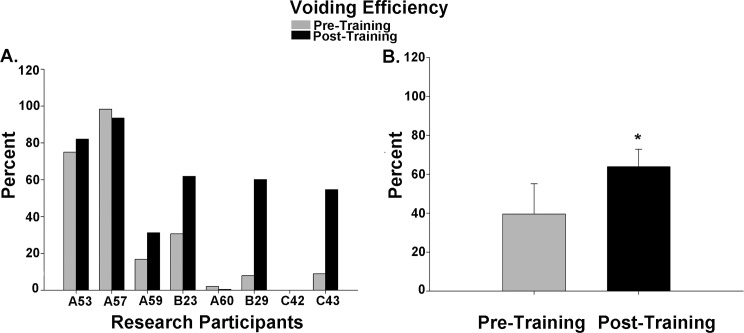
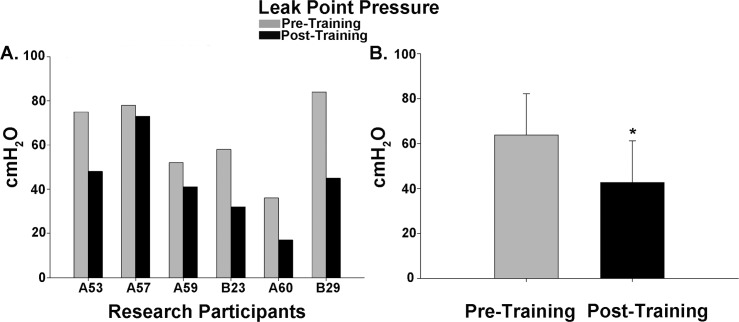
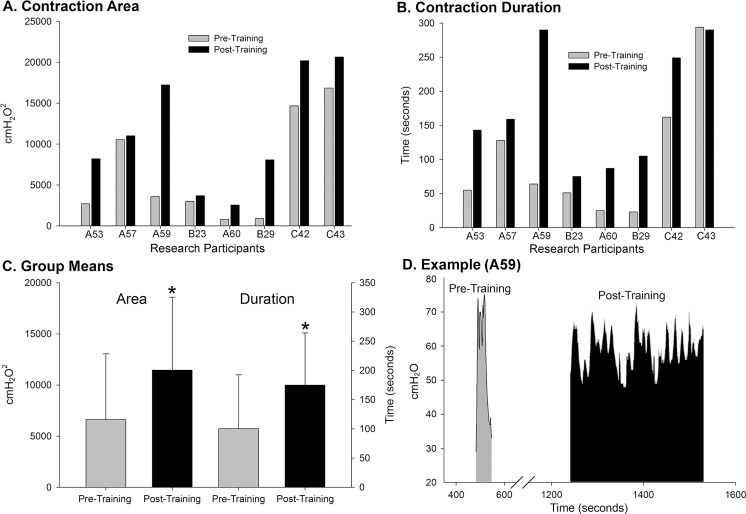
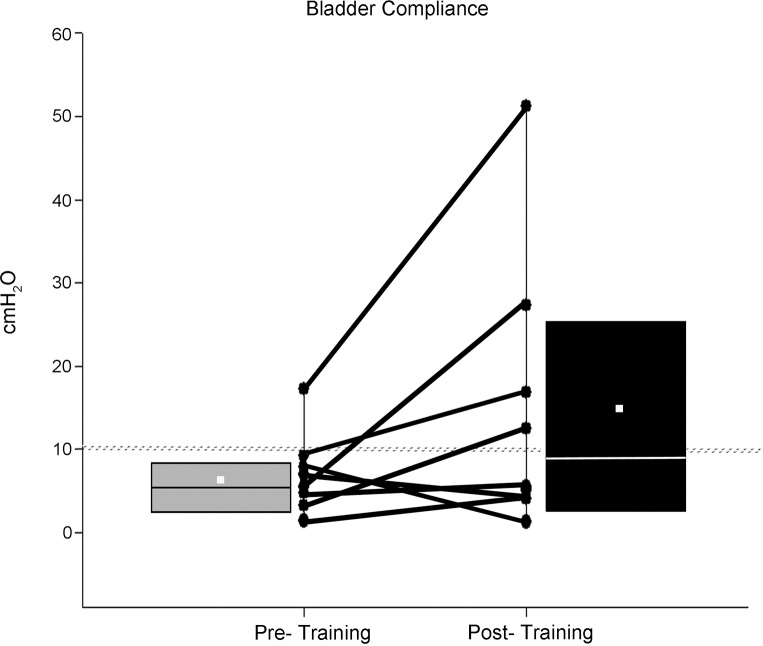
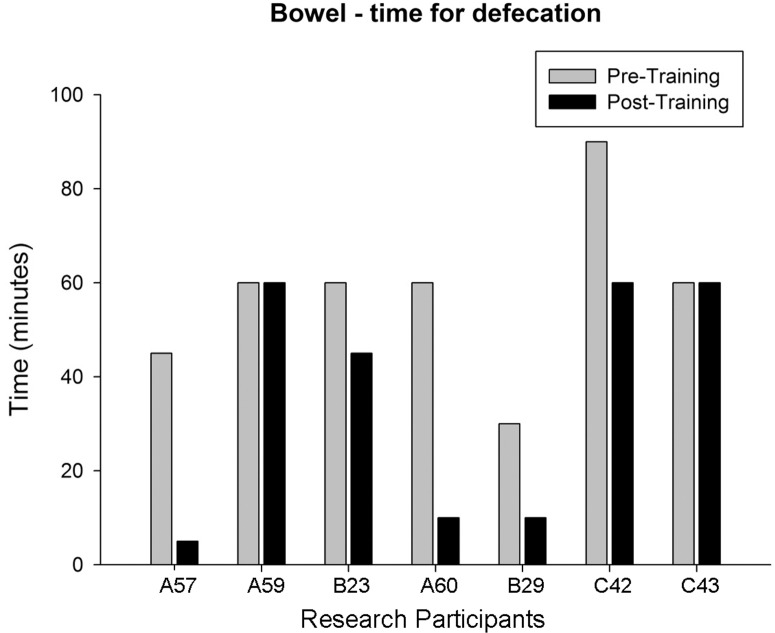
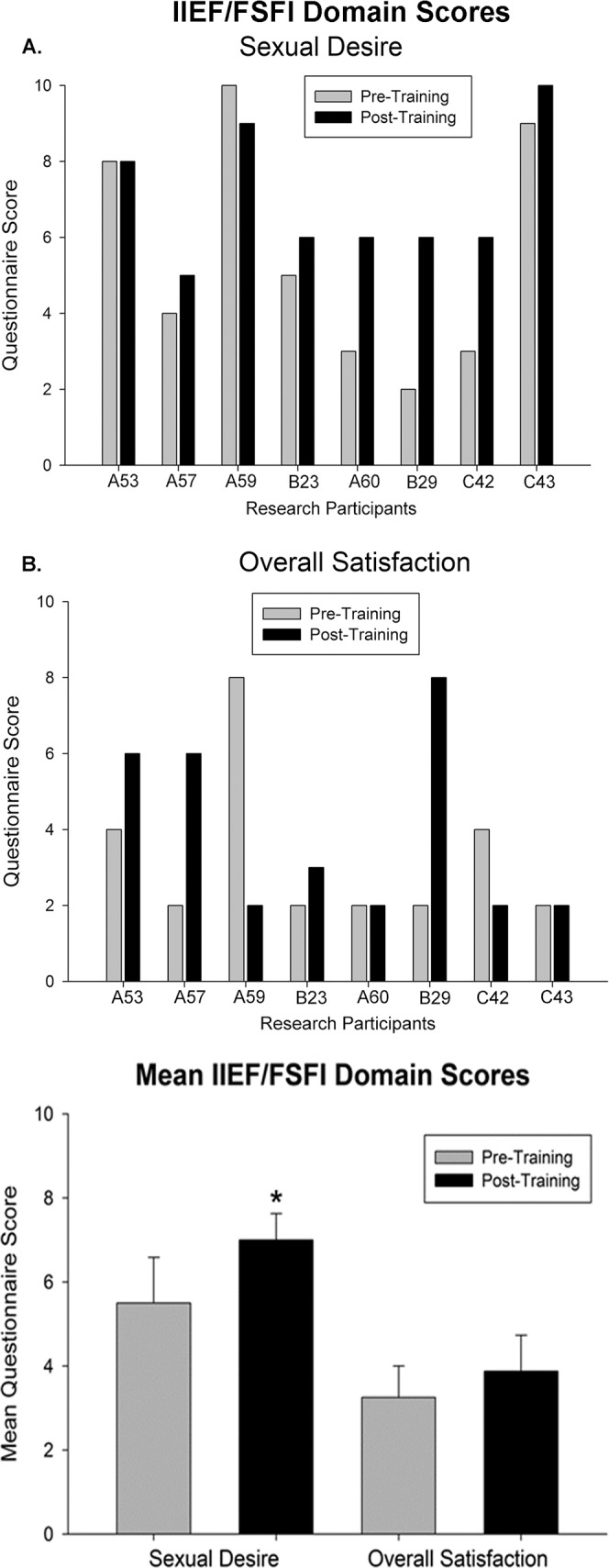
Filling cystometry documented significant increases in bladder capacity, voiding efficiency and detrusor contraction time as well as significant decreases in voiding pressure post-training relative to baseline. Questionnaires revealed a decrease in the frequency of nocturia and urinary incontinence for several research participants as well as a significant decrease in time required for defecation and a significant increase in sexual desire post-training. No significant differences were found for usual care research participants.
These results suggest that an appropriate level of sensory information provided to the spinal cord, generated through task-specific stepping and/or loading, can positively benefit the neural circuitries controlling urogenital and bowel functions.
ClinicalTrials.gov NCT03036527.
脊髓损伤(SCI)后进行运动训练(LT)作为一种治疗干预措施,是改善运动结果的有效康复策略,但其对非运动功能的影响尚不清楚。鉴于我们实验室临床前动物SCI LT研究的最新结果以及控制盆腔内脏和运动功能的腰骶脊髓回路存在重叠,我们探讨了LT是否能在慢性SCI时间点(损伤后两年以上)改善人类的膀胱、肠道和性功能。
前瞻性队列研究;小样本量的试点试验。
八名SCI研究参与者,他们作为路易维尔大学肯塔基脊髓损伤研究中心另一项研究的一部分,每天在跑步机上使用体重支持进行80次一小时的LT训练,或隔天进行一小时的LT训练和站立训练,被纳入该试点试验。在训练前和训练后的时间点进行尿动力学评估,并完成关于膀胱、肠道和性功能的国际数据集问卷。另外四名接受常规护理(未训练;居家常规护理)的研究参与者也被纳入本研究,并在至少相隔3个月的时间进行了两次相同的评估。
充盈性膀胱测压显示,与基线相比,训练后膀胱容量、排尿效率和逼尿肌收缩时间显著增加,排尿压力显著降低。问卷调查显示,几名研究参与者的夜尿和尿失禁频率降低,排便所需时间显著减少,训练后性欲显著增加。常规护理研究参与者没有发现显著差异。
这些结果表明,通过特定任务的踏步和/或负重产生的、提供给脊髓的适当水平的感觉信息,可以对控制泌尿生殖和肠道功能的神经回路产生积极影响。
ClinicalTrials.gov NCT03036527。