Department of Organismic Interactions, Max Planck Institute for Terrestrial Microbiology, Marburg, Germany.
Department of Evolutionary Biology and Environmental Studies, University of Zürich, Winterthurerstrasse 190, 8057 Zürich, Switzerland.
Genome Biol Evol. 2018 Feb 1;10(2):629-645. doi: 10.1093/gbe/evy023.
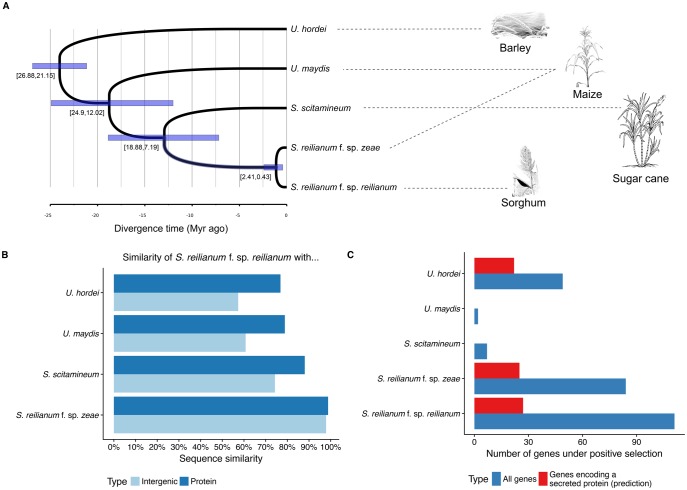
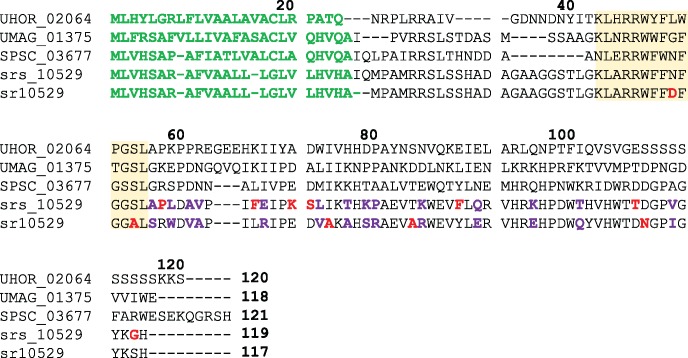
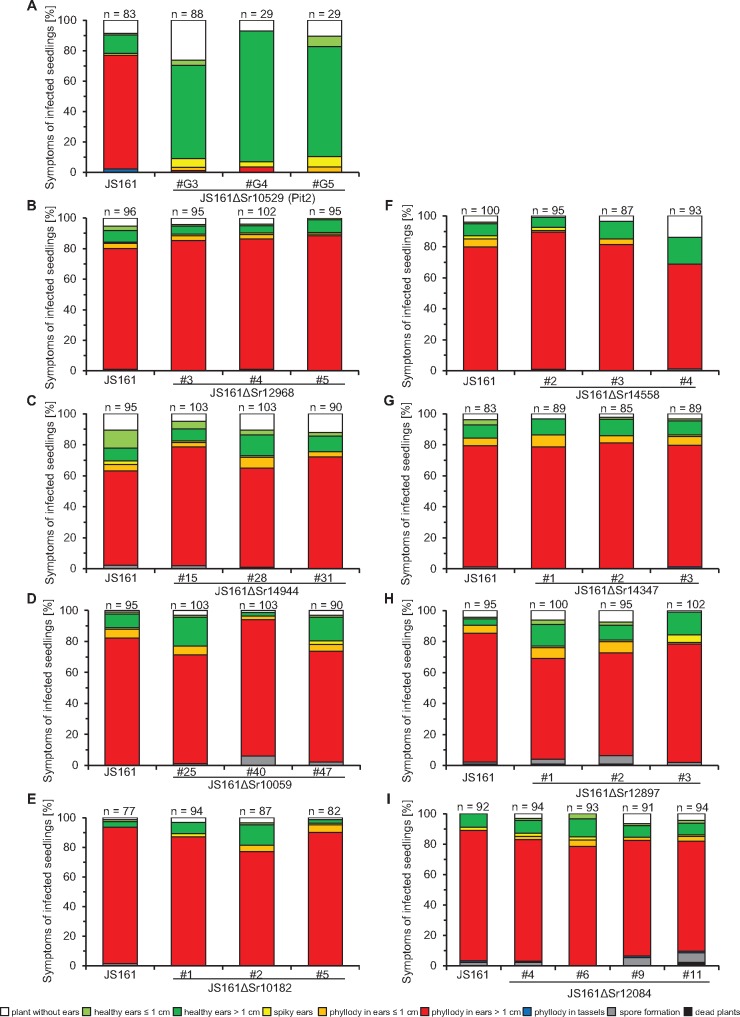
Plants and fungi display a broad range of interactions in natural and agricultural ecosystems ranging from symbiosis to parasitism. These ecological interactions result in coevolution between genes belonging to different partners. A well-understood example is secreted fungal effector proteins and their host targets, which play an important role in pathogenic interactions. Biotrophic smut fungi (Basidiomycota) are well-suited to investigate the evolution of plant pathogens, because several reference genomes and genetic tools are available for these species. Here, we used the genomes of Sporisorium reilianum f. sp. zeae and S. reilianum f. sp. reilianum, two closely related formae speciales infecting maize and sorghum, respectively, together with the genomes of Ustilago hordei, Ustilago maydis, and Sporisorium scitamineum to identify and characterize genes displaying signatures of positive selection. We identified 154 gene families having undergone positive selection during species divergence in at least one lineage, among which 77% were identified in the two investigated formae speciales of S. reilianum. Remarkably, only 29% of positively selected genes encode predicted secreted proteins. We assessed the contribution to virulence of nine of these candidate effector genes in S. reilianum f. sp. zeae by deleting individual genes, including a homologue of the effector gene pit2 previously characterized in U. maydis. Only the pit2 deletion mutant was found to be strongly reduced in virulence. Additional experiments are required to understand the molecular mechanisms underlying the selection forces acting on the other candidate effector genes, as well as the large fraction of positively selected genes encoding predicted cytoplasmic proteins.
植物和真菌在自然和农业生态系统中表现出广泛的相互作用,从共生到寄生。这些生态相互作用导致不同伙伴的基因之间发生共同进化。一个被充分理解的例子是分泌真菌效应蛋白及其宿主靶标,它们在致病相互作用中发挥着重要作用。活养性黑粉菌(Basidiomycota)非常适合研究植物病原体的进化,因为这些物种有几个参考基因组和遗传工具。在这里,我们使用了分别感染玉米和高粱的两个密切相关的专性形式种 Sporisorium reilianum f. sp. zeae 和 S. reilianum f. sp. reilianum 的基因组,以及 Ustilago hordei、Ustilago maydis 和 Sporisorium scitamineum 的基因组,来鉴定和描述显示正选择特征的基因。我们鉴定出了 154 个基因家族,它们在至少一个谱系的物种分化过程中经历了正选择,其中 77%在我们研究的 S. reilianum 的两个专性形式种中被鉴定出来。值得注意的是,只有 29%的正选择基因编码预测的分泌蛋白。我们通过删除单个基因来评估这 9 个候选效应基因在 S. reilianum f. sp. zeae 中的毒力贡献,包括之前在 U. maydis 中鉴定出的效应基因 pit2 的同源物。只有 pit2 缺失突变体被发现毒力显著降低。需要进一步的实验来了解作用于其他候选效应基因的选择力的分子机制,以及预测细胞质蛋白编码的大量正选择基因。