Department of Pharmacology, Physiology and Neurosciences, New Jersey Medical School, Rutgers University, Newark, NJ, 07103, USA.
Present address: Performance Nutrition Team, Combat Feeding Directorate, US Army, 15 General Greene Ave, Natick, MA, 01760-5018, USA.
BMC Biol. 2018 Feb 1;16(1):19. doi: 10.1186/s12915-018-0481-z.
Mammalian small intestinal tight junctions (TJ) link epithelial cells to one another and function as a permselective barrier, strictly modulating the passage of ions and macromolecules through the pore and leak pathways, respectively, thereby preventing the absorption of harmful compounds and microbes while allowing regulated transport of nutrients and electrolytes. Small intestinal epithelial permeability is ascribed primarily to the properties of TJs between adjoining enterocytes (ENTs), because there is almost no information on TJ composition and the paracellular permeability of nonenterocyte cell types that constitute a small but significant fraction of the intestinal epithelia.
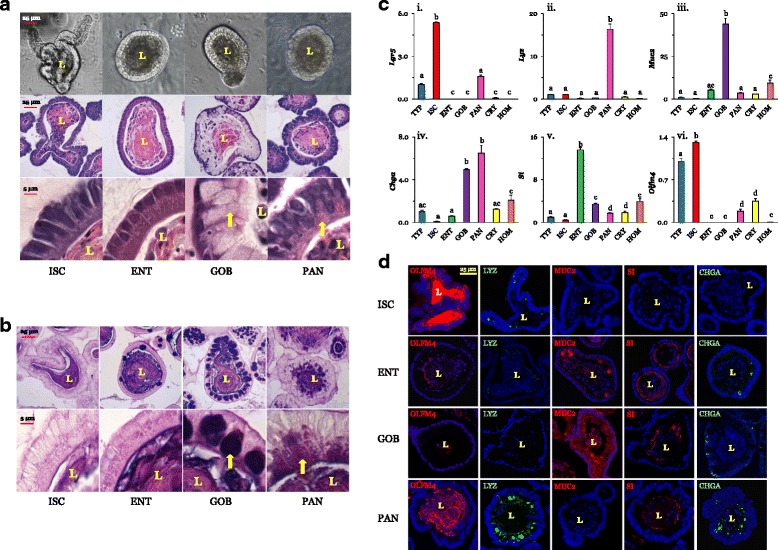
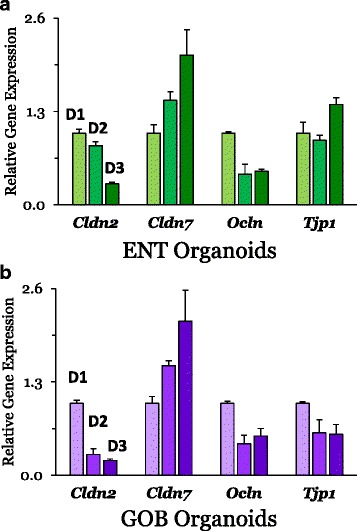
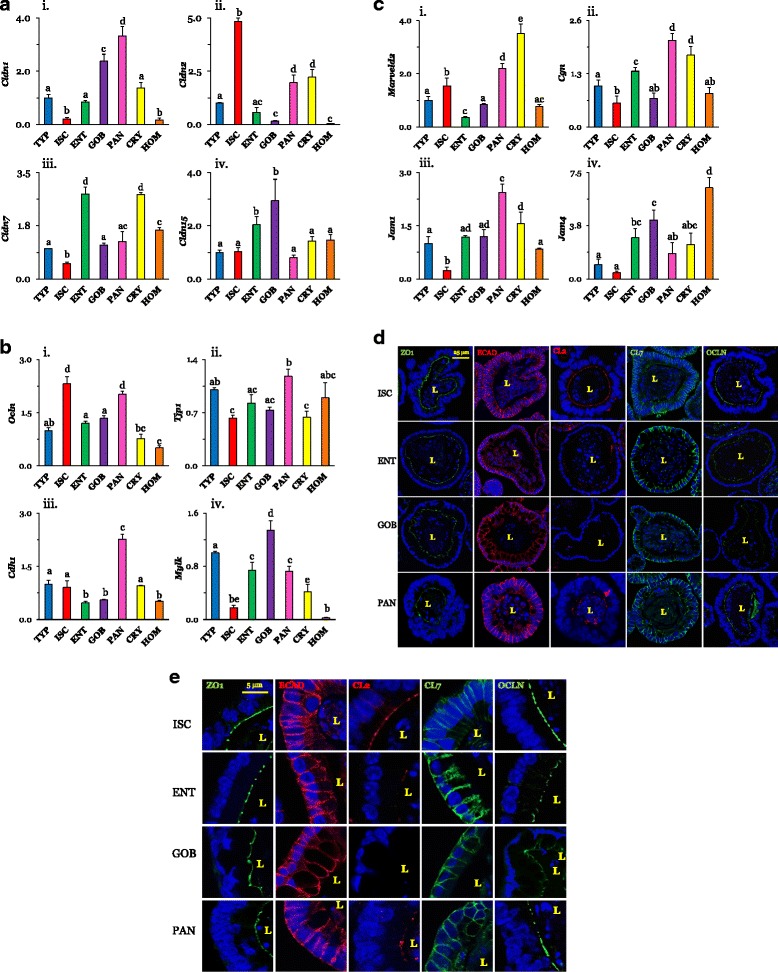
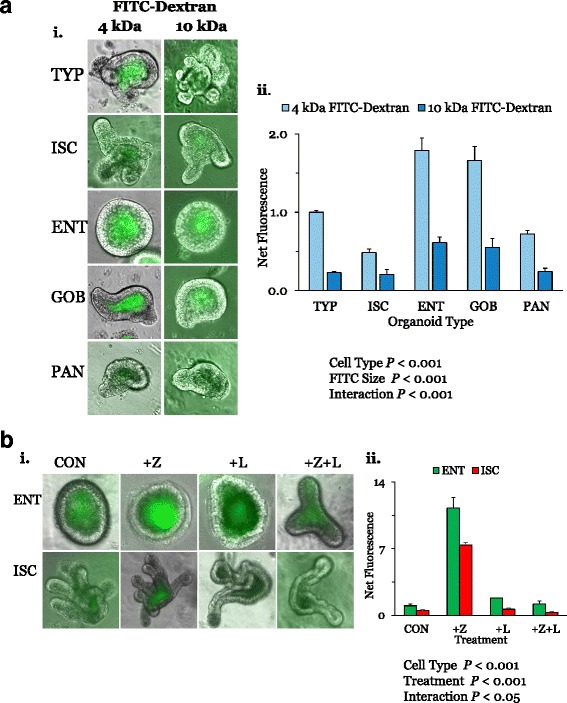
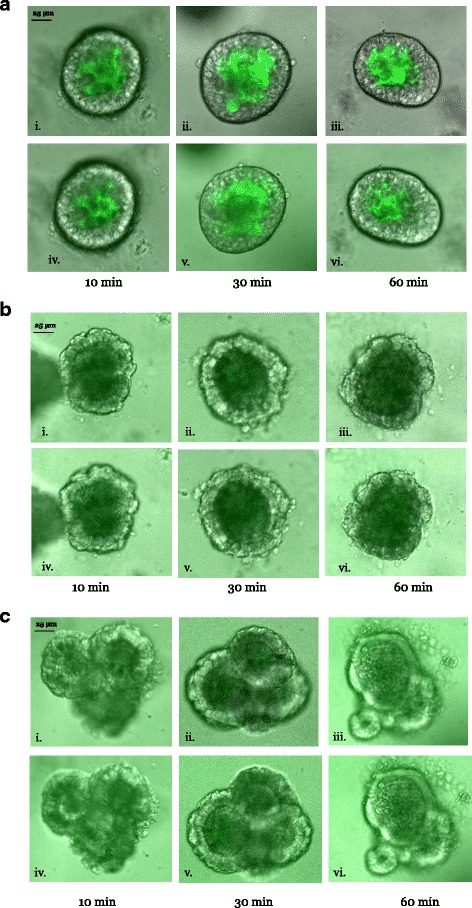
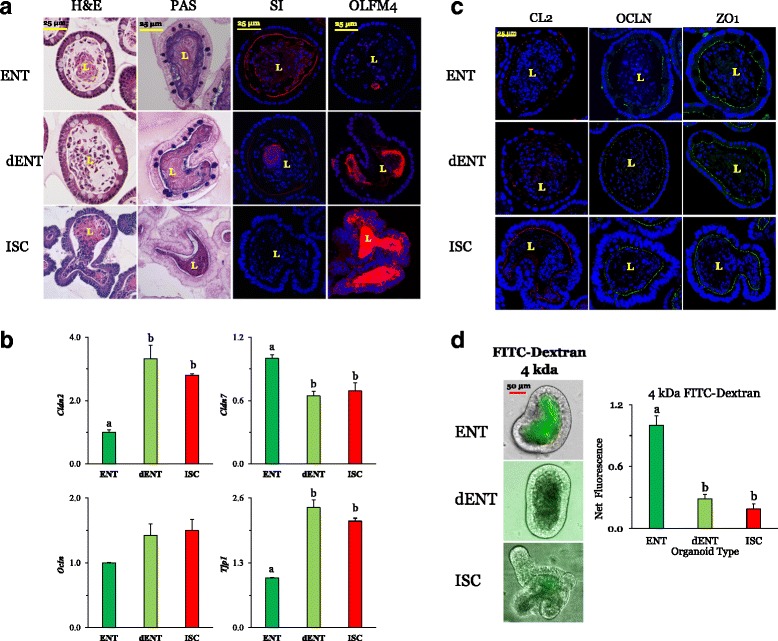
Here we directed murine intestinal crypts to form specialized organoids highly enriched in intestinal stem cells (ISCs), absorptive ENTs, secretory goblet cells, or Paneth cells. The morphological and morphometric characteristics of these cells in organoids were similar to those in vivo. The expression of certain TJ proteins varied with cell type: occludin and tricellulin levels were high in both ISCs and Paneth cells, while claudin-1, -2, and -7 expression was greatest in Paneth cells, ISCs, and ENTs, respectively. In contrast, the distribution of claudin-15, zonula occludens 1 (ZO-1), and E-cadherin was relatively homogeneous. E-cadherin and claudin-7 marked mainly the basolateral membrane, while claudin-2, ZO-1, and occludin resided in the apical membrane. Remarkably, organoids enriched in ENTs or goblet cells were over threefold more permeable to 4 and 10 kDa dextran compared to those containing stem and Paneth cells. The TJ-regulator larazotide prevented the approximately tenfold increases in dextran flux induced by the TJ-disrupter AT1002 into organoids of different cell types, indicating that this ZO toxin nonselectively increases permeability. Forced dedifferentiation of mature ENTs results in the reacquisition of ISC-like characteristics in TJ composition and dextran permeability, suggesting that the post-differentiation properties of TJs are not hardwired.
Differentiation of adult intestinal stem cells into mature secretory and absorptive cell types causes marked, but potentially reversible, changes in TJ composition, resulting in enhanced macromolecular permeability of the TJ leak pathway between ENTs and between goblet cells. This work advances our understanding of how cell differentiation affects the paracellular pathway of epithelia.
哺乳动物小肠紧密连接 (TJ) 将上皮细胞彼此连接,并作为一种选择性渗透屏障发挥作用,严格调节离子和大分子分别通过孔和渗漏途径的通过,从而防止有害物质和微生物的吸收,同时允许营养物质和电解质的调节运输。小肠上皮细胞通透性主要归因于相邻肠上皮细胞 (ENT) 之间 TJ 的特性,因为几乎没有关于 TJ 组成和构成小肠上皮细胞一小部分但很重要的非肠上皮细胞类型的旁细胞通透性的信息。
在这里,我们指导小鼠肠隐窝形成专门的类器官,这些类器官高度富含肠干细胞 (ISC)、吸收性 ENT、分泌性杯状细胞或潘氏细胞。这些细胞在类器官中的形态和形态特征与体内相似。某些 TJ 蛋白的表达随细胞类型而变化:occludin 和 tricellulin 在 ISC 和潘氏细胞中均高水平表达,而 claudin-1、-2 和 -7 的表达分别在潘氏细胞、ISC 和 ENT 中最高。相比之下,claudin-15、zonula occludens 1 (ZO-1) 和 E-钙粘蛋白的分布相对均匀。E-钙粘蛋白和 claudin-7 主要标记基底外侧膜,而 claudin-2、ZO-1 和 occludin 位于顶膜。值得注意的是,与含有干细胞和潘氏细胞的类器官相比,富含 ENT 或杯状细胞的类器官对 4 和 10 kDa 葡聚糖的通透性增加了三倍以上。TJ 调节剂 larazotide 可防止 TJ 破坏剂 AT1002 诱导的不同细胞类型的类器官中葡聚糖通量增加约十倍,表明这种 ZO 毒素非选择性地增加通透性。成熟 ENT 的强制去分化导致 TJ 组成和葡聚糖通透性获得类似 ISC 的特征,表明 TJ 的分化后特性不是固定的。
成体肠干细胞分化为成熟的分泌和吸收细胞类型会导致 TJ 组成发生明显但可能是可逆的变化,从而导致 ENT 之间和杯状细胞之间 TJ 渗漏途径中大分子通透性增强。这项工作增进了我们对细胞分化如何影响上皮细胞旁细胞途径的理解。