Shidfar Farzad, Faghihi Amirhosein, Amiri Hamid Lorvand, Mousavi Seyedeh Neda
Iran National Science Foundation, Tehran, Iran.
Department of Nutrition, School of Public Health, Iran University of Medical Sciences, Tehran, Iran.
Iran J Med Sci. 2018 Jan;43(1):26-31.
Studies have shown that zinc and selenium deficiency is common in nonalcoholic fatty liver disease (NAFLD). However, the effects of zinc and selenium co-supplementation before and/or after disease progression on NAFLD are not clear enough. The aim of this study was to compare the effects of zinc and selenium co-supplementation before and/or after disease progression on NAFLD prognosis.
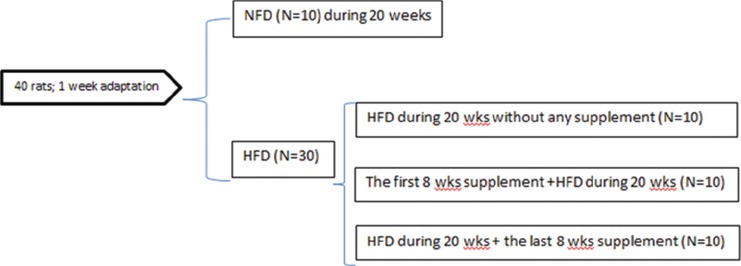
Forty male Sprague-Dawley rats (197±4 g) were randomly assigned to 4 dietary groups: normal-fat diet (NFD; receiving 9% of calories as fat), high-fat diet (HFD; receiving 82% of calories as fat), supplementation before disease progression (S+HFD), and supplementation after disease progression (HFD+S). The diets were implemented over a 20-week period in all the groups. Biochemical and histologic parameters were compared between the 4 groups, and between-group comparisons were also carried out.
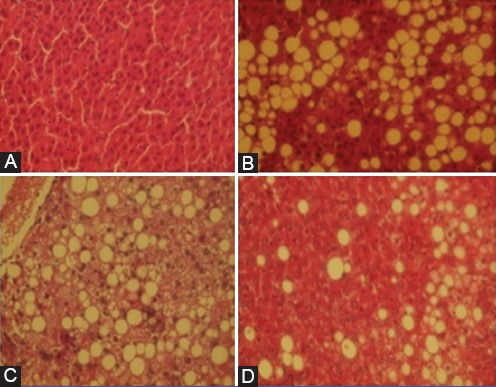
There were significant differences in the average food dietary intake (P<0.001), weight (P<0.001), fasting blood sugar (P=0.005), triglyceride (P<0.001), total cholesterol (P<0.001), low-density lipoprotein cholesterol (P=0.002), high-density lipoprotein cholesterol (P=0.001), alanine aminotransferase (P<0.001), and aspartate aminotransferase (P<0.001) between the 4 dietary groups. Serum triglyceride and total cholesterol were significantly lower in the HFD+S Group than in the S+HFD Group (P<0.001 and P=0.003, respectively). Fat accumulation was significantly reduced in the HFD+S Group (P<0.001).
Zinc and selenium co-supplementation after disease progression improved biochemical and histologic parameters in an experimental model of NAFLD.
研究表明,锌和硒缺乏在非酒精性脂肪性肝病(NAFLD)中很常见。然而,在疾病进展之前和/或之后联合补充锌和硒对NAFLD的影响尚不够明确。本研究的目的是比较在疾病进展之前和/或之后联合补充锌和硒对NAFLD预后的影响。
40只雄性Sprague-Dawley大鼠(体重197±4 g)被随机分为4个饮食组:正常脂肪饮食组(NFD;脂肪提供9%的热量)、高脂饮食组(HFD;脂肪提供82%的热量)、疾病进展前补充组(S+HFD)和疾病进展后补充组(HFD+S)。所有组的饮食方案实施20周。比较4组之间的生化和组织学参数,并进行组间比较。
4个饮食组在平均食物摄入量(P<0.001)、体重(P<0.001)、空腹血糖(P=0.005)、甘油三酯(P<0.001)、总胆固醇(P<0.001)、低密度脂蛋白胆固醇(P=0.002)、高密度脂蛋白胆固醇(P=0.001)、丙氨酸氨基转移酶(P<0.001)和天冬氨酸氨基转移酶(P<0.001)方面存在显著差异。HFD+S组的血清甘油三酯和总胆固醇显著低于S+HFD组(分别为P<0.001和P=0.003)。HFD+S组的脂肪堆积显著减少(P<0.001)。
在疾病进展后联合补充锌和硒可改善NAFLD实验模型中的生化和组织学参数。