Kour Gurpreet, Masih Updesh, Singh Chanchal, Srivastava Manvi, Yadav Priti, Kushwah Jagriti
Student, Department of Pedodontics and Preventive Dentistry, K.D. Dental College & Hospital, Mathura, Uttar Pradesh, India.
Professor, Department of Pedodontics and Preventive Dentistry, K.D. Dental College & Hospital, Mathura, Uttar Pradesh, India.
Int J Clin Pediatr Dent. 2017 Oct-Dec;10(4):319-323. doi: 10.5005/jp-journals-10005-1458. Epub 2017 Feb 27.
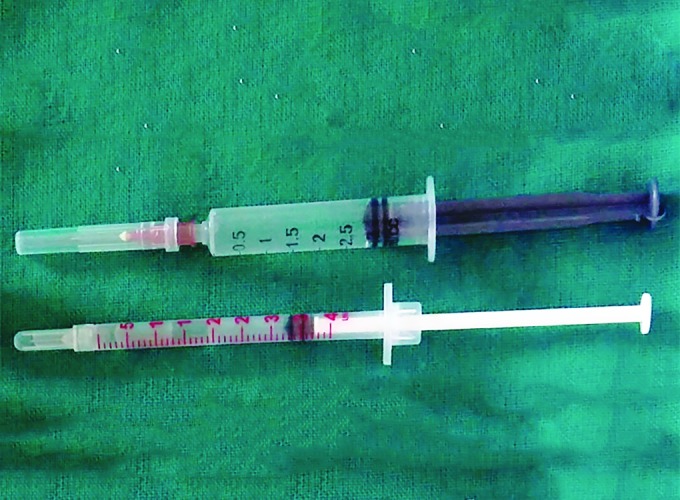
The management of pain and anxiety in dentistry encompasses a number of procedural issues, including the delivery of anesthetic solution. One of the most important ways to manage the behavior of children is pain control. Trypanophobia is very common among dental patients and the most important goal of guidelines on behavior guidance for pediatric dental patient is to ease fear and anxiety in dental procedures in children. For the stated reasons, the purpose of the present study was to record child's pain sensation both objectively and subjectively while receiving dental local anesthesia using conventional syringes and diabetic needles.
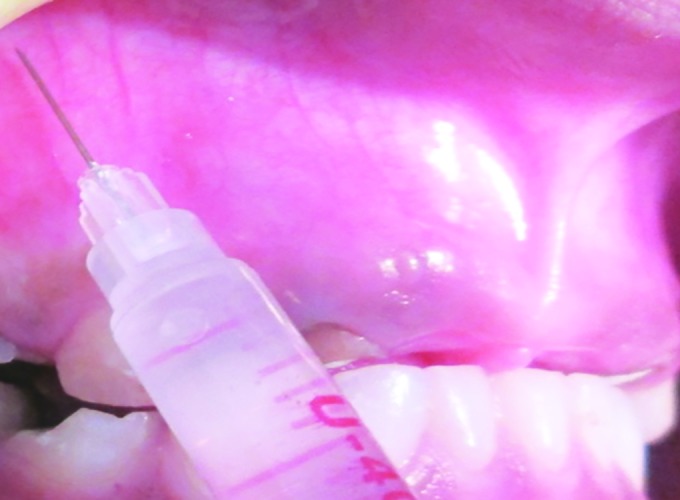
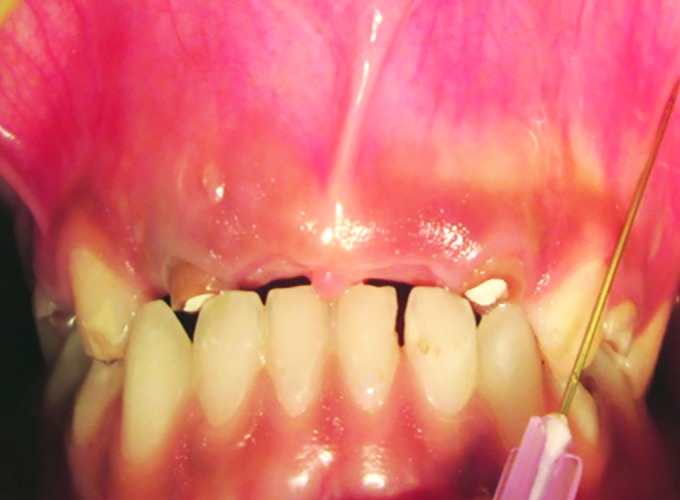
Twenty children of age group 6 to 12 years undergoing routine dental procedures participated in the study. Every child acted as one's own control, while receiving treatment on the opposite side of the same arch. Each patient was randomly assigned to receive the injection either with conventional syringe or diabetic needle for the first visit, while the injection with the other needle was administered during the second visit. Rating scales were used for objective and subjective evaluations.
Statistical analysis of the measurements were made using Wilcoxon signed U test and Mann-Whitney U test which showed the mean sound, eye, motor (SEM) score difference using insulin syringe. The outcome was statistically significant when compared using the mean ranks between male and female patients with that of control group.
It can be concluded that diabetic syringes exhibit clinical advantage and its use in pediatric dentistry for local anesthetics (LA) infiltration can prove beneficial. Kour G, Masih U, Singh C, Srivastava M, Yadav P, Kushwah J. Insulin Syringe: A Gimmick in Pediatric Dentistry. Int J Clin Pediatr Dent 2017;10(4):319-323.
牙科中疼痛和焦虑的管理涉及多个程序问题,包括麻醉剂溶液的注射。控制疼痛是管理儿童行为的最重要方法之一。恐针症在牙科患者中非常常见,儿童牙科患者行为指导指南的最重要目标是减轻儿童在牙科手术中的恐惧和焦虑。基于上述原因,本研究的目的是在儿童使用传统注射器和胰岛素针接受牙科局部麻醉时,客观和主观地记录其疼痛感觉。
20名年龄在6至12岁接受常规牙科手术的儿童参与了本研究。每个儿童在同一牙弓的对侧接受治疗时作为自身对照。每位患者在首次就诊时随机分配接受传统注射器或胰岛素针注射,而在第二次就诊时接受另一种针的注射。使用评分量表进行客观和主观评估。
使用Wilcoxon符号秩和检验和Mann-Whitney秩和检验对测量结果进行统计分析,结果显示使用胰岛素针时平均声音、眼睛、运动(SEM)评分存在差异。与对照组相比,按性别分组的患者平均秩次比较时,结果具有统计学意义。
可以得出结论,胰岛素针具有临床优势,其在儿童牙科局部麻醉浸润中的应用可能是有益的。库尔G、马西赫U、辛格C、斯里瓦斯塔瓦M、亚达夫P、库什瓦J。胰岛素针:儿童牙科中的一个噱头。《国际临床儿科牙科学杂志》2017年;10(4):319 - 323。